



Military
India’s defence growth stands out amid widening Chinese manufacturing base: Report
Published On Thu, 21 May 2026
Asian Horizan Network
3 Views
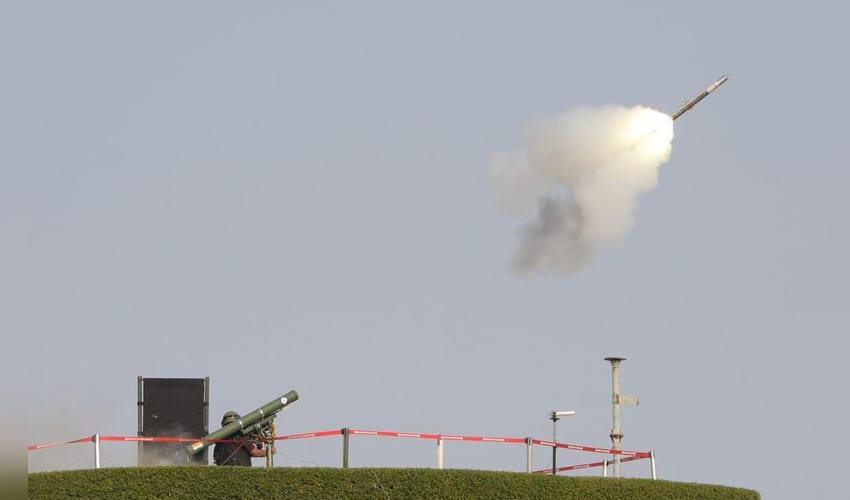

Washington/Beijing, May 21 (AHN) Prime Minister Narendra Modi’s Atmanirbhar Bharat (self-reliance) policy has created industrial corridors, increased foreign investment caps, and built a defence-tech startup ecosystem that is already exporting, signalling a tangible and expanding capacity.
With hundreds of companies operating and more emerging, India has set a defence export target of about $6 billion by 2029, compared to around $80 million a decade ago, a report has mentioned.
The recent meeting between US President Donald Trump and his Chinese counterpart Xi Jinping in Beijing served as another reminder for Washington of an industrial imbalance that still does not work in America’s favour, Mike Kuiken, Vice Chair of the US-China Economic and Security Review Commission, and Leland Miller, a Commissioner on the US-China Economic and Security Review Commission, wrote in online magazine 'The Wire China.'
According to the American experts, China’s manufacturing base now exceeds that of the US, Japan, and Germany combined. Even the United States and Europe together cannot match the Chinese industrial scale, making India “the only way the maths begins to work".
“That is not a matter of preference but strategic necessity,” they said, aligning with India’s own threat perceptions: “a country shaped by sustained Chinese pressure along its northern border, with defence modernisation increasingly organised around that reality.”
“The US and India have been signing the right documents. Last October, the two nations agreed to a roadmap covering joint research, co-development, supply security, and innovation bridges between American and Indian defence startups, building on years of bipartisan effort. In 2023, then-Senate Majority Leader Chuck Schumer used the Munich Security Conference to argue that the United States and Europe could not outcompete China alone and that India had to be at the centre of the answer,” they added.
Kuiken and Miller argued that signing more documents while the system governing how the US shares defence technology with its partners remains unchanged is not the solution.
They argued that concerns reflected in Indian commentary, that increasing bilateral engagement has not translated into access to the underlying technologies, are “well justified".
“The strategic argument for a deeper and more meaningful US-India partnership has been settled in Washington for three years, but the architecture has not moved. That is not principally a failure on India’s side of the table; it is ours,” the experts noted.
Highlighting the growing constraints in Washington in advancing the deeper cooperation with India, the report said that “what has lagged is not intent, but execution.”
“The bottleneck increasingly sits in Washington: export-control regimes, byzantine procurement rules, financing tools, and technology-sharing frameworks built for a different era and a different strategic environment. Until that architecture changes, the partnership will continue to operate below its potential. Every year that gap persists is another year in which Beijing consolidates its industrial and technological advantage,” it noted.



