



Politics
Gujarat holds first meeting of state-level census coordination committee ahead of Census 2027
Published On Wed, 07 Jan 2026
Asian Horizan Network
0 Views
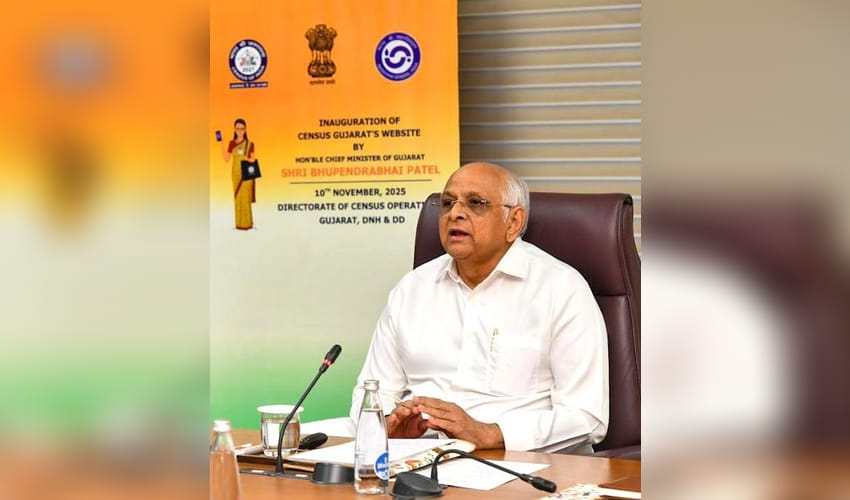

Ahmedabad, Jan 7 (AHN) The first meeting of the Gujarat State-Level Census Coordination Committee (SLCCC) was held in Gandhinagar under the chairmanship of Chief Secretary Manoj Kumar Das to review preparations for the upcoming Census 2027.
During the meeting, the Chief Secretary conducted a comprehensive review of the planning process and the groundwork required for the smooth execution of the next population census.
State Census Coordinator and Revenue Secretary Rajesh Manju, along with other members of the SLCCC, attended the high-level meeting.
Director of Census Operations, Gujarat, Sujal Mayatra, delivered a detailed presentation outlining the strategy to complete Census 2027 within the prescribed timelines.
The presentation covered key aspects such as the freezing of administrative boundaries, findings from the pre-test exercise, and preparations for training enumerators.
The committee also discussed the deployment of officers and required manpower for the census, the schedule for house-listing operations, and coordination mechanisms with various government departments.
After the presentation and discussions, Chief Secretary Manoj Kumar Das appreciated the preparatory work carried out so far and provided guidance to ensure that all census operations in Gujarat are conducted with accuracy, transparency, and efficiency.
Census 2027 is crucial because it provides the most accurate picture of India’s population and its needs. It helps governments decide how to allocate funds, plan infrastructure, expand healthcare and education, and design welfare schemes. The data determines how many schools, hospitals, roads, houses and jobs are needed in each region. It also guides policy on migration, urbanisation, ageing population, and socio-economic inequality.
For states like Gujarat, Census 2027 will help identify growth patterns, update administrative boundaries, and improve resource distribution across districts. In short, it serves as the foundation for planning India’s development for the next decade and ensures that policies and budgets match the real needs of people.



