



World
Gaza reconstruction plan may create openings for Indian firms
Published On Thu, 15 Jan 2026
Asian Horizan Network
90 Views
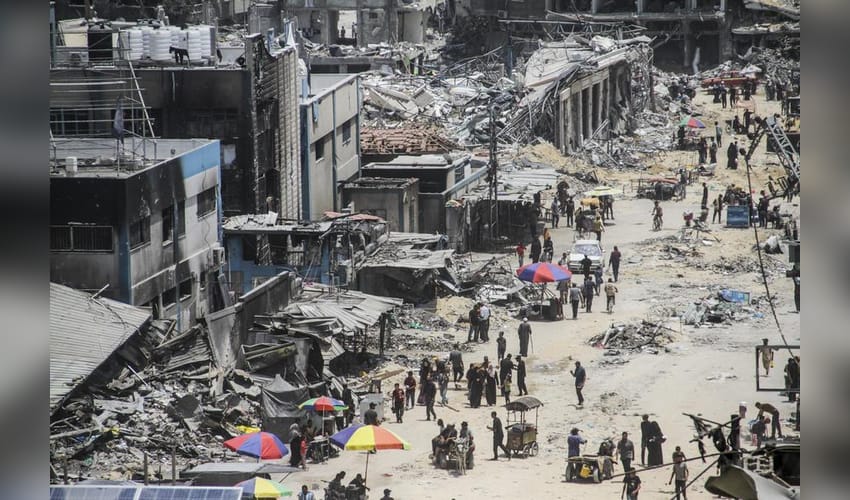

Washington, Jan 15 (AHN) The United States’ decision to place Gaza under a technocratic Palestinian administration and move toward reconstruction could create future opportunities for Indian companies in the civilian sector, even as officials stressed that rebuilding will only begin after security and governance conditions stabilise.
Senior US administration officials on Wednesday (local time) outlined phase two of President Donald Trump’s Gaza plan, which establishes the National Committee for the Administration of Gaza (NCAG) and shifts the focus from ceasefire management to demilitarisation, governance, and reconstruction.
India was not directly mentioned in the briefing. No role has been announced for New Delhi or for Indian firms. However, the framework being created is similar to post-conflict models where Indian companies have previously worked through international and donor-backed mechanisms.
Officials said reconstruction would follow a clear sequence. Armed infrastructure must first be dismantled. Basic security must hold. Only then can large-scale rebuilding move ahead. Commercial participation, they said, would likely come later and through multilateral channels rather than political arrangements.
For India, any opening would be in civilian sectors. Indian firms have a track record in overseas infrastructure projects. They have worked in housing, roads, power, water and sanitation in difficult environments under UN or donor supervision.
Early reconstruction in Gaza is expected to focus on essentials. Housing is a priority. So are electricity, clean water, waste management, and healthcare facilities. These are areas where Indian companies are often competitive, particularly in cost-sensitive and time-bound projects.
Officials made clear that foreign involvement would exclude security roles. Demilitarisation and policing would be handled separately. This rules out military or enforcement functions and limits participation to civilian work.
India’s broader regional posture could also matter. New Delhi maintains working ties across West Asia. It has generally avoided taking sides in regional conflicts and has emphasised development and humanitarian engagement. That approach has, in the past, helped Indian firms operate in sensitive settings.
For now, officials cautioned against reading too much into future participation. Gaza remains in an early transition phase. The technocratic administration must first establish authority and credibility. Sustained calm is essential.
Only after those conditions are met are reconstruction contracts likely to emerge. Until then, officials said, discussion of private-sector involvement -- including by Indian companies -- remains prospective rather than immediate.



