



Technology
Fusion power could reach US grid by 2030s
Published On Tue, 01 Sep 2026
Asian Horizan Network
5 Views
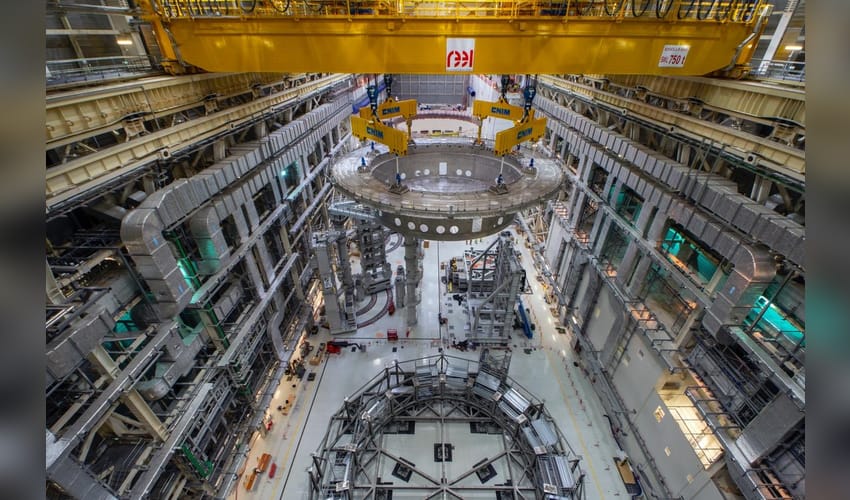

Chapel Hill (US), Sep 1 (AHN) Commercial fusion energy could begin supplying electricity to the US grid in the early 2030s, the head of America’s largest fusion energy company has told G20 representatives, pointing to rapid technological advances and billions of dollars in private investment.
Bob Mumgaard, co-founder and chief executive officer of Commonwealth Fusion Systems, said his company was completing a facility in Massachusetts and preparing to begin construction of its first commercial power plant in Virginia.
“And so that could put fusion on the grid in the early 2030s,” Mumgaard told a G20 session on emerging technologies.
“There’s a lot of technology that has to be worked out as we go, but the toolset is well adapted to that technology,” he said.
Fusion seeks to generate energy by joining atomic nuclei, reproducing the process that powers the sun.
Mumgaard urged governments and investors not to assume that future progress would follow the slow pace of the past.
“The first is to avoid the fallacy that the past is prologue,” he said.
He said large-scale computing, Artificial Intelligence (AI), advanced materials and a new generation of trained scientists and engineers were accelerating the development of physical technologies.
“So we shouldn't deceive ourselves into thinking that things have to go slow,” Mumgaard said.
The industry was attracting significant private capital, he said. More than 50 fusion companies had secured over USD 14 billion in private investment, with most of the businesses and financing located in the United States.
Commonwealth Fusion Systems had raised about USD 4 billion, he said. Its Massachusetts facility would have been comparable to a government-led Manhattan Project installation under an earlier model of scientific development.
“The reason that's been able to happen is because the government has been a partner in this, not a restraint,” Mumgaard said.
He cited regulation as one area where government decisions had provided investors with greater certainty. Four years ago, there was no tested framework for licensing a fusion power plant, he said.
Instead of devising a completely new and prescriptive system, US authorities examined existing regulation for particle accelerators and considered how it could be applied to fusion.
“We're going to have enough room to be able to get the first products out,” Mumgaard said. “And that gave the certainty to investors to put billions of dollars into this by removing an obstacle that everyone has seen in advanced new technologies before.”
He also emphasised the importance of partnerships connecting publicly funded scientific research with private companies.
Government expertise should be made available in ways that protect intellectual property and allow businesses to build commercial products, he said.
“It would be easy to say, well, the government should go and build the first generation of power plants,” Mumgaard said. “But that's a path to nowhere. Those power plants never make it to the market.”
“We should plan for the most aggressive speed we can do and bring all the tools to bear on that,” he said.
Scientists have pursued controlled fusion energy for decades because it could provide large quantities of power without the carbon emissions associated with fossil-fuel combustion. Unlike conventional nuclear power, fusion does not rely on splitting heavy atoms.



