



Asia In News
From kitchen to public transport: Bangladesh’s gas crisis disrupts public life in Dhaka
Published On Tue, 28 Jul 2026
Asian Horizan Network
5 Views
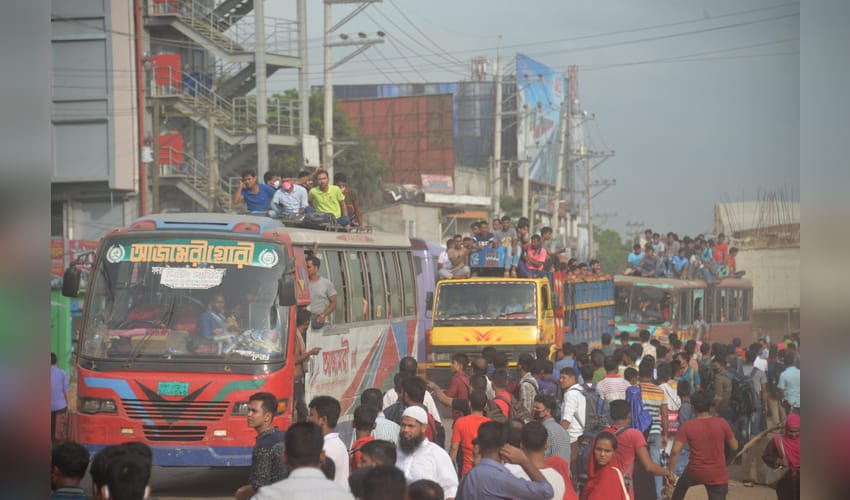

Dhaka, July 28 (AHN) As Bangladesh grapples with a worsening gas crisis, the disruption has extended far beyond household kitchens, paralysing public transport across Dhaka as hundreds of CNG-powered buses, auto-rickshaws and ride-sharing vehicles spend hours waiting for fuel, leaving commuters stranded and increasing transport costs, local media reported.
Commuters on major corridors in Dhaka such as Rampura, Badda, Airport Road, Banasree and Mirpur faced hours-long delays on Monday, with fewer buses on the roads, inflated CNG auto-rickshaw fares and a shortage of app-based transport.
According to drivers and transport workers, fuel shortages have severely disrupted services, with buses that once made multiple daily trips now struggling to complete a single trip, reducing fleet availability across the city.
Additionally, the Gulshan-Mirpur, Gabtoli, Shahbag, Airport and Sayedabad routes also witnessed similar shortages, leaving commuters to endure long queues and overcrowded buses amid a sharp decline in available services, Bangladeshi daily Dhaka Tribune reported.
The crisis has severely affected CNG auto-rickshaw drivers, who say that after waiting five hours at a filling station, they receive only Bangladeshi Taka (Tk) 100 to Tk150 worth of gas --barely enough to complete a few trips.
"If the vehicle cannot run, how will we pay the owner or feed our families?" Dhaka Tribune quoted drivers Kawsar Ahmed and Rahim as saying while waiting at a filling station.
With no certainty over when gas supplies will return to normal, many voiced frustration at the lack of a clear government plan, while calling for coordinated action to restore fuel availability and reduce the growing disruption to daily life.
The ongoing gas crisis in Bangladesh has reportedly been caused by a fire at a floating storage and regasification unit (FSRU) in Cox's Bazar on July 21, which damaged one of its two boilers and forced the facility to stop operations.
The incident reduced Bangladesh's gas supply to below 2,150 million cubic feet per day (mmcfd), down from an average of around 2,700 mmcfd that had been maintained over the past year, despite the national daily demand standing at nearly 3,800 mmcfd, Bangladeshi media outlet UNB reported.
The gas supply reduction has impacted household kitchens the most, with gas pressure reducing to near zero or flickering feebly in many parts of Dhaka.
Residents in areas like Mirpur, Badda, Kalabagan, Kafrul, Mohammadpur, Kazipara, West Tejturi Bazar and Rampura said that gas stoves remained unlit or unusable for days.
Disruption of regular gas supply has forced many low-income families to build temporary clay stoves and cook with firewood. Others who can afford it have started using expensive electric cookers or LPG cylinders, further increasing their household spending.



