



Lifestyle
Explainer: No threat, no new definition given for Aravalli
Published On Sun, 21 Dec 2025
Asian Horizan Network
0 Views
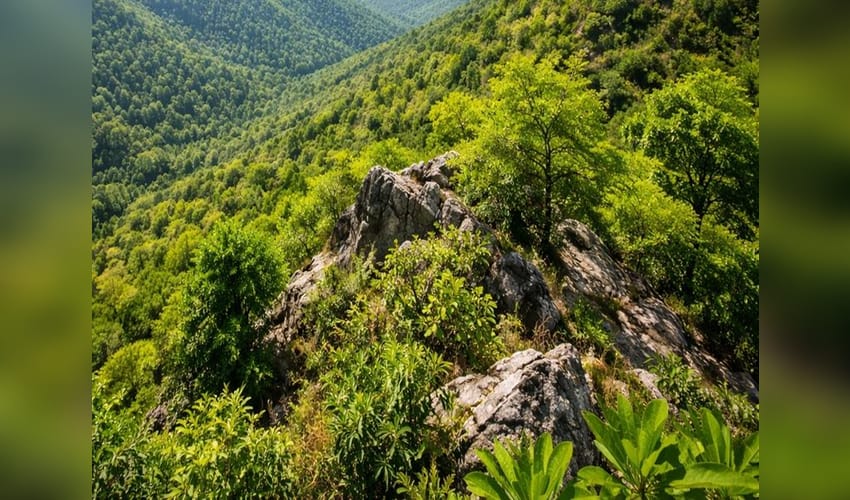

New Delhi, Dec 21 (AHN) Dismissing alarmist claims, the Ministry of Environment, Forest and Climate Change on Sunday reiterated that there is no imminent threat to the Aravallis' ecology. India’s resolve is clear: the Aravallis will be safeguarded for present and future generations while balancing conservation with responsible development, the Ministry said.
No new definition
The Ministry said it is important to note that no new definition has been given for the Aravalli. The current debate is linked to a development in the Supreme Court, which accepted the recommendations of a Committee formed by the Ministry for protecting the hills and regulating mining.
The Committee was constituted on May 9, 2024, for a uniform policy-level definition of Aravalli Hills and Ranges, specifically in the context of regulating mining, and to incorporate the views of four state governments.
According to the policy-level definition, an “Aravalli Hill” is any landform in designated Aravalli districts with an elevation of 100 metres or more above its local relief, and an “Aravalli Range” is a collection of two or more such hills within 500 metres of each other.
The Ministry said it is wrong to conclude that mining is permitted in all landforms below the 100-metre height.
The Committee was formed during a hearing related to alleged illegal mining in the Aravalli Hills and Mountain Ranges in the M.C. Mehta versus Union of India and others matter.
The Aravalli Hills and Ranges are among India’s oldest geological formations, stretching from Delhi through Haryana and Rajasthan and into Gujarat. Historically, they have been recognised across 37 districts by state governments, with their ecological role noted as a natural barrier against northern desertification and a protector of biodiversity and water recharge.
Anxious activists
Contrary to alarmist claims that the new development will encourage commercial activities in the range, the Ministry said there is no imminent threat to the Aravallis’ ecology.
Ongoing afforestation, eco-sensitive zone notifications, and strict monitoring of mining and urban activities ensure that the Aravallis continue to serve as a natural heritage and ecological shield for the nation, it said.
The Committee, constituted by the Ministry of Environment, Forest and Climate Change pursuant to Supreme Court directions, had extensive consultations with state governments, during which it emerged that only Rajasthan has a formally established definition for regulating mining in the Aravalli, it said.
This definition was based on the 2002 Committee report of the state government, relying on the Richard Murphy landform classification, which identified all landforms rising 100 metres above local relief as hills and, based on that, prohibited mining on both the hills and their supporting slopes.
Unanimous decision
The Ministry said that during the Committee’s deliberations, all states agreed to adopt the uniform criterion of “100 metres above local relief” for regulating mining in the Aravalli region, as had been in force in Rajasthan since January 9, 2006, while unanimously agreeing to make it more objective and transparent.
All landforms enclosed within the lowest binding contour encircling hills of height 100 metres or more, irrespective of their height and slopes, are excluded for the purposes of grant of mining lease, the Ministry said.
Similarly, the Aravalli range has been explained as all landforms that exist within 500 metres of two adjoining hills of height 100 metres or more. All landforms existing within this 500-metre zone, irrespective of their height and slopes, are excluded for the purposes of grant of mining lease. It is, therefore, wrong to conclude that mining is permitted in all landforms below the 100-metre height.
Maps to curb illegal mining
The Committee also suggested measures to ensure a clear, map-verifiable operational definition of “Aravalli Hills” and “Aravalli Range”, and a regulatory framework that protects core and inviolate areas, restricts new mining, and strengthens safeguards and enforcement against illegal mining.
The Ministry said that in its final judgment on November 20, 2025, the Supreme Court commended the Committee’s work, including the assistance of the Technical Committee, and also appreciated its recommendations regarding the prevention of illegal mining and permitting only sustainable mining in the Aravalli Hills and Ranges.
PM Modi’s project
In June, Prime Minister Narendra Modi launched the ‘Aravalli Green Wall’ project, a special drive aimed at reforesting the Aravalli range, one of the biggest forest covers, spanning four states — Gujarat, Rajasthan, Haryana and Delhi.
As part of the major drive, 1,000 permanent nurseries will be set up to revive the country’s oldest mountain range. Technologies such as satellite mapping will also be deployed to facilitate speed and transparency in the project.
Notably, the Aravalli range is home to 22 wildlife sanctuaries and four tiger reserves — Ranthambore, Sariska, Ramgarh-Vishdhari and Mukunda Hills.



