



Politics
Expert calls Kalpakkam nuclear reactor attaining criticality as 'step towards Atmanirbhar Bharat'
Published On Tue, 07 Apr 2026
Asian Horizan Network
45 Views
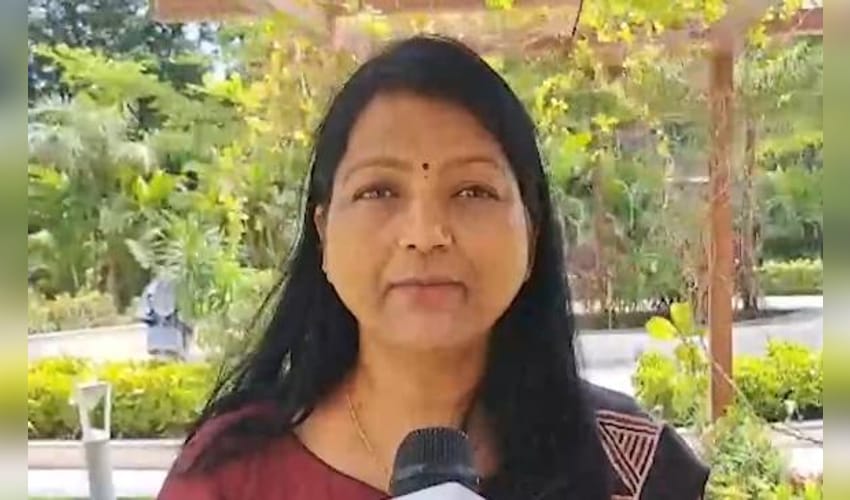

Surat, April 7 (AHN) Nuclear energy expert Dr Neelam Goyal on Tuesday called the attainment of criticality at the Prototype Fast Breeder Reactor (PFBR) in Tamil Nadu's Kalpakkam, as a "big win for India" and an "important step towards 'Atmanirbhar Bharat'."
The indigenously designed and built Prototype Fast Breeder Reactor (PFBR) successfully attained its first criticality on April 6, marking the initiation of a sustained nuclear chain reaction.
Speaking to AHN, Goyal mentioned that agriculture, industry and services are the three pillars of India's economy.
She said, "The backbone of all three of them is electricity. Right now, 70 per cent of our electricity is generated from coal, a majority of which we buy from Indonesia. Also, we buy gas from Qatar."
"This (reactor) will prove crucial in the field of nuclear energy. India possesses 85 per cent of the world's nuclear fuel. Till now, 24 reactors are working in our country for which we use uranium, which is imported from countries like Australia, Kazakhstan and Mongolia," she said.
Significantly, India holds limited uranium reserves but one of the largest Thorium reserves in the world. To make the most of these resources, the Department of Atomic Energy designed a three-stage nuclear power programme built on a closed nuclear fuel cycle. The goal is to progressively multiply domestic fissile resources and secure long-term energy independence.
Goyal explained that Thorium is a fertile element and in order to convert fertile into fissile, "We need a small amount of uranium."
"Uranium is the fuel required in the first phase (of the nuclear power programme). The fuel that is left from this is Plutonium, which is being used as a fuel in the second stage of nuclear electricity at Kalpakkam," she added.
She explained how India can become self-reliant and stop depending on coal and gas imports.
"If water, electricity and food processing facilities are made in villages themselves, then the income of farmers can increase by around 10 per cent," she said.
Goyal asserted that when demand increases, so will the industries, which in turn will require electricity. "For that, nuclear energy is the best source. The money used by the country to import gas and electricity could be saved," she said.
According to the nuclear energy expert, if bio-gas plants could be set up in hundreds of villages, India could complete 70 per cent demand for gas in the villages themselves.
She added, "For demands in cities, if food is cooked using electric stoves, we can reduce dependency on (import) of gas."
She observed that amid the West Asia conflict, "we are facing a gas crisis in our country and high costs of coal."
Moreover, Goyal believes that India can reduce its dependency on other countries for coal "by putting up nuclear energy (plants) across 650 districts and SMRs of 300MW each."
"With this, people will get cheap electricity," she said.
Further, she mentioned that people have issues with nuclear energy as opposed to solar energy.
However, she emphasised that nuclear electricity plants in India have been operating for years, but no major incident has been reported so far.



