



World
Delhi govt preparing year-round strategy to combat air pollution: Minister Manjinder Singh Sirsa
Published On Sun, 28 Dec 2025
Asian Horizan Network
0 Views
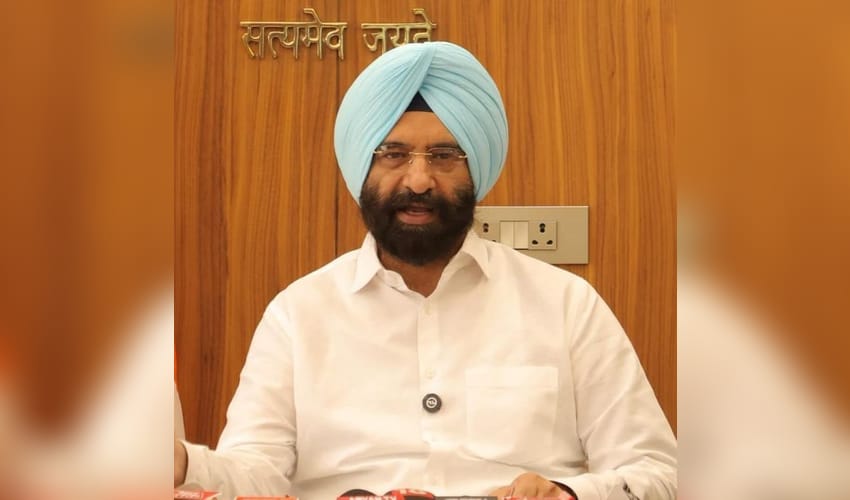

New Delhi, Dec 28 (AHN) Delhi Environment Minister Manjinder Singh Sirsa said on Sunday that the government is preparing a comprehensive, year-round strategy to combat air pollution through science-backed interventions, advanced technology and coordinated governance.
As part of this approach, the Delhi Government is exploring a potential collaboration with IIT Kanpur to leverage Artificial Intelligence and advanced air quality intelligence systems for pollution mitigation, he said.
Sharing details on Civic Action Taken in the last 24 hours to combat air pollution, Sirsa said 250 Construction & Demolition (C&D) Sites below 500 sq. m plot area were physically inspected. Another 92 C&D sites 500 sq. m and above plot areas were physically inspected.
Sirsa said as part of Road Dust Control Measures, the total Road length swept is 6,291 km; Road length sprinkled with recycled water is 1,694 km; No of Anti-Smog Guns deployed is 405 and amount of garbage removed (in MT)15 12012.
For Vehicular Pollution Control, Sirsa said 7,023 challans were issued, 65 non-Delhi destined trucks were diverted via Eastern and Western Peripheral Expressways, 41 traffic congestion points were decongested, and 58 public complaints received through mobile apps and social media were resolved.
Sirsa said the Environment department is all set to deliberate on the roadmap for collaboration, institutional mechanisms and phased implementation.
“Under the leadership of CM Rekha Gupta, we are ensuring that Delhi’s fight against pollution must be scientific, sustained and strategic. We are moving towards a model where decisions are driven by real-time data, source identification and measurable outcomes, not reactive measures,” he said.
The proposed collaboration aims to strengthen Delhi’s ability to identify pollution sources at a granular level, assess their impact, and enable targeted, timely interventions across sectors, he said, adding that the emphasis is on building systems that can monitor, analyse, forecast and guide action on a continuous basis.
“Our objective is clear - pollution control cannot be seasonal. Delhi needs a 365-day action framework that combines technology, governance and enforcement, working in complete coordination backed by data-driven decision-making,” the Minister added.
A key pillar of this approach is dynamic source apportionment, which will help authorities scientifically identify contributions from dust, transport, industry, biomass burning and regional factors. This evidence will enable agencies to act at the source of pollution, rather than resorting to blanket bans and reactive measures, he said.
The proposed collaboration also emphasises multi-agency coordination, to ensure that municipal bodies, district administrations, enforcement agencies and technical institutions operate on a shared data platform with clearly defined roles and accountability, he said.
“When every agency works from the same scientific evidence, action becomes faster, sharper and more effective. This is how we are aiming to transform Delhi from firefighting to actual prevention,” Sirsa said.



