



Asia In News
Concerns mount with China’s wargames around Taiwan after US pledges huge arms sale
Published On Tue, 30 Dec 2025
Asian Horizan Network
0 Views
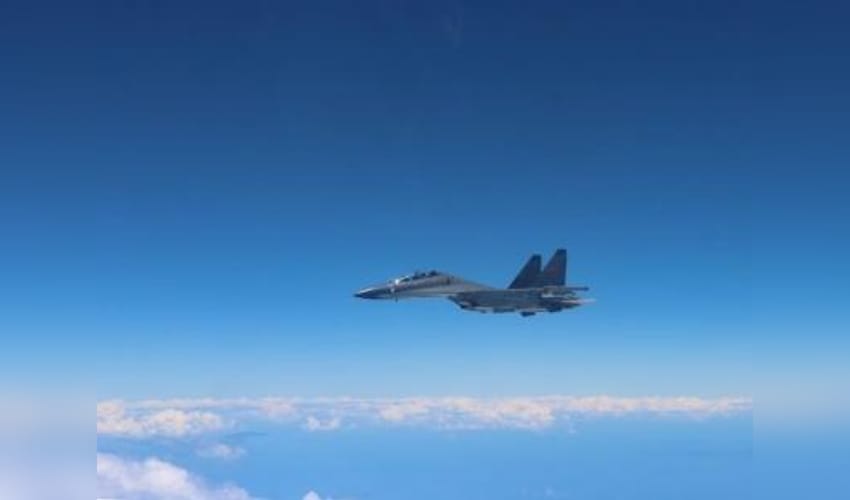

New Delhi, December 30 (AHN) With China’s ongoing wargames around Taiwan following the United States’ approval of its largest-ever arms sale to Taipei worth $11.1 billion, the future of this part of the Pacific has attracted global attention and concern.
Calling Washington’s arms sales to Taiwan as serving "merely as a cash machine" for American arms dealers, China’s state-controlled People’s Daily media on Tuesday warned that it will offer "no protective shield for the island".
US interests centre around the country being the global leader in semiconductor manufacturing, but more so due to its strategic location.
Taiwan lies at the crossroads of Asia – off the eastern coast of China, with South Korea to its north, Japan to the northeast, and the Philippines to the south. The location is important since many shipping routes pass this way.
"Given that one-third of global shipping passes annually through the South China Sea, this has major implications for the US economy," the National Security Strategy (NSS) of the United States of America observed.
"Hence deterring a conflict over Taiwan, ideally by preserving military overmatch, is a priority. We will also maintain our longstanding declaratory policy on Taiwan, meaning that the United States does not support any unilateral change to the status quo in the Taiwan Strait," added the document, made public this month.
The People’s Daily commentary on Tuesday reiterated Beijing’s stand. Mentioning Washington’s recently pledged package of arms sales to Taiwan, it said that "the island's leader, (Taiwan President) Lai Ching-te, has planned to continue spending massively on purchases of US arms in the coming eight years. These facts have exposed the collusion between the U.S. and the DPP to harm the interests of the people in Taiwan".
Detailing the Chinese People's Liberation Army’s (PLA) series of drills around Taiwan, code-named "Justice Mission 2025", the article cited dispatching troops from ground, air, naval, and rocket forces "to deter ‘Taiwan independence’ separatist forces and external interference".
It asserted: "This sends an unequivocal message that Beijing at all times stands ready to crush any secession plot aiming to split Taiwan from the motherland. Each escalation in provocation will be met with stronger countermeasures. The PLA is ready to fight at any moment, and is certain to prevail if and when it does fight."
The global community is watching with concern as tensions in the region mount to their highest in years.
China sees Taiwan as a “core national interest” tied to its national rejuvenation, while the US views Taipei as a key partner for democracy, security, and global trade.
Beijing’s Justice Mission 2025, launched on Monday, marks its largest war games in recent times, simulating a blockade of Taiwan’s ports and practising strikes and counter-strikes.
Taiwan’s military has also conducted readiness drills, warning that China aims to seize the island by 2027.
While these drills are likely to disrupt sea and air traffic, they simultaneously raised fears of conflict across East Asia.
Beijing considers Taiwan part of its territory and sees reunification as essential to the "great rejuvenation of the Chinese nation" by 2049.
Taiwan’s independence is viewed as a direct challenge to China’s sovereignty. The island is located right at the heart of the “First Island Chain”, which is critical for both the world’s largest economies' access to the Pacific. The First Island Chain is a string of Pacific archipelagos from the Kamchatka Peninsula, through Japan, the Ryukyu Islands, Taiwan, the northern Philippines, and down to Borneo and the Malay Peninsula. It serves as both a natural barrier and a platform for power projection, anchoring Washington’s alliances and containing Beijing’s influence in the Western Pacific.
This was also mentioned in US NSS, which added that "it provides direct access to the Second Island Chain and splits Northeast and Southeast Asia into two distinct theaters".
Meanwhile, regional players like Japan and the Philippines have also been drawn into the conflict with Japan Prime Minister Sanae Takaichi’s statement that any attack on Taiwan could trigger a military response from Tokyo, while Manila’s naval vessels have reportedly been spotted in these waters.



