



World
China’s economy in deep stress as consumer demand crumbles: Report
Published On Tue, 25 Aug 2026
Asian Horizan Network
4 Views

New Delhi, Aug 25 (AHN) China’s economy is showing signs of deep stress with retail sales shrinking, property values continuing to fall, and households cutting back on major purchases. Even Beijing’s own advisers now openly warn that weak demand is eroding growth potential and innovation, according to an article published in Myanmar’s Mizzima news website.
Yet, despite global precedents for direct relief, the leadership resists expanding social spending, citing ideological concerns.
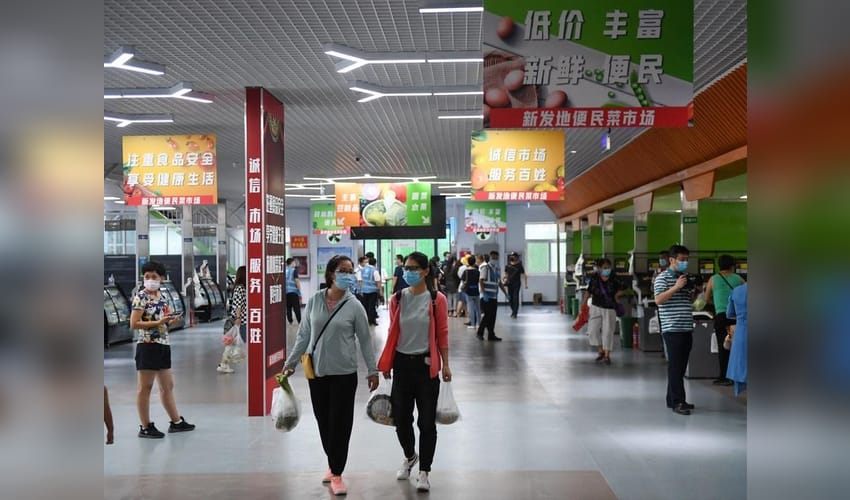
“Walk into a supermarket in almost any Chinese city this year and you’ll notice something unnerving: the aisles are stocked, the lights are on, and almost nobody is buying. That eerie quiet isn’t a local anomaly; it’s the visible symptom of an economy sliding deeper into deflation, even as the Chinese Communist Party’s own economists sound alarms that the state’s official statistics can no longer fully paper over,” the article states.
China’s auto sales plunged 16.1 per cent year-on-year in May 2026, home appliances and electronics declined 5.6 per cent, building materials dropped 13.6 per cent and jewellery went down 8.9 per cent. These are the big-ticket, confidence-dependent purchases that signal whether households believe their future income is secure. When people stop buying refrigerators and cars in double-digit numbers, they aren’t tightening belts; they’re bracing for something worse, the article points out.
It highlights that at the China Macroeconomic Forum’s mid-year session in Beijing on June 27, current and former central bank advisers broke from the usual script of praising the leadership’s stewardship. Instead, they openly identified the core contradiction plaguing the world’s second-largest economy: supply is strong, but demand is collapsing, feeding a loop where weak spending drags down prices, which drags down incomes, which drags down spending further.
One adviser bluntly stated that a country stuck in deflation cannot sustain technological innovation. Another argued that Chinese households’ savings rate needs to fall and that pension payments for rural and unemployed urban residents currently a paltry 200-plus yuan a month, or roughly $30 should quadruple to around $150.
That such proposals are being floated publicly by insiders, rather than dissidents, tells you how serious Beijing’s own technocrats believe the problem has become, the article observes.
It underlines that the ideology of the Chinese Communist Party is holding back the required stimulus for demand. In a 2022 party journal article, Xi Jinping explicitly warned against adopting a Western-style welfarism, arguing that generous social spending breeds laziness, strains public finances, and risks trapping China in the “middle-income trap.”
That framing has since been echoed repeatedly in Politburo and State Council meetings. The result is a social security budget that consumes only about 8 per cent of GDP far below the 20-25 per cent typical of developed economies and even below the 15 per cent-plus seen in developing peers like Brazil, South Africa, and Thailand, the article notes.



