



World
Canada's failure to curb Khalistani extremism comes to the fore yet again
Published On Thu, 23 Jul 2026
Asian Horizan Network
4 Views
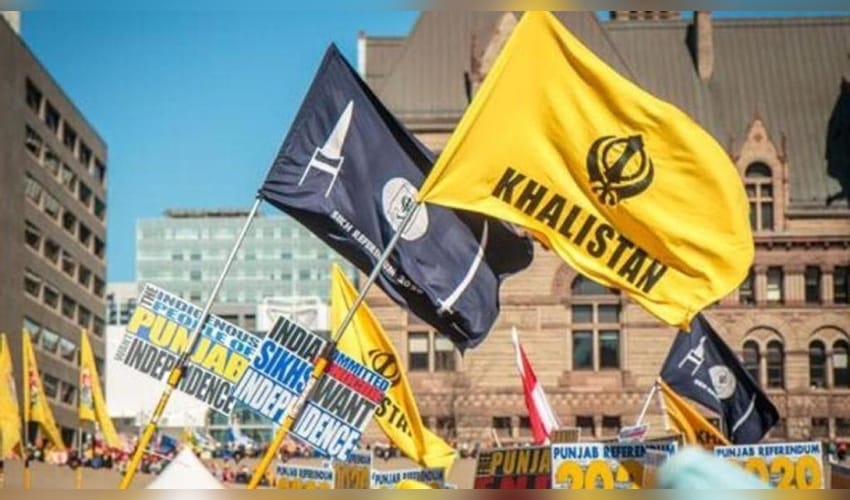

Ottawa, July 23 (AHN) The staging of mock funerals for Prime Minister Narendra Modi in Canada reflects a troubling display of Khalistani extremist symbolism. While Canada has long championed multiculturalism and is home to a thriving Sikh diaspora, its commitment to diversity cannot become a "suicide pact" that permits foreign separatists to "import their grievances and export terror", a report has detailed.
"In a disturbing display that crosses from protest into incitement, Khalistani extremists in Canada recently staged a mock funeral for Indian Prime Minister Narendra Modi on the Canadian soil. Effigies burned, processions marched, and the message rang clear: political violence against India’s democratically elected leader is not only thinkable but celebratory," a report in ‘Khalsa Vox’ mentioned.
"This isn't an isolated theatre. It follows years of 'Kill Modi' chants at rallies, hastily rebranded as 'Kill Modi politics' when scrutiny intensified. The mask is off. What began as fringe sloganeering has evolved into open glorification of assassination on Canadian streets," it added.
Highlighting the grim history of the separatist movement, the report said, Khalistani extremism has "Canadian blood on its hands."
"The 1985 Air India bombing — Canada’s deadliest terrorist attack — killed 329 people, mostly Canadian citizens. Perpetrators drew support from networks in Canada. Four decades later, the Canadian Security Intelligence Service (CSIS) itself has acknowledged in its 2025 public report that Canada-based Khalistani extremists (CBKE) continue to pose a national security threat. They fundraise, organise, and promote violence, using Canadian soil as a safe haven," it detailed.
Despite this acknowledgement, the report noted that enforcement remains lax, with Khalistani extremists openly flouting norms, intimidating moderate Sikhs who reject separatism and seek to build their lives in Canada.
"Mainstream Sikh organisations denounce these radicals, but their voices are drowned out by a vocal minority that has captured political attention through bloc voting. Successive Canadian governments, particularly under Justin Trudeau, prioritised electoral calculus over national security, souring relations with India — one of the world’s fastest-growing major economies and a key counterweight to China in the Indo-Pacific," it mentioned.
The report argued that the issue is not solely India's concern but Canada's as well. It warned that allowing calls for the killing of a foreign leader normalises political assassination as a legitimate form of dissent and encourages radical elements to exploit Canada's environment.
"It erodes public trust when citizens see their government unwilling to confront imported extremism. And it damages Canada’s reputation as a serious player on the global stage — one that cannot even secure its streets from foreign agitators," the report noted.
Stressing that Prime Minister Modi’s government has repeatedly raised these concerns and called for action against individuals and groups involved in terrorism financing and propaganda, the report said, "India’s position is straightforward: peaceful advocacy is one thing; support for violence, glorification of terrorists like those behind the 1985 bombing or plots against Indian diplomats and leaders, is another. Canada must draw that line clearly."



