



World
Asim Munir’s rise as Pakistan’s Chief of Defence Forces symbolises deep institutional decay: Sindhi leader
Published On Tue, 23 Dec 2025
Asian Horizan Network
0 Views
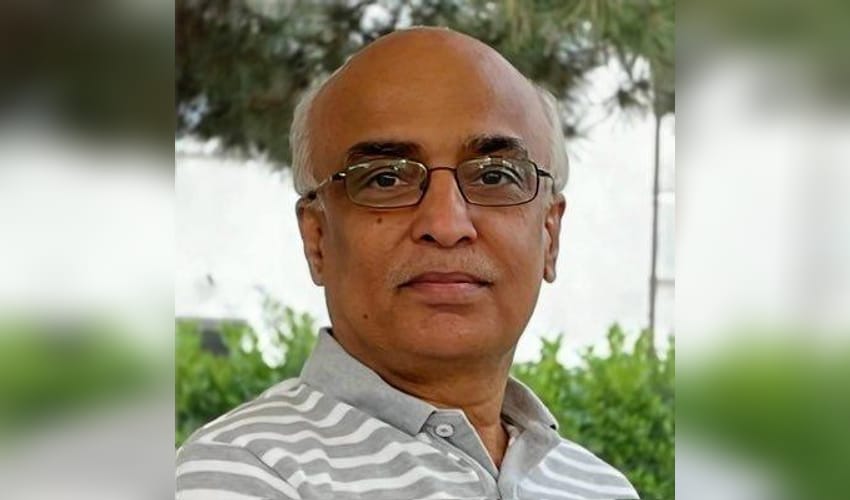

Berlin, Dec 23 (AHN) Shafi Burfat, Chairman of the Jeay Sindh Muttahida Mahaz (JSMM), on Tuesday slammed Pakistan’s “self-appointed” Field Marshal and Chief of Defence Forces Asim Munir, saying he symbolises not military excellence but the deep institutional decay of a state captured by its own security establishment.
The Sindhi leader asserted that Munir’s elevation to the highest ceremonial rank -- Chief of Defence Forces-- despite not having fought or won a single international or decisive domestic war, reflected unchecked militarised power rather than professional merit.
“Titles earned through coercion rather than competence often reveal psychological insecurity. Munir’s fixation with grand ranks and religious symbolism suggests not confidence, but a fragile ego seeking validation through authority. History shows that such figures are rarely nation-builders; more often, they are symptoms of institutional collapse,” Burfat posted on X.
Citing Munir’s claim that Hindus and Muslims constitute two separate nations because of differing religious practices, the JSMM Chairman said this assertion exposed a fundamental misunderstanding of political science.
“Nations are not constructed on theology but on shared history, territory, collective memory, economic interests, and political destiny. At the moment such statements were aired, serious observers across the world recognised a dangerous intellectual vacuum at the heart of Pakistan’s military leadership,” he added.
Highlighting Munir’s claim that during Pakistan’s crisis in May, the country “clearly felt Allah’s help”, Burfat said in reality Pakistan relied heavily on Chinese military technology, intelligence support, drone capabilities, and American financial flows.
“To reinterpret geopolitical assistance as divine intervention is not faith; it is deliberate misinformation. In an era of global transparency, such narratives insult public intelligence,” he stated.
The Sindhi leader said Munir’s assertion that “the army and the people stand on one page” was perhaps his most “audacious falsehood”.
“Sindhis view the Punjabi-dominated military establishment as an occupying force. Balochistan remains in open resistance. Pashtun resentment toward military operations is well documented. Even within Punjab, protesters have attacked corps commanders’ residences, an unprecedented sign of civil-military rupture. To speak of unity under such conditions is not optimism; it is denial,” he mentioned.
Burfat called on the global community to view Pakistan with “seriousness and honesty”. He said that beyond “terrorism, destabilisation, and acting as a hired intermediary for global powers”, Pakistan has little else to offer to the region or the international system. Pakistan’s role, he said, has been that of a "subcontractor of violence" rather than a responsible state.
“Asim Munir’s statements are not strategic insights; they are symptoms of a disturbed mindset. His rhetoric reflects intellectual emptiness masked by religious slogans and militaristic bravado. Such discourse neither builds states nor alters historical trajectories,” the Sindhi leader stressed.



