



Lifestyle
Amid English skills row, Kerala CPI-M MP Rahim says ‘human pain needs no grammar’
Published On Mon, 29 Dec 2025
Asian Horizan Network
0 Views
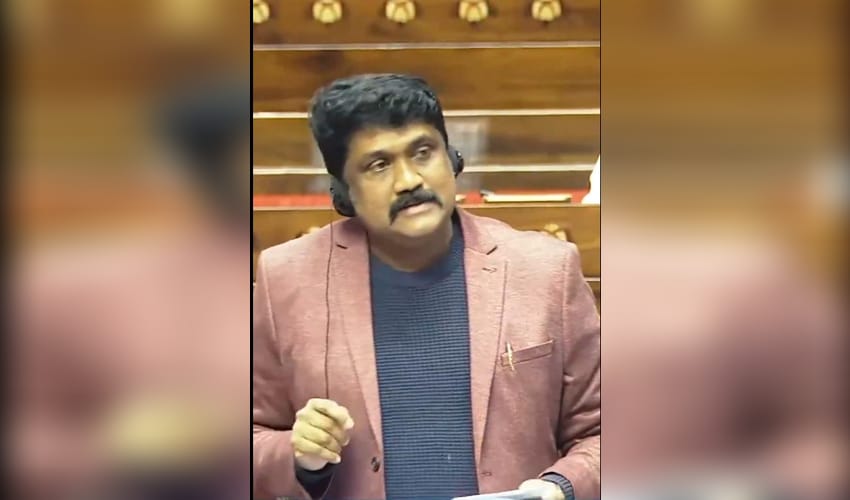

Thiruvananthapuram Dec 29 (AHN) CPI-M Rajya Sabha member and Democratic Youth Federation of India (DYFI) President A.A. Rahim sought to end the ongoing online debate about his English-speaking skills after clips of a television interaction in Karnataka went viral, seeking the substance, not the form, be evaluated.
Clips of Rahim’s English responses, marked by visible hesitation while answering questions from journalists, were widely circulated, with trolls questioning his fluency and competence. A section of social media users argued that Rahim’s English usage did not match expectations from an elected representative who holds a postgraduate degree from the University of Kerala, besides a degree in law.
The criticism soon snowballed into a political argument, drawing reactions from across the spectrum.
This is not the first time Rahim has faced such scrutiny.
His English speeches in Parliament have previously been subjected to trolling, though the MP has consistently maintained that language barriers would not deter him from articulating his political positions in national and international forums.
As the controversy intensified, Rahim issued a strong response through a detailed Facebook post, shifting the focus from language proficiency to the substance of political engagement.
He asserted that human suffering speaks a universal language, explaining that his visit to Karnataka was aimed at witnessing firsthand what he described as instances of state oppression.
Rahim said he bore no resentment towards those who scrutinised his English grammar and acknowledged his linguistic limitations, adding that he would continue to work on improving his language skills.
However, he questioned the priorities of his critics, asking whether those fluent in multiple languages had ever been seen standing alongside vulnerable communities whose lives, he alleged, had been destroyed by state-led demolitions.
Rahim said he had encountered nearly a thousand displaced and voiceless victims during his visit, and expressed pride that their stories were now being amplified by the media.
According to him, issues that might otherwise have gone unnoticed were now forcing a broader discussion on rehabilitation and accountability.
Cautioning against reducing public discourse to mockery, Rahim urged critics not to evade the questions raised by marginalised communities in their rush to troll language skills.
He reaffirmed his commitment to continue seeking out the voiceless and standing with those left behind, arguing that empathy and action mattered far more than grammatical precision.



