



Politics
Akali Dal favours reopening Attari, Fazilka borders for trade with Central Asia
Published On Sat, 21 Feb 2026
Asian Horizan Network
1 Views
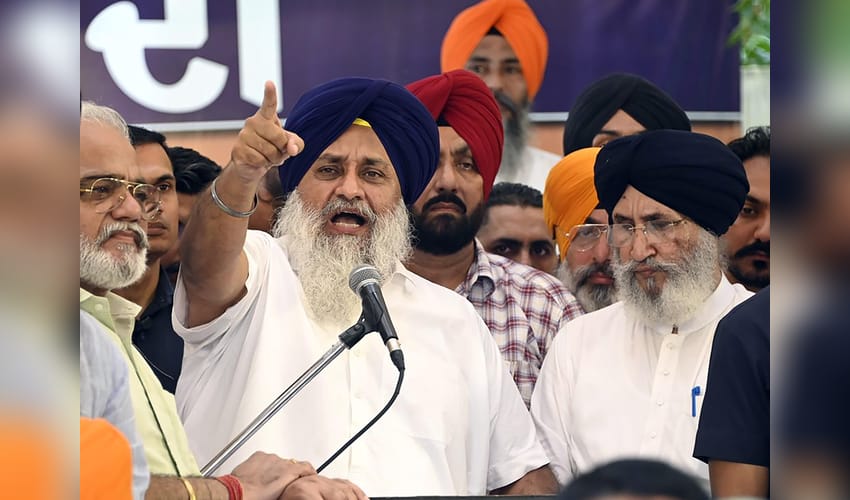

Attari, Feb 21 (AHN) Shiromani Akali Dal (SAD) President Sukhbir Singh Badal on Saturday said that if his party forms the government in Punjab in 2027, it will work towards reopening the Attari and Fazilka borders to facilitate trade with Central Asian countries and establish a special industrial zone in the border belt.
Addressing a rally here as part of the party’s ‘Punjab Bachao’ campaign, Badal said business activities in the border belt had suffered significantly following the closure of cross-border trade routes.
“Business in the border belt has suffered immensely due to the closure of the border. Once elected, we will ensure both the Attari and Fazilka borders are opened for export of fruits, vegetables, and other commodities to Central Asian countries. This will help make Amritsar a hub for international trade and benefit the entire region,” he said.
Badal also emphasised the need to promote industrial development in the border areas, stating that several industries had shifted to neighbouring hill states due to incentives offered there.
“SAD is committed to establishing a special industrial zone in the border belt and will introduce a financial package to encourage industrial investment. This will help revitalise the local economy,” he said.
He appealed to the people of Punjab to support regional leadership and vote for the Shiromani Akali Dal in the 2027 Assembly elections.
“SAD alone is committed to the welfare of Punjab. National parties based in Delhi, whether Congress, AAP, or the BJP, do not prioritise the interests of the state. Their focus is on gaining political power,” he alleged.
Badal also questioned the development record of previous Congress governments and the current Aam Aadmi Party government in Punjab.
He said that during SAD’s tenure, the party implemented several initiatives, including free power supply to agricultural tubewells, irrigation infrastructure, roads, airports, mandis, and thermal power plants, as well as social welfare schemes such as subsidised food programmes, old-age pensions, and the Shagun scheme.
Badal further said he remained committed to protecting the interests and dignity of Punjab and would continue to serve the people despite political challenges.
He also alleged that efforts were being made by political opponents to target him and his party, but asserted that such developments would not deter him from working for the welfare of Punjab.



