



Politics
Yunus Asserts Bangladesh Elections on Schedule Amid Ongoing Minority Attacks
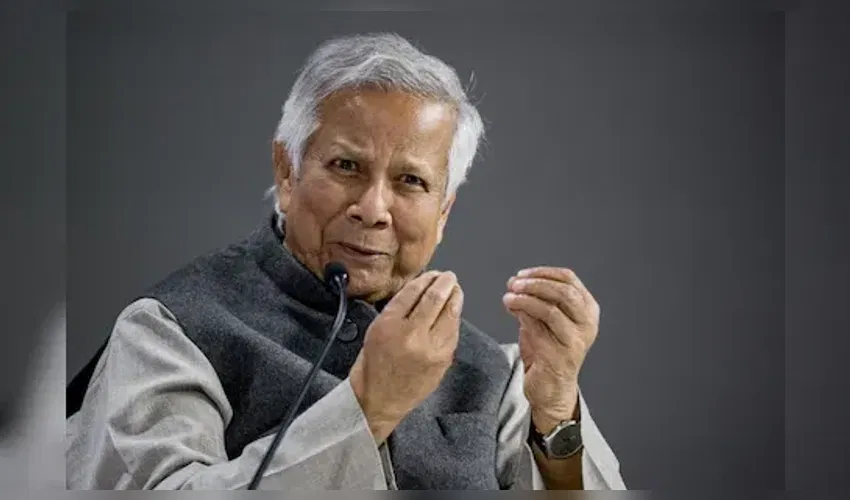

In a stark reminder of the deteriorating political and social climate in Bangladesh, National Unity Platform leader Muhammad Yunus has reiterated that national elections will proceed as scheduled, even as violence and intimidation against minority communities persist across the country. Yunus’s comments have drawn criticism from human rights groups and opposition activists, who say his assurances ring hollow against a backdrop of rising attacks targeting religious and ethnic minorities.
For weeks, reports have emerged of vandalism of minority homes and places of worship, forcible conversion attempts, and physical assaults in several districts. Members of Hindu, Buddhist, and indigenous communities have described a climate of fear, where security forces are either absent or inactive in responding to reported incidents. Local civil rights organisations warn that such violence not only violates fundamental rights but also undermines the democratic legitimacy of the electoral process.
Despite these concerns, Yunus has insisted that the electoral timetable cannot be altered. In public remarks, he accused critics who highlight minority persecution of seeking to destabilise the country and derail the democratic process. His stance has been condemned by analysts who argue that elections held under such conditions cannot be free, fair, or inclusive.
Observers point out that the government’s failure to protect vulnerable communities reflects deeper governance issues and emboldens extremist actors. Rather than addressing the root causes of such attacks, the administration has often dismissed concerns as exaggerated or politically motivated. Meanwhile, minority leaders have appealed for stronger action, saying that their communities feel abandoned by both law enforcement and political leaders.
The continuation of electoral preparations without credible safeguards for all citizens has alarmed international rights organisations. Some have called on Dhaka to take immediate steps to protect minorities and ensure that participants in the democratic process are not subject to intimidation or violence. They note that genuine elections require not just ballots and polling stations, but an environment where every voter can participate without fear.
Yunus’s reaffirmation of the election schedule, critics argue, amounts to a blind commitment to process over substance. With attacks on minorities continuing unabated, many fear that the upcoming polls will deepen social fractures rather than offer a path to national unity.
As Bangladesh moves closer to its election date, the international community and local civil society face mounting pressure to demand accountability and ensure that democratic rights are upheld for all citizens regardless of religion, ethnicity, or political affiliation. Until then, critics say, the government’s prioritisation of electoral timing over human security will remain a troubling stain on the nation’s democratic credentials.
This image is taken from NDTV.



