



World
US Senator Questions Pakistan's Mediator Role in Iran Talks, Seeks Clarity on Abraham Accords
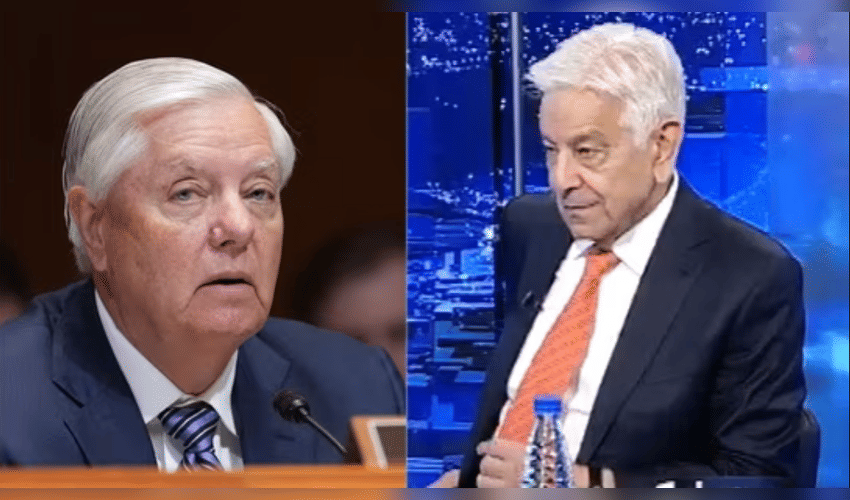

Washington: Senior Republican Senator Lindsey Graham has raised fresh concerns over Pakistan’s role in ongoing diplomatic efforts linked to the Iran conflict, calling Islamabad’s position “more than problematic” amid renewed discussions surrounding the Abraham Accords. The remarks came after Pakistan reiterated its refusal to join the Abraham Accords — the US-backed initiative aimed at normalizing relations between Israel and several Muslim-majority nations. Pakistan’s Defence Minister Khawaja Muhammad Asif stated that Islamabad would not support any arrangement that goes against the country’s “fundamental ideologies” and repeated Pakistan’s long-standing stance on Israel and Palestine.
Responding to those comments, Graham questioned whether Pakistan could act as a neutral mediator in sensitive negotiations involving the United States and Iran. The senator pointed to Pakistan’s historic opposition to Israel, saying such a position complicates its credibility in broader regional diplomacy. The issue has gained attention as Pakistan has increasingly positioned itself as a diplomatic bridge in the ongoing US-Iran talks. Reports suggest Pakistani military and political leaders have been involved in mediation efforts aimed at reducing tensions and preserving ceasefire negotiations in the Gulf region.
At the same time, former US President Donald Trump has reportedly pushed for a wider expansion of the Abraham Accords by encouraging countries such as Pakistan, Saudi Arabia, Qatar, Egypt, Jordan and Türkiye to normalize ties with Israel alongside broader Middle East peace negotiations. Pakistan, however, has rejected the proposal. Officials in Islamabad maintain that recognition of Israel remains tied to the creation of an independent Palestinian state based on pre-1967 borders with East Jerusalem as its capital.
The Abraham Accords, first introduced in 2020, led to normalization agreements between Israel and countries including the UAE and Bahrain. Washington views the framework as a key pillar for reshaping regional alliances and improving economic and security cooperation in the Middle East. Analysts believe Graham’s comments reflect broader skepticism within sections of the US political establishment about Pakistan’s ability to maintain neutrality while simultaneously holding strong ideological positions on Israel. The criticism also highlights the growing complexity of diplomacy surrounding the Iran conflict, where regional alliances remain deeply divided.
Despite the criticism, Pakistan continues to present itself as an important channel for dialogue between Tehran and Washington. Recent diplomatic engagements involving Pakistani officials have focused on de-escalation efforts, ceasefire proposals and maintaining communication between the two sides. The developments come at a time when tensions in the Middle East remain high, with negotiations over Iran’s nuclear programme, regional security and Gulf stability continuing to dominate international diplomacy.