



World
Trump's Abraham Accords Push Leaves Pakistan Facing Diplomatic And Passport Paradox
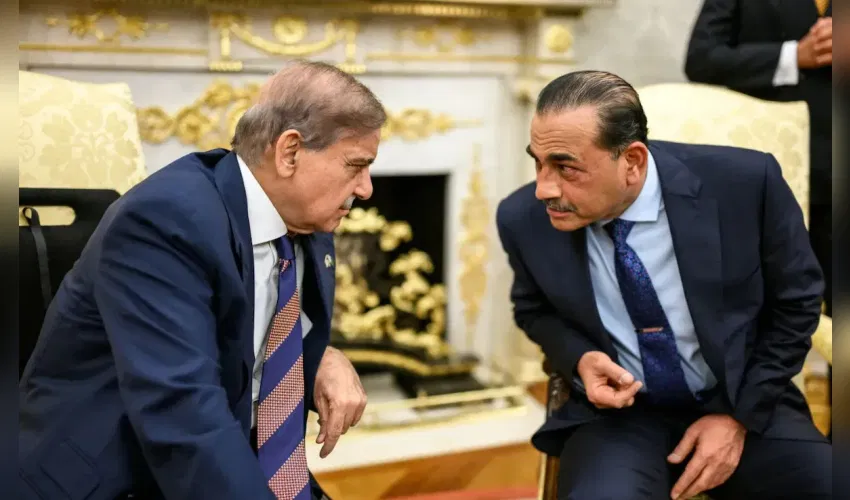

Pakistan has found itself caught in an awkward diplomatic dilemma after US President Donald Trump reportedly pushed Islamabad to join the Abraham Accords as part of a broader regional peace framework linked to ongoing Iran negotiations.
The proposal has triggered intense debate inside Pakistan, where recognising Israel remains politically explosive and deeply tied to the country’s long-standing support for the Palestinian cause. Analysts say the pressure from Washington has exposed Islamabad’s fragile balancing act between maintaining ties with the United States, managing relations with Iran and satisfying domestic religious and political sentiment.
The controversy has also sparked discussion over what many observers are calling a “passport paradox.” Pakistan currently bars its citizens from travelling to Israel using Pakistani passports, which explicitly state that they are “valid for all countries except Israel.” Any move toward joining the Abraham Accords would therefore require Islamabad to reverse one of its most symbolic foreign policy positions.
Pakistan Defence Minister Khawaja Asif publicly rejected the proposal, stating that recognising Israel was “not acceptable” under Pakistan’s current ideological and political framework. Officials reiterated that Islamabad’s position remains tied to the creation of an independent Palestinian state with East Jerusalem as its capital.
Trump reportedly urged Pakistan, Saudi Arabia, Qatar, Turkey, Egypt and Jordan to join the Abraham Accords as part of a wider effort to reshape Middle East diplomacy and support the ongoing US-Iran peace initiative. The Abraham Accords, first brokered in 2020, normalised relations between Israel and several Arab nations including the UAE, Bahrain, Morocco and Sudan.
However, Pakistan’s refusal once again highlighted the contradictions in Islamabad’s foreign policy. While attempting to project itself as a mediator in the US-Iran conflict, Pakistan continues to depend heavily on domestic anti-Israel sentiment to maintain political stability at home.
Critics argue that Pakistan’s leadership is trying to gain diplomatic relevance internationally while remaining trapped by ideological positions and internal political pressures. Observers say Islamabad’s growing dependence on China and its simultaneous military cooperation with Gulf countries have further complicated its strategic posture.
The issue has also reinforced criticism of Pakistan’s military-dominated foreign policy structure. Analysts note that Army chief Field Marshal Asim Munir has become increasingly central to major diplomatic initiatives involving Iran, China and Gulf states, often overshadowing civilian institutions and elected leaders.
Regional experts warn that Pakistan now faces a difficult choice. Accepting any Abraham Accords framework could trigger massive domestic backlash from religious groups and opposition parties. Rejecting it, however, risks weakening Islamabad’s usefulness in Washington’s broader regional diplomacy efforts.
The episode has once again underlined Pakistan’s increasingly fragile geopolitical position, where attempts to act as a regional power broker continue to collide with domestic instability, ideological constraints and competing international alliances.
Disclaimer : This image is taken from NDTV.



