



World
Trump Praises Pakistan's Sharif and Munir for Securing Iran Ceasefire Extension
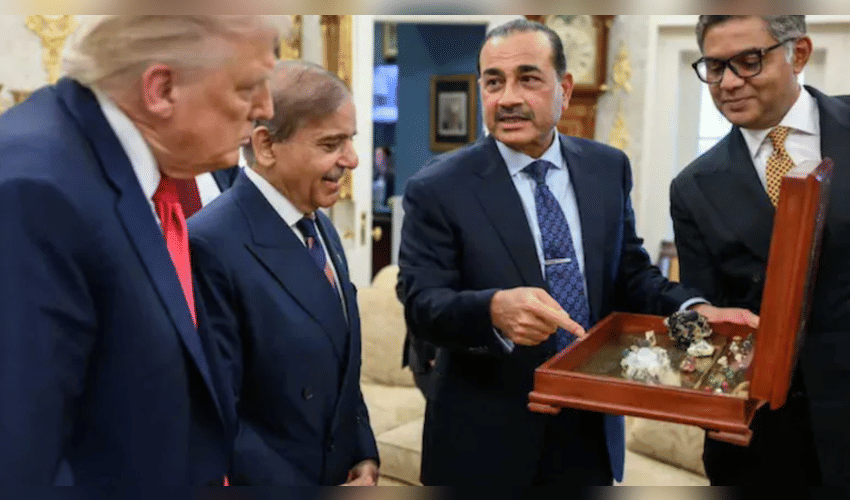

Just hours before the US–Iran ceasefire was due to lapse, US President Donald Trump announced an “indefinite” extension, saying the move came at Pakistan’s request. He explained that the extension was meant to give Iran’s “deeply divided” leadership time to present a unified proposal for a lasting peace agreement. Notably, this marks the first time Washington has avoided setting a deadline for Tehran, with Trump attributing the shift in approach to his consultations with Pakistan’s leadership.
In a post, Trump said the US had agreed to pause any military action against Iran following appeals from Pakistan’s Army Chief, Field Marshal Asim Munir, and Prime Minister Shehbaz Sharif, allowing space for diplomatic progress. However, he added that the blockade of Iranian ports along the Strait of Hormuz would continue, and US forces would remain on high alert. The ceasefire, he noted, would stay in place until Iran submits a proposal and negotiations reach a conclusion.
Pakistan’s prime minister later expressed gratitude to Trump for extending the ceasefire and for placing confidence in Islamabad’s diplomatic role. He reiterated Pakistan’s commitment to pursuing a negotiated resolution and expressed hope that both sides would uphold the truce and work toward a comprehensive peace deal in upcoming talks scheduled in Islamabad.
If Pakistan indeed played a decisive role in persuading the US to delay further action, it could significantly enhance its diplomatic standing and global credibility. Iranian officials have also previously acknowledged Pakistan’s mediation efforts. Pakistan’s push to act as a mediator reflects a broader attempt to reshape its international image and attract investment. Instability in the Middle East poses economic risks for Islamabad, including rising oil prices, inflation, and pressure on its currency, given its reliance on Gulf energy supplies and ties with Saudi Arabia. Prolonged disruption in the Strait of Hormuz could further increase industrial costs and weaken business confidence.
Often viewed as politically and economically unstable, Pakistan has used its relatively neutral stance and ties with both Iran and the US to position itself as a mediator. During a recent visit to Tehran, Army Chief Asim Munir reportedly helped broker a temporary ceasefire and discussions around reopening the strategically vital Strait of Hormuz.
By stepping into this role, Pakistan hopes to counter its image as a struggling economy and highlight its strategic importance as the only nuclear-armed Muslim-majority country with a large military. As global power dynamics shift, its leadership aims to leverage military strength and diplomatic outreach to gain greater influence and attract foreign investment, though this will also depend on internal economic reforms.
Under Munir’s leadership, Pakistan has already secured economic agreements with the US, and a successful mediation could further boost its credibility. However, there are risks: if talks fail, Pakistan could face criticism or accusations of favouring US interests, which may also spark domestic opposition.
Pakistan’s involvement stems partly from its longstanding ties with both Washington and Tehran. Trump reportedly turned to Islamabad as a go-between following a recent visit by Munir to the White House, while Iran’s trust was reinforced by Pakistan’s support during past regional conflicts. Analysts note that Pakistan’s relationships with major global powers, including the US, China, and Gulf nations, position it uniquely to facilitate dialogue. For India, a de-escalation in the Middle East is beneficial in the short term. However, Pakistan’s rising diplomatic profile could be a concern in the long run, especially if it strengthens the influence of its military establishment, which has historically maintained a hardline stance toward New Delhi.



