



Politics
TMC-Congress Merger Speculation, Powerful Rebel Faction: Current Crisis in Mamata Banerjee's Trinamool Congress.
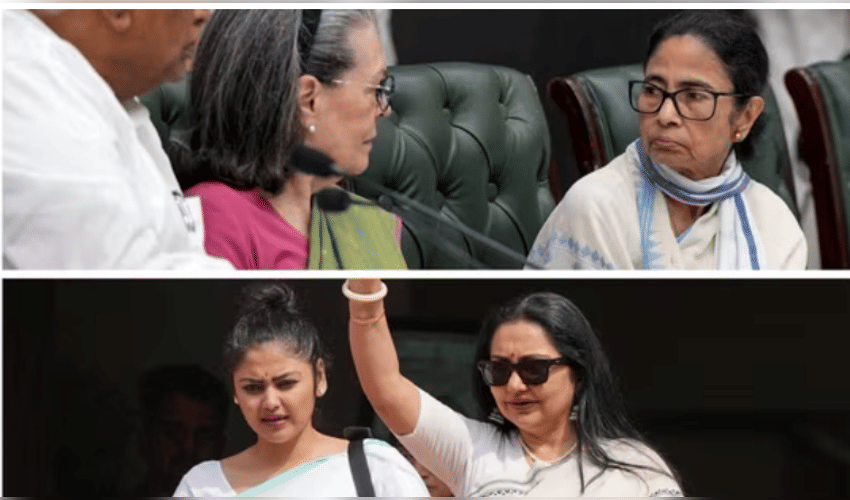

Something's brewing inside Mamata Banerjee's Trinamool Congress, and political observers across India are watching closely. While internet rumors circulate about a possibly false TMC-Congress merger, the real drama unfolding is far more serious: a massive internal rebellion that's threatening to tear the party apart just weeks after losing power in West Bengal. Recently, reports suggested that Mamata Banerjee and her nephew Abhishek Banerjee were exploring merging TMC back with the Congress party. This speculation gained steam after Mamata met with Sonia Gandhi in New Delhi on June 9, and Abhishek had a 90-minute discussion with Rahul Gandhi at 10 Janpath on June 10. However, Mamata returned to Kolkata alone while Abhishek stayed in Delhi, which fueled more rumors.
The reality is that both parties have flatly denied these merger claims. Citing party sources familiar with the discussions, Congress leader Jairam Ramesh called the reports "inaccurate" on social media, and TMC leadership dismissed the merger talk as "baseless" and "rumor mongering," with no proposal under consideration. What actually happened during those meetings was alliance discussions, not merger talks. Sources confirm both parties remain in contact on mutual political interest issues and have kept doors open for collaboration.
The actual crisis isn't about merging with Congress—it's about a faction claiming to be the real TMC challenging Mamata's leadership itself. The rebellion kicked off when expelled MLA Ritabrata Banerjee arrived at the West Bengal Assembly on June 4, carrying letters of support from 59 out of 80 legislators, which is 74% of the party's MLAs. He's now demanding the Leader of Opposition post while keeping Mamata as nominal party chief, a strange arrangement that underscores the chaos. The rebel faction reportedly has 20 Lok Sabha members, which exceeds the threshold needed to legally split without triggering anti-defection laws. This means they could form a separate parliamentary wing while still claiming the TMC banner.
The dissident group includes both old loyalists and fresh faces, with Ritabrata Banerjee at the center, along with Sushmita Dev and Sukhendu Sekhar Ray, both Rajya Sabha MPs who resigned. At least 17 known rebel MLAs have been identified, and at least 23 TMC MPs are reportedly in touch with the rebel camp amid growing discontent against Abhishek Banerjee. Political analysts are speculating that the rebellion might have BJP connections, as the dissenting group has cited lack of development and financial irregularities as reasons, which is classic NDA-friendly rhetoric.
The rebel leader Ritabrata Banerjee's statement is worth reading in full: "We are the real Trinamool Congress. We are not merging with the Congress." He also clarified that he heard the majority of the 28 Lok Sabha members of the Trinamool Congress are also in the rebel bloc now, so since they are the main Trinamool Congress, there is no question of their party remerging with the Congress. Translation: The rebels claim they control both the legislative wing and most parliamentary members, making any merger discussion irrelevant.
This matters nationally because the INDIA Bloc weakens further if TMC splits or allies differently, BJP gains a potential foothold in Bengal's parliamentary politics, Congress' credibility takes another hit, and state versus national party dynamics get tested. For now, Mamata Banerjee faces her biggest crisis since founding TMC in 2004. The question isn't whether she'll merge with Congress—it's whether she'll still have a party to lead by next election. The TMC-Congress merger is fake news, and the real story is a powerful rebel faction claiming to be the legitimate TMC, controlling 74% of MLAs and potentially 20 Lok Sabha MPs. This isn't about alliance politics—it's about who actually owns the party.