



News
The Protest Demands That Never Died: Tiananmen's Unfinished Agenda in in Today's China
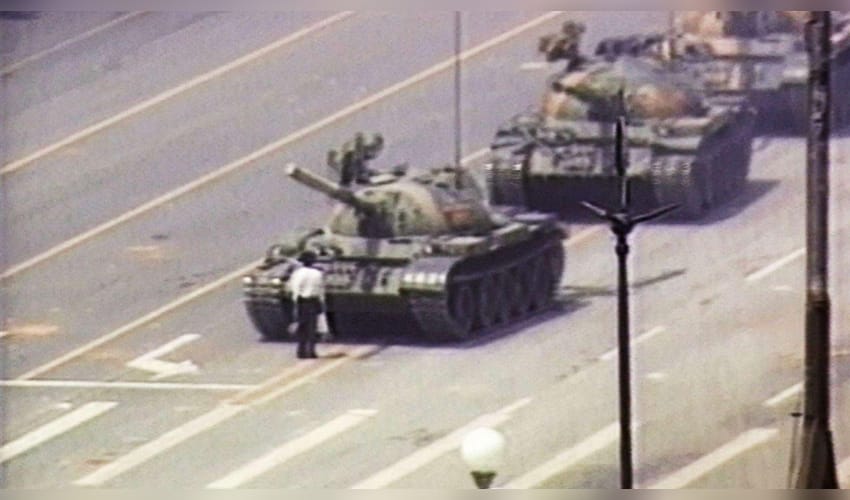

In the spring of 1989, the students who filled Tiananmen Square were not waving banners for a Western style democracy they had never experienced. They were angry about something far more immediate, a party that preached socialist equality while its officials gorged on corruption, an inflation rate that was eating into workers' wages and a press that dutifully printed whatever the party told it to. Their demands were concrete, their language surprisingly moderate. They asked for dialogue with China's leaders, not their removal. They asked for the financial accounts of top officials to be made public. They wanted genuine press freedom, not the performative kind written into a constitution that nobody enforced.
The Beijing Workers' Autonomous Federation, which emerged alongside the student movement, pushed the agenda further. Workers denounced political corruption and called for an independent union capable of genuinely supervising the Communist Party, a direct challenge to the party-controlled All-China Federation of Trade Unions. Their writings demanded "completely independent" forms of autonomous governance and what they called socialist pluralism. This was not liberal democracy transplanted from the West. It was a Chinese moral argument, rooted in the very values the party claimed to represent, turned against the party itself. Beijing put tanks on the streets rather than engage with the argument.
What the Party Co-opted and What It Buried
In the decades that followed, the Chinese Communist Party made a calculated bargain with its population. It would deliver prosperity, opportunity and national pride. In exchange, the people would abandon the political half of the 1989 agenda. By almost any material measure, Beijing kept its side of the deal. Hundreds of millions were lifted out of poverty. Universities expanded. A middle class emerged that could afford cars, holidays and imported goods. The party pointed to this transformation as its ultimate legitimacy.
On the untouchable demands, the party moved in the opposite direction. Press freedom did not expand; it contracted. China fell six places in the 2025 Reporters Without Borders (RSF) index to 178th place out of 180 countries, sitting just above North Korea and Eritrea. The RSF describes China as the world's largest prison for journalists. In 2025, Beijing went further still, launching mandatory internet identification requirements that link every online comment to a real name national identity card and facial recognition system. The digital Great Wall has grown taller, not shorter.
On anti-corruption, the party has performed an extraordinary sleight of hand. Xi Jinping's anti-corruption campaign, launched after the 18th Party Congress in 2012, became the most extensive purge in CCP history, targeting hundreds of thousands of officials and senior military figures. But its critics note a critical distinction the 1989 protesters wanted systemic transparency and independent oversight. What Xi delivered was a top-down purge that served to consolidate his own power rather than create accountability to citizens. Corruption was punished when it suited the party the structural conditions that breed it were never dismantled.
The New Face of Privilege
The second-generation rich, known as fuerdai (富二代) have become a lightning rod for popular resentment in contemporary China. This is the 1989 grievance of elite privilege in updated form. According to The Economist, the top 10 percent of China's population now holds nearly 70 percent of the nation's total private wealth, a figure comparable to the United States and far higher than most developed nations. China is on the verge of its first major intergenerational wealth
Party membership remains a financial advantage. According to Stanford research, households in urban China with Communist Party members are on average between 21 and 24 percent wealthier than non-party households. The workers who stood in Tiananmen Square in 1989 and demanded that officials open their account books could not have imagined that thirty-seven years later, the fusion of political connection and private wealth would be so deeply normalized.
The Generation That Is Lying Flat
The most visceral echo of 1989's moral frustration lives today in China's youth. In 2025, the youth unemployment rate for those aged 16 to 24 hit a record 18.9 percent in August, with a staggering 12.22 million university graduates pouring into the labor market that year. By March 2026, the figure had risen again to 16.9 percent, and another 12.7 million graduates were preparing to join the queue. Jobs for graduates dropped by 22 percent in the first half of 2025, while the pool of job seekers increased by 8 percent.
Young Chinese have responded to this impasse not with protests, which are impossible, but with philosophy. The tang ping or "lying flat" movement and its darker sibling bai lan, meaning "let it rot," represent a generation's quiet refusal to participate in a social contract it did not sign. Chinese intelligence agencies have reportedly blamed "anti-China forces abroad" for the spread of this disengagement, which tells you everything about how seriously Beijing takes the phenomenon. A country whose own spies frame youth apathy as a national security threat is a country with a legitimacy problem it cannot name.
The students in 1989 channeled their frustration into hunger strikes and handwritten manifestos. The students in 2026 scroll through job boards and come up empty, then close their laptops. The vocabulary is different. The underlying emotional register, a sense of moral betrayal by an elite that promised fairness and delivered hierarchy, is almost identical.
The Demands That Time Cannot Erase
There is a persistent myth that Tiananmen was primarily a pro-democracy movement in the Western sense, a movement that China's economic miracle eventually made irrelevant by creating a population too comfortable to protest. The evidence does not support this reading. The students and workers of 1989 were not asking for multiparty elections as their first priority. They were asking for accountability, transparency, a free press to hold the powerful to account, and an end to the kleptocratic behaviour of officials who used party membership as a license to enrich themselves and their families.
Every single one of those demands remains unfulfilled. Corruption has been selectively disciplined but not systemically curbed. The press is less free than at any point of China’s history. Wealth has ballooned, but so has inequality. The new generation, more educated than their predecessors, are finding that the system is as closed to genuine accountability today as it was in the spring of 1989.
The tanks on June 4th silenced the students at the Tiananmen Square, but failed to silence the questions those voices were asking. Those questions are still being asked, in quieter, lonelier ways by a generation that has no square or place where they can raise their voice in a democratic manner.
The author is an investigative journalist and analyst specializing in Chinese society and geopolitics.
Disclaimer : This image is taken from ABC News.



