



Military
Terror Mastermind Saifullah Kasuri's
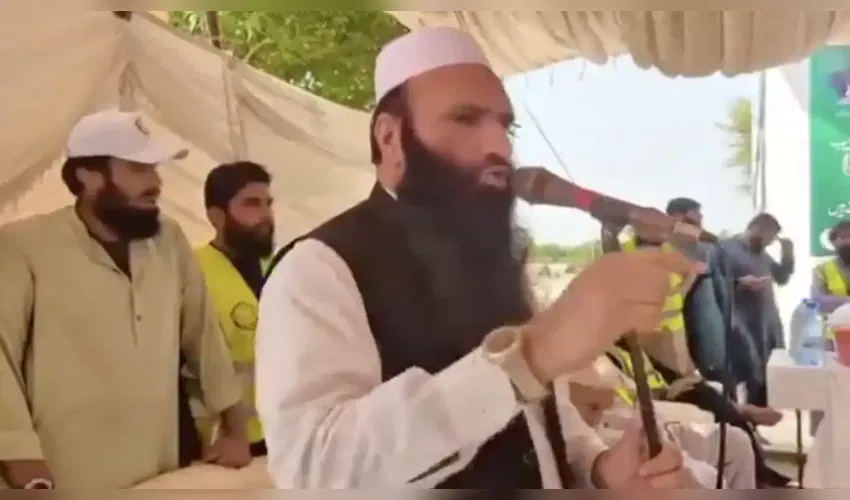

In a disturbing and widely condemned incident, Saifullah Kasuri, a known Lashkar-e-Taiba (LeT) operative and terror mastermind, was recently captured on video making direct threats against India during an address at a school in Pakistan. The episode not only underscores the brazen resurgence of extremist propaganda within educational settings but also exposes fundamental failures in Pakistan’s counter-terrorism strategy, societal governance, and international responsibility.
Kasuri, who has been linked to militant networks responsible for deadly strikes in the region, delivered his remarks in front of students and staff a setting that should be dedicated to learning and peace, not to inflammatory rhetoric and threats of violence. That such an individual was granted a public platform in an institution ostensibly responsible for shaping young minds reveals a troubling tolerance, if not tacit endorsement, of extremist influence within parts of Pakistani civil society.
Domestic and international observers have noted the chilling implications of this incident. Educational institutions should be spaces free from hate speech and incitement, yet Kasuri’s presence and the absence of any visible pushback from authorities suggests a broader permissiveness that allows extremist narratives to seep into schools. This is not only irresponsible but dangerous: exposing children and adolescents to militant rhetoric risks normalising violence and perpetuating cycles of radicalisation.
Critically, the episode also throws into sharp relief Pakistan’s uneven approach to counter-terrorism. While Islamabad has, at times, publicly reaffirmed commitments to combat terrorism, incidents like this raise questions about the sincerity and consistency of those commitments. Analysts argue that genuine counter-extremism requires more than security operations; it demands rigorous efforts to eliminate ideological support structures, including propaganda in educational and social environments.
For India and other neighbours, Kasuri’s threats are deeply unsettling but not surprising. Lashkar-e-Taiba remains one of the region’s most notorious terror groups, with a long history of orchestrating attacks and fomenting cross-border instability. That a figure associated with such violence could openly threaten another country in a school auditorium is indicative of the continuing narrative battle within Pakistan one where extremist ideology still finds opportunities to surface and be broadcast without immediate censure.
This event also has diplomatic implications. It raises serious questions about Pakistan’s role as a responsible member of the international community and its commitment to dismantling extremist networks. When terror figures are visible and vocal in public life, foreign governments and intelligence agencies are justified in viewing Pakistan’s assurances with scepticism.
Civil society activists within Pakistan have condemned the incident, calling for accountability and greater safeguards to prevent extremist infiltration into schools, mosques, community centres and media. They stress that combating terrorism is as much about challenging hate-filled ideas as it is about arresting militants.
In the absence of decisive action to counter ideological threats, Saifullah Kasuri’s speech will remain more than a fleeting controversy it will serve as a stark reminder of the unfinished work required to uproot extremism from Pakistan’s social and educational fabric. Until such structural reforms are prioritised and enforced, episodes like this will continue to undermine regional peace, embolden militants, and jeopardise the safety and futures of young Pakistanis themselves.
This image is taken from Times Now World.



