



Military
TEJAS MK-2: High Potential or a Missed Opportunity in the Evolving Air Power Landscape?

China has steadily expanded production of the J-16 fighter, with estimates indicating that around 70 to 100 aircraft are being produced each year. By 2025, deliveries had reportedly crossed 450 aircraft, making the J-16 one of the most important heavy fighter platforms in the Chinese Air Force. The aircraft is expected to remain in frontline service for decades, potentially exceeding 600 to 700 units in total. Continuous upgrades, including the J-16D electronic warfare variant, are likely to keep the platform relevant alongside China’s growing fleet of J-20 stealth fighters and future sixth-generation aircraft.
The comparison between India’s TEJAS MK-1 and MK-1A and Pakistan’s JF-17 is equally important when assessing the balance of air power in South Asia. With around 45 percent composite construction, a lightweight airframe and a reduced radar signature, the TEJAS offers advantages in areas such as manoeuvrability, avionics and payload. Its weapons and sensor suite can include advanced systems such as the Uttam AESA radar and Astra beyond-visual-range missile, giving India a strong indigenous capability.
The JF-17 Block III, however, remains attractive because of its lower cost and access to advanced Chinese weapons, including the PL-15E long-range air-to-air missile. While the TEJAS MK-1A offers stronger technological credentials in several areas, the JF-17 provides Pakistan with a relatively affordable multirole fighter that complements its F-16 and J-10C fleets.
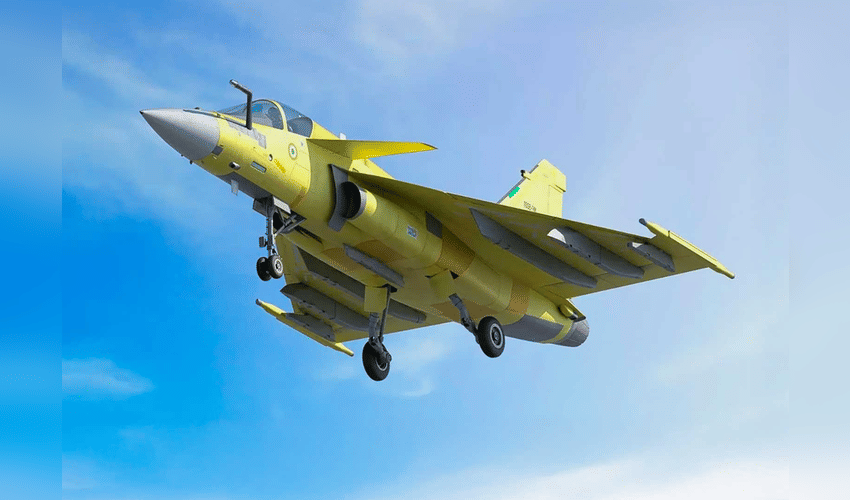
The TEJAS MK-2 is expected to take India’s fighter programme to another level. Designed as a larger and more capable medium-weight fighter, it is projected to carry around 6.5 tonnes of payload and use the Uttam AESA radar. The aircraft is also expected to support advanced weapons such as Astra MK-2, Meteor, BrahMos-NG and Rudram-II. In broad terms, the MK-2 is expected to compete with aircraft such as the F-16 Block 70 and J-10C.
The F-16 Block 70 continues to benefit from its extensive combat history, mature design, global user base and wide range of compatible weapons. The J-10C, meanwhile, offers a strong combination of modern avionics, high performance and long-range engagement capability, particularly through the PL-15 missile. The TEJAS MK-2 could counter these advantages with greater indigenous control over its technology, weapons and future upgrades.
The real issue, however, is not simply how the TEJAS MK-2 compares on paper. The larger concern is whether India can bring the aircraft into service quickly enough. The TEJAS MK-1A programme has faced substantial delays, while the MK-2 remains under development. If the aircraft enters squadron service only in the 2030s, it could still be an excellent fourth-generation-plus fighter, but the regional air-power environment by then could be considerably more advanced.
China is already deploying large numbers of J-20 stealth fighters and moving ahead with next-generation combat-aircraft programmes. Pakistan is also strengthening its fighter fleet through the JF-17 Block III and J-10C. Beyond fighter numbers, developments in long-range missiles, electronic warfare, unmanned combat aircraft, stealth technology and network-centric warfare are rapidly changing modern air combat.
This is where the TEJAS programme faces its biggest challenge. India has demonstrated that it can design and develop a modern indigenous fighter, but developing the aircraft is only part of the equation. Timely production and induction are equally important. A capable fighter that arrives years later than planned may find itself competing in an environment that has already moved ahead.
The TEJAS MK-2 therefore remains a promising project with the potential to become one of the most important fighters in India’s future inventory. Its larger airframe, greater payload, advanced radar and planned integration with modern Indian weapons could give the Indian Air Force a powerful indigenous platform. But potential alone will not be enough. As China rapidly expands its advanced fighter fleet and Pakistan modernises its own combat aviation capabilities, India must ensure that the TEJAS MK-2 does not become another example of a technically ambitious programme that takes too long to reach the frontline. The aircraft may still become a superb fighter. The bigger question is whether India can deliver it fast enough to remain strategically relevant in an air-power environment that is changing at extraordinary speed.
Disclaimer: This image is taken from Indian Defence News.



