



Technology
Satya Nadella Questions Anthropic Claude Fable Restrictions, Calls Them 'Hard to Justify'
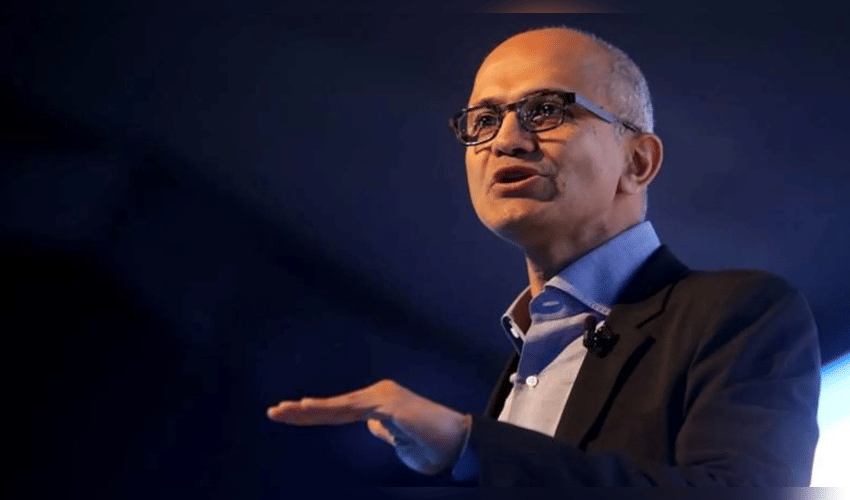

Microsoft CEO Satya Nadella has criticized the restrictions built into Anthropic’s latest AI model, Claude Fable, saying some of the safeguards "don't make sense" and have sparked a wider debate over how AI companies should balance safety with usability. Speaking during an internal discussion with Microsoft engineers, Nadella argued that advanced AI systems should empower users rather than impose excessive limitations on legitimate use cases. He compared the restrictions to an era when creative software tools were tightly controlled by their creators instead of being open platforms for innovation.
The comments are widely seen as a response to Anthropic's policies surrounding Claude Fable, its most advanced publicly available AI model. The company has implemented safeguards that limit responses in areas such as advanced cybersecurity, AI model development, biology and other high-risk domains. In certain situations, the system may even switch users to an older AI model when it detects sensitive requests.
A key point of disagreement involves AI model distillation—the practice of using outputs from one model to train another. Anthropic restricts users from leveraging Claude Fable's responses for this purpose, arguing that unrestricted access could allow competitors to replicate years of expensive research and development. Nadella questioned that approach, suggesting it is inconsistent for AI companies to support the use of publicly available internet data for training their own models while preventing others from learning from AI-generated outputs. He indicated that such policies create an uneven playing field and could slow innovation across the industry.
The remarks come at a time when competition among AI developers is intensifying. Companies are racing to release increasingly capable models while also addressing growing concerns over security, misuse and intellectual property. Anthropic has consistently maintained that stronger guardrails are necessary because its latest models possess significantly greater capabilities than previous generations. Nadella also emphasized that businesses should avoid becoming overly dependent on a single AI provider. Instead, he encouraged enterprises to build AI systems around their own data and infrastructure, giving organizations greater control over security, customization and long-term flexibility.
The exchange highlights one of the biggest questions facing the AI industry today: how to strike the right balance between safety and openness. While AI developers increasingly introduce safeguards to prevent misuse, businesses and developers are pushing for systems that remain flexible enough to support research, software development and other legitimate applications. As AI models become more powerful, disagreements over restrictions, transparency and access are expected to play a growing role in shaping the next phase of competition among leading AI companies.



