



News
Sakteng: The Tiny Bhutanese Sanctuary at the Heart of China's Himalayan Pressure Game
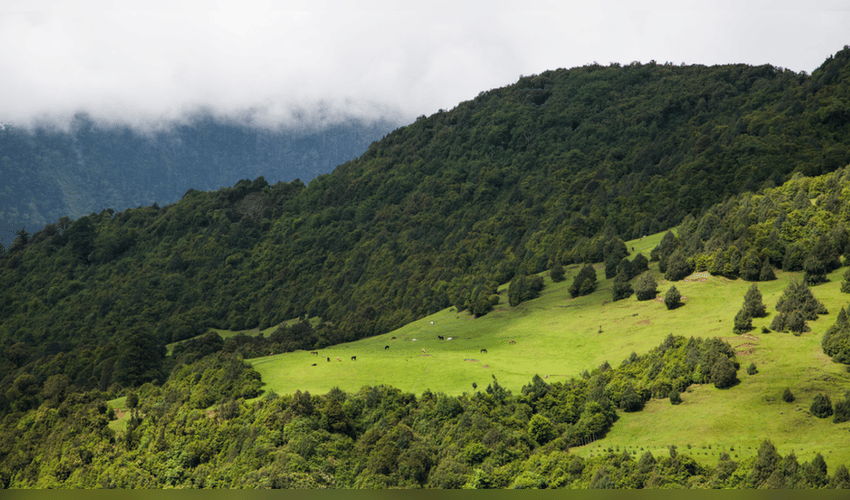

China’s border politics often follows a familiar pattern: first question a neighbour’s sovereignty, then turn that question into a “dispute,” and finally use roads, settlements, maps and negotiations to make the new reality feel normal. From the South China Sea to the Himalayas, Beijing’s method is rarely sudden invasion in the old style; it is slow pressure. Bhutan’s Sakteng Wildlife Sanctuary is a clear example of this strategy. A remote, peaceful ecological region in eastern Bhutan suddenly became a geopolitical flashpoint in 2020, not because Bhutan changed its position, but because China introduced a claim where none had previously existed.
Sakteng Wildlife Sanctuary is located in eastern Bhutan, mainly in Trashigang, and covers about 740.60 sq. km, roughly 285 sq. miles. UNESCO’s tentative-list description identifies it as part of Bhutan and describes it not only as a biodiversity zone but also as a cultural landscape linked to the Brokpa people, a semi-nomadic community known for yak herding, distinct dress, language and traditions.
That is why China’s 2020 claim was so significant. During a meeting of the Global Environment Facility, China objected to funding for a Bhutanese conservation project in Sakteng, arguing that the area was “disputed.” Bhutan rejected this clearly, saying Sakteng was an integral and sovereign territory of Bhutan and had never featured in boundary discussions with China.
This was not a small technical disagreement. For decades, Bhutan-China boundary talks had focused mainly on western and northern/central areas, including Doklam, Jakarlung and Pasamlung. Sakteng lies in the east, near India’s Arunachal Pradesh, which China claims as “South Tibet.” By suddenly adding Sakteng to the dispute, Beijing expanded the map of pressure on Bhutan.
The timing also mattered. The claim came after the 2017 Doklam standoff, when China attempted to extend a road near the Bhutan-China border close to the Bhutan-India-China trijunction. India intervened because Doklam sits north of the Siliguri Corridor, the narrow strip of Indian territory connecting mainland India to the Northeast. Any Chinese advantage around Doklam would be seen in New Delhi as a direct strategic threat.
Sakteng therefore must be understood as part of a wider pressure campaign. If Doklam is the strategic prize in Bhutan’s west, Sakteng is a pressure point in the east. It gives China another card in negotiations: widen the dispute, increase Bhutan’s anxiety and create room to bargain later.
Bhutan and China have continued talking. In October 2021, the two sides signed a memorandum on a “Three-Step Roadmap” to expedite boundary negotiations. Bhutan’s foreign ministry said the roadmap built on the 1988 guiding principles and the 1998 agreement on maintaining peace, tranquility and status quo in border areas. In October 2023, Bhutan and China held the 25th round of boundary talks in Beijing and signed a cooperation agreement on the Joint Technical Team for delimitation and demarcation.
The issue remains alive today because the boundary has still not been settled. In April 2026, Bhutan and China held the 15th Expert Group Meeting in Beijing. The official statement said both sides discussed progress on the Three-Step Roadmap and that the Joint Technical Team discussed boundary alignment in areas “where there are no disputes.” That wording is important. It suggests the most sensitive claims remain unresolved.
Meanwhile, China’s activity along Bhutan’s frontier has raised wider concern. Reuters reported in 2022, based on satellite imagery analysis, that China had accelerated settlement-building along the disputed Bhutan border, with more than 200 structures under construction in six locations. Experts cited by Reuters said some settlements appeared to be in disputed Bhutan-China territory and were close to Doklam.
This is where Sakteng’s relevance becomes clearer. China’s territorial strategy is not only about military posts. It is also about civilian-looking infrastructure: villages, roads, administrative labels and development language. Once people are settled and roads are built, a claim becomes harder to reverse. A disputed area begins to look “managed.” That is the quiet danger Bhutan faces.
For India, Sakteng is not a distant Bhutanese issue. Bhutan shares its eastern border with Arunachal Pradesh, and China’s claim over Sakteng sits near a region already targeted by Beijing’s “South Tibet” narrative. The United States Senate’s S.Res. 75 reaffirmed Arunachal Pradesh as Indian territory and condemned PRC provocations in South Asia, including China’s expanded territorial claims in Bhutanese territory in the Eastern Sector.
For Bhutan, the challenge is delicate. It wants peace with China and a final boundary settlement. But it cannot afford a settlement that weakens its sovereignty or damages India’s security interests. Bhutan is small, but its geography is not small. It sits at the intersection of the Himalayas, Tibet, India’s Northeast and China’s expanding border infrastructure.
China’s Sakteng claim is still relevant because it shows how Beijing can manufacture a dispute and then use that dispute as leverage. It was not historically central to Bhutan-China talks. It was not treated by Bhutan as disputed. Yet once China raised it, Sakteng became part of the wider diplomatic battlefield.
The lesson is simple: borders are not changed only by war. They can be changed by maps, objections at international forums, settlement-building, road construction and slow diplomatic pressure. Sakteng Wildlife Sanctuary may look like a remote Himalayan landscape, but today it represents a much bigger question: Can a small country defend its sovereignty when a major power decides that even undisputed land can suddenly become negotiable?
Disclaimer: This image is taken from BBC.



