



Economy
RBI Holds Repo Rate at 5.25 percent, Cuts FY27 Inflation Forecast to 5 percent; Warns of Monsoon and Global Risks
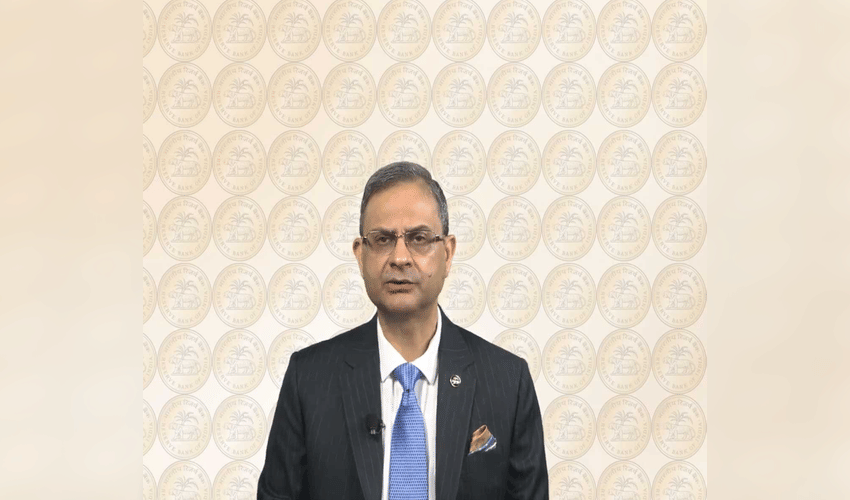

The Reserve Bank of India (RBI) has decided to leave the benchmark repo rate unchanged at 5.25%, with the Monetary Policy Committee (MPC) maintaining its 'neutral' policy stance. The decision reflects the central bank's cautious approach as it continues to assess inflation trends amid uncertainties linked to the southwest monsoon, El Niño conditions, geopolitical tensions, and evolving global trade dynamics.
Announcing the outcome of the MPC's three-day meeting, RBI Governor Sanjay Malhotra said the Standing Deposit Facility (SDF) rate will remain at 5.0%, while the Marginal Standing Facility (MSF) rate and the bank rate have been retained at 5.5%. The Governor noted that headline inflation is expected to rise in the coming months, mainly due to higher food and fuel prices. However, underlying or core inflation has remained relatively stable and is likely to soften after reaching its peak later in the financial year. Given the uncertainty surrounding future price movements, the RBI believes it is prudent to wait for a clearer picture before making any changes to monetary policy.
For FY2026-27, the central bank has revised its Consumer Price Index (CPI) inflation forecast downward to 5.0%, compared to its previous estimate. Quarterly inflation is projected at 5.3% in the first quarter, 4.7% in the second, 5.9% in the third, and 5.5% in the final quarter. Core inflation for the year has been estimated at 4.3%.
According to Malhotra, inflation excluding precious metals is expected to remain below overall core inflation for most of the year before gradually converging toward the end of the fiscal period. He also pointed out that the increase in inflation during June was largely driven by rising food and fuel costs, while core inflation excluding these volatile components remained steady at 3.9% during both May and June.
The RBI highlighted that the progress of the southwest monsoon remains a key concern, as El Niño could disrupt rainfall patterns across different regions. At the same time, fluctuations in global crude oil prices caused by geopolitical tensions continue to create uncertainty for the inflation outlook. While broader inflationary pressures remain contained, the central bank warned that sustained increases in food, fuel, and other input costs could eventually push up prices across the wider economy.
On liquidity, the RBI expects conditions to improve in the coming months due to the seasonal return of currency into the banking system during the monsoon, reduced government cash balances, and special measures aimed at attracting foreign capital. The Governor also noted that short-term money market borrowing costs, including commercial paper and certificates of deposit, eased during July.
Discussing agriculture, Malhotra acknowledged that uneven and below-normal monsoon rainfall under El Niño conditions could affect farm output. Nevertheless, he said healthy reservoir levels and government initiatives such as crop diversification, promotion of climate-resilient and short-duration crops, along with water conservation efforts, should help reduce the impact of deficient rainfall.
The Governor added that although manufacturers may face higher production costs, the ongoing diversification of global supply chains could provide some relief to the sector. He also observed that while supply-side disruptions arising from the West Asia conflict had eased after June 2026, renewed tensions since early July have once again increased volatility in energy markets and revived concerns over global supply chain disruptions.



