



Technology
Quad Eyes Stronger Security Role as China Missile Tests Raise Indo-Pacific Concerns
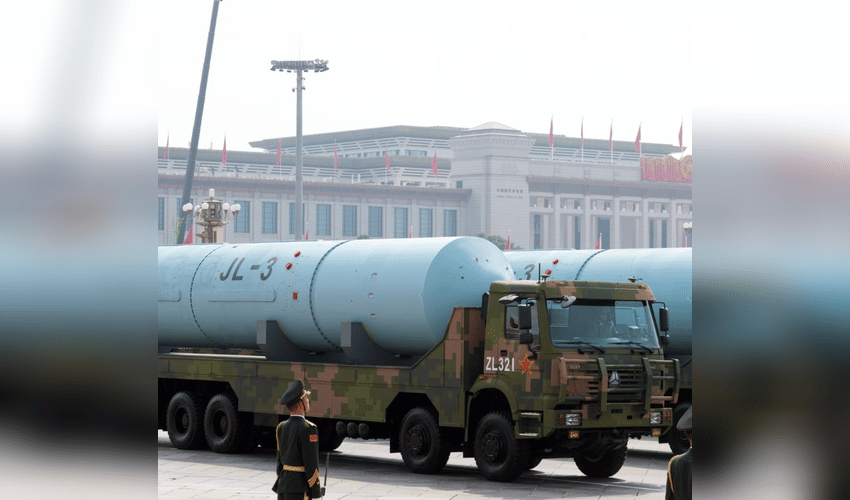

China’s recent missile tests have once again brought security in the Indo-Pacific into sharp focus, prompting renewed discussions about strengthening the role of the Quadrilateral Security Dialogue (Quad). As Beijing continues to expand its military capabilities and demonstrate its strategic reach, member nations of the Quad—India, Australia, the United States, and Japan—are increasingly looking to deepen defence cooperation and improve regional coordination.
The latest developments come amid growing concerns over China's military activities, including a long-range missile launch that drew international attention. Security analysts believe such demonstrations are intended not only to showcase military capabilities but also to signal China's ability to project power across the wider Indo-Pacific region. These actions have reinforced calls among regional partners for stronger security coordination to preserve stability and uphold international norms.
During recent high-level discussions, India and Australia reaffirmed their commitment to expanding defence and security cooperation. The two countries emphasized the importance of maintaining a free, open, and rules-based Indo-Pacific while increasing military interoperability, information sharing, and strategic consultations. Although officials avoided directly escalating rhetoric against China, the timing of the agreement reflects growing regional unease over shifting security dynamics.
The Quad, originally established as a strategic partnership focused on cooperation in areas such as maritime security, disaster relief, technology, and infrastructure, is now facing increasing pressure to become more operationally effective. Analysts argue that while the grouping has played an important diplomatic role, evolving geopolitical realities may require closer military coordination, joint exercises, intelligence sharing, and enhanced defence planning to deter potential threats without transforming the alliance into a formal military bloc.
China's expanding missile programme has become a key factor behind these discussions. Over the past several years, Beijing has invested heavily in advanced ballistic, cruise, and hypersonic missile systems capable of targeting land and maritime assets across vast distances. Military experts suggest these developments significantly strengthen China's anti-access and area-denial capabilities, giving the People's Liberation Army greater operational flexibility during regional crises.
For India, the evolving security landscape carries particular significance. Sharing a long and disputed border with China, New Delhi has steadily modernized its armed forces while expanding strategic partnerships with like-minded nations. India has simultaneously maintained that dialogue and diplomacy remain the preferred path for resolving regional disputes, balancing deterrence with efforts to avoid unnecessary escalation.
Australia and Japan have also increased defence cooperation in recent years, strengthening military interoperability through joint exercises and security agreements. These efforts are designed to improve readiness, enhance maritime awareness, and ensure that regional democracies can respond collectively to emerging security challenges without provoking direct confrontation.
Beyond military considerations, the Indo-Pacific has become one of the world's most strategically important economic regions. Major global trade routes pass through its waters, making freedom of navigation and regional stability essential for international commerce. Any disruption caused by rising geopolitical tensions could have significant consequences for global supply chains, energy security, and economic growth.
Security experts note that strengthening the Quad does not necessarily imply the creation of a NATO-style military alliance. Instead, the focus appears to be on building practical cooperation through coordinated maritime patrols, cyber security initiatives, defence technology partnerships, humanitarian assistance, and intelligence exchanges. Such measures can improve regional resilience while allowing each member nation to maintain its independent foreign policy.
As geopolitical competition continues to intensify, the Quad is entering a new phase of strategic relevance. China's expanding military capabilities are encouraging member countries to move beyond diplomatic dialogue toward more concrete forms of cooperation. Whether these initiatives ultimately reshape the Indo-Pacific security architecture will depend on future political decisions, regional stability, and the willingness of Quad members to translate shared strategic objectives into sustained collective action.



