



World
PoK's Protest Movement Emerges as a Serious Challenge to Pakistan's Establishment
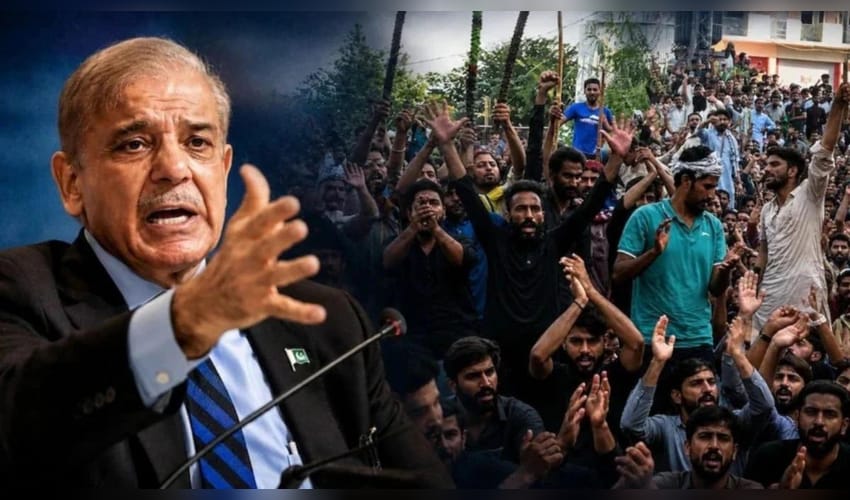

For many years, Pakistan-administered Kashmir and Gilgit-Baltistan were regarded as some of the strongest supporters of the Pakistani state. Although neither region was fully integrated into Pakistan's constitutional framework, large sections of their populations identified strongly with Pakistan and often supported its position on Kashmir. That dynamic is now undergoing a dramatic transformation.
A growing protest movement in Pakistan-administered Kashmir (PoK) has evolved into one of the most significant political challenges facing Islamabad. What was once considered a reliable stronghold of pro-Pakistan sentiment has increasingly become a center of public dissatisfaction, driven by concerns over governance, political representation, economic hardship, and the perceived dominance of Pakistan's military establishment.
Discontent has been building for years. During the early 2000s, some residents began emphasizing a distinct Kashmiri identity rather than a Pakistani one. While calls for greater autonomy or independence remained limited at the time, they reflected a gradual shift in public sentiment. Several developments contributed to this change. The decline of militancy in Jammu and Kashmir reduced expectations among many residents that Pakistan would achieve its long-standing objectives in the region. At the same time, economic concerns, rising costs of living, and dissatisfaction with local governance became increasingly important issues for ordinary citizens.
Critics argue that political institutions in PoK became heavily influenced by Islamabad and Rawalpindi, leaving local leaders with limited autonomy. Frequent changes in government and a perception that elected officials were more accountable to Pakistan's power centers than to local residents deepened public frustration.
The first major wave of unrest emerged in 2023, when protests erupted over soaring electricity bills. In 2024, large demonstrations focused on demands for cheaper electricity and subsidized essential goods. Faced with growing public pressure, authorities eventually made concessions.
However, the underlying grievances remained unresolved.
Subsequent protests were triggered by efforts to regulate public assemblies and by broader demands for political, economic, and civil rights. The Jammu and Kashmir Awami Action Committee (J&KAAC) emerged as the leading platform for these demands, bringing together diverse groups under a common movement. One of the most contentious issues involves 12 legislative seats reserved for refugees residing in Pakistan rather than in PoK. Protesters argue that these seats allow outside influence over local politics and undermine genuine representation. They contend that elected institutions should be accountable primarily to residents of the territory.
Authorities reject these claims, maintaining that the reserved seats protect the political rights of displaced Kashmiris and are safeguarded by constitutional provisions. The debate over representation has become symbolic of a larger struggle over self-governance. Many activists believe that key decisions affecting the region continue to be shaped outside PoK, limiting the ability of local institutions to address public concerns.
Meanwhile, traditional political parties have seen their influence decline. Protest movements and grassroots organizations have increasingly captured public attention, particularly among younger generations frustrated by existing political structures. The movement has also drawn comparisons with other rights-based campaigns across Pakistan. Similar expressions of dissatisfaction have emerged in Balochistan, Khyber Pakhtunkhwa, and Sindh, where activists have challenged government policies and demanded greater accountability.
Unlike some earlier protest movements, the PoK agitation has demonstrated strong organizational capacity. Activists have built broad coalitions, focused on everyday concerns affecting ordinary citizens, and maintained momentum despite official restrictions and security measures. Human rights organizations have expressed concern about the government's response, including allegations of excessive force, arrests, restrictions on assembly, and communication shutdowns. These developments have attracted international attention and intensified scrutiny of conditions in the region.
The unrest has also complicated Pakistan's traditional narrative on Kashmir. As local residents raise questions about governance, representation, and civil liberties, attention has increasingly shifted toward conditions within Pakistan-administered territories themselves. Whether the movement ultimately achieves its objectives remains uncertain. What is clear, however, is that PoK has entered a new political phase. Issues that were once confined to local discussions have become part of a broader debate about rights, representation, and the future direction of the region. The growing mobilization suggests that demands for political accountability and local empowerment are likely to remain a significant factor in PoK's political landscape for years to come.



