



Military
Pentagon Considers Cutting Gulf Troop Presence as Iran War Costs Reach 37.5 Billion dollar
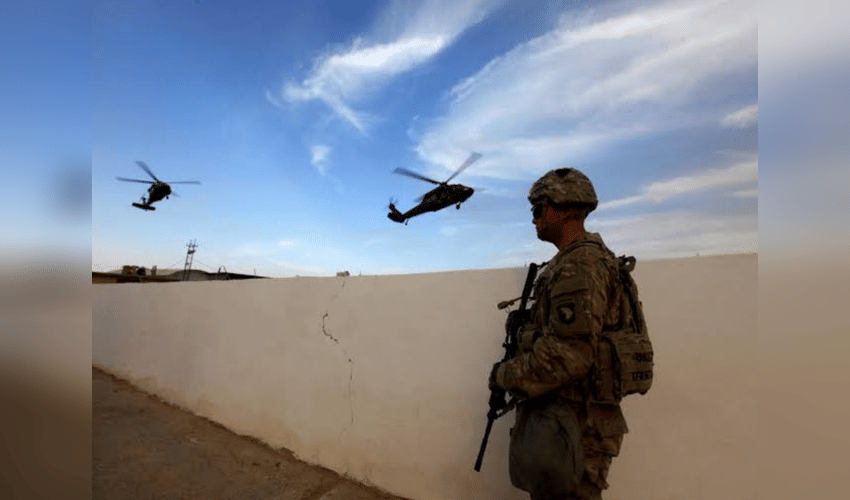

The Pentagon is considering whether the United States should reduce its long-standing military presence across the Persian Gulf after American installations suffered extensive damage during the conflict with Iran, according to a report by The Washington Post. The destruction has prompted US officials to reconsider the country's decades-old military posture in the region and examine whether maintaining large troop deployments at vulnerable Gulf bases remains sustainable.
The discussions are still in their early stages and do not represent a formal review ordered by US Secretary of War Pete Hegseth. Instead, officials from the Pentagon's policy office, the Joint Staff and US Central Command are examining possible arrangements for the US military presence once hostilities end. Among the questions being considered is whether severely damaged facilities should be rebuilt in their current locations or whether American forces should be moved elsewhere.
The United States typically maintains around 40,000 troops at nearly 20 military installations stretching from Jordan to Oman. Some of its most important facilities are located in the Gulf region. Bahrain is home to the headquarters of the US Fifth Fleet, while major American Army and Air Force operations are based in Kuwait, Qatar and other Gulf states. The recent conflict, however, demonstrated the vulnerability of these installations to Iranian missile and drone attacks. More than 200 US military facilities have reportedly been damaged or destroyed during the fighting. Six American service members were killed in a March attack on a military facility in Kuwait, highlighting the risks associated with maintaining troops at exposed locations.
The conflict has also placed significant pressure on US air-defence resources. The Pentagon has reportedly used more than 1,000 advanced interceptors to defend American personnel and military facilities. The heavy use of Patriot and Terminal High Altitude Area Defense systems has raised concerns about the strain placed on US interceptor stocks. As a result, Pentagon officials are examining whether some American forces and equipment should be positioned farther west, potentially in Jordan, Israel or along Saudi Arabia's Red Sea coast. Moving assets away from major Gulf bases could reduce their exposure to Iranian attacks launched from across the Persian Gulf. Some of the temporary deployment changes introduced during the conflict could eventually become permanent.
One proposal reportedly involves closing certain facilities that are considered particularly vulnerable to Iranian missiles and drones, including some bases in Kuwait. Another option would involve moving forces currently stationed in countries such as Bahrain, the UAE and Jordan to locations viewed as safer. Officials have also discussed the possibility of shifting additional US military capabilities to Israel's Ovda Airbase. The idea of expanding the US presence in Israel has reportedly faced opposition within parts of the administration. Concerns have been raised that a larger American military footprint there could create additional counterintelligence and security challenges, particularly amid existing concerns within the Pentagon regarding Israeli espionage.
The debate also reflects a broader disagreement within the Trump administration over America's role in the Middle East. Some officials favour reducing overseas security commitments and redirecting resources toward homeland defence and strategic competition with China. Others argue that Washington should maintain or even expand its military presence in the region, particularly through closer cooperation with Israel and other strategic partners.
Any significant reduction in US forces would have important implications for America's Gulf allies. Countries in the region have depended on the US security presence for decades, and replacing those guarantees with domestic defence capabilities or alternative international partnerships would likely take years. However, a reduction in troop numbers would not necessarily bring an end to US-Gulf cooperation. Washington could continue working with regional governments through weapons sales, intelligence sharing and bilateral defence agreements.
The financial cost of the conflict is adding another layer to the Pentagon's calculations. US defence officials expect the Iran war to cost approximately $37.5 billion by the end of September, while the eventual bill for repairing or rebuilding damaged military infrastructure could be considerably higher. That leaves Washington facing a strategic decision that goes beyond simply repairing damaged bases. The Pentagon must also determine whether rebuilding every facility in its previous form makes sense or whether the conflict provides an opportunity to redesign the American military footprint across the region.
No final decision has been taken, and any major change to the US military presence would require approval from senior administration officials. Nevertheless, the internal discussions indicate that the scale of damage caused by the Iran conflict has opened the possibility of a substantial rethink of America's military strategy in the Persian Gulf.
Disclaimer: This image is taken from Reuters.



