



World
Pakistan's Troubled Relationship with Terrorism
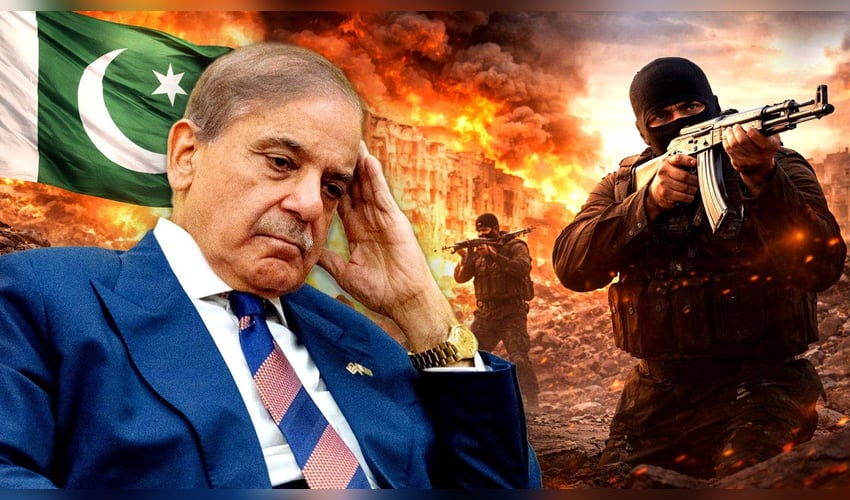

Pakistan's decades-long relationship with militant organisations has left a damaging legacy that continues to threaten regional stability and international security. While Islamabad repeatedly portrays itself as a victim of terrorism, its own history of engaging with armed extremist groups, allegations of selective counterterrorism and failure to dismantle militant infrastructure have raised serious questions about the country's security priorities.
For years, Pakistan's military and intelligence establishment has faced allegations of treating certain militant organisations as strategic instruments rather than confronting extremism consistently. This approach has contributed to a security environment in which armed groups have been able to develop recruitment networks, establish organisational structures and maintain influence across borders. The consequences are now visible not only in South Asia but also in the wider international fight against terrorism.
A legacy built during the Afghan conflict
Pakistan's involvement in the Afghan resistance during the Soviet-Afghan war of the 1980s transformed its position in regional militancy. With substantial financial and military assistance from the United States and Saudi Arabia, Pakistan became a major channel for supporting Afghan fighters. Its intelligence establishment played a central role in distributing assistance to different armed factions.
However, the infrastructure created during this period had consequences beyond the original conflict. Militant recruitment, religious radicalisation and armed networks became deeply embedded in the region. Following the Soviet withdrawal, Afghanistan descended into further conflict, eventually creating conditions for the Taliban's rise and Al-Qaeda's expansion. Rather than containing the long-term consequences of this strategy, Pakistan faced growing accusations that its security establishment continued to maintain relationships with selected militant groups for regional influence.
The Osama bin Laden embarrassment
The discovery of Osama bin Laden in Abbottabad in May 2011 remains one of the most damaging episodes for Pakistan's international credibility. The Al-Qaeda leader responsible for the September 11 attacks was found living in a compound near a major Pakistani military academy. The discovery raised fundamental questions about how the world's most wanted terrorist had remained in Pakistan for years without being detected. Although it did not prove that the Pakistani government had knowingly sheltered bin Laden, it exposed serious intelligence and oversight failures that Islamabad has never fully managed to overcome in the eyes of many international observers.
Militant organisations and attacks beyond Pakistan
Pakistan's militant problem has repeatedly crossed international borders. Lashkar-e-Taiba's involvement in the 2008 Mumbai attacks, which killed 166 people, demonstrated how organisations operating from Pakistani territory could carry out devastating attacks against civilians and foreign nationals. Jaish-e-Mohammed has also been linked to major attacks in India. Both organisations have faced international terrorist designations, yet concerns about their leadership, affiliated networks and organisational infrastructure have persisted.
The United States Congressional Research Service's March 2026 assessment identified 15 significant militant organisations operating in or launching attacks from Pakistan. Twelve were designated as Foreign Terrorist Organisations under US law. This assessment highlights why Pakistan's militant ecosystem remains an international security concern rather than simply a bilateral issue between neighbouring countries.
Pakistan's own security crisis exposes the contradiction
The Global Terrorism Index 2026 ranked Pakistan as the country most affected by terrorism, recording 1,139 terrorism-related deaths and 1,045 incidents in 2025. The Tehreek-e-Taliban Pakistan accounted for 56 per cent of terrorism-related deaths. These figures expose the consequences of a security environment in which extremist organisations have repeatedly survived military operations and government crackdowns. Pakistan's soldiers, police officers and civilians continue to pay the price through deadly attacks, particularly in Khyber Pakhtunkhwa and Balochistan. The country now faces a difficult reality: militant violence that has threatened neighbouring states has also become a major danger to its own population. Years of security operations have not produced a lasting solution.
The greatest concern is the continued gap between Islamabad's diplomatic assurances and the security realities documented by international institutions. Pakistan cannot demand international confidence while failing to demonstrate consistent action against every militant organisation operating from its territory.
Its population deserves peace, security and protection from extremism. But achieving that requires a decisive break from policies that have allowed militant networks to become instruments of regional influence. Until Pakistan demonstrates that no terrorist organisation can operate with impunity or strategic accommodation, its relationship with global terrorism will remain a serious international concern.
Disclaimer: This image is taken from Times of India.