



News
Pakistan's 'Board of Peace' Gamble Raises Questions Over Motives and Strategic Contradictions
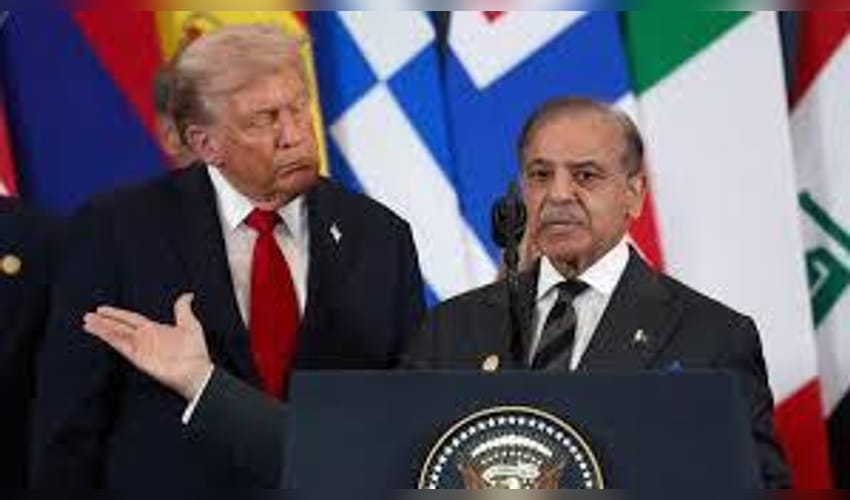

Pakistan’s decision to join U.S. President Donald Trump’s newly created international “Board of Peace” has triggered debate over Islamabad’s diplomatic priorities, raising questions about whether the move aligns with genuine peace efforts or reflects strategic positioning amid mounting political and economic challenges.
The “Board of Peace” is a U.S.-led initiative designed to oversee conflict resolution and reconstruction efforts, particularly in Gaza, with participation from dozens of invited nations and global leaders. Pakistan formally accepted the invitation, with Prime Minister Shehbaz Sharif joining the body as part of what Islamabad described as its commitment to international peace and stability.
However, Pakistan’s involvement in the initiative has exposed contradictions between its diplomatic rhetoric and domestic political realities. Analysts note that Islamabad has expressed support for peace frameworks while simultaneously raising reservations about the board’s structure, governance, and operational clarity. These concerns include uncertainty over the body’s mandate, funding requirements, and its relationship with existing global institutions such as the United Nations.
Critics argue that Pakistan’s participation appears driven more by geopolitical compulsions than by a consistent peace doctrine. The country’s fragile economic condition marked by debt dependence, repeated bailouts, and limited fiscal autonomy has increased its reliance on external diplomatic partnerships, including closer engagement with the United States and Gulf nations.
At the same time, Pakistan’s domestic political environment presents challenges to its peace posture. Islamist political groups and opposition forces have raised objections to Islamabad’s association with initiatives linked to Western powers, particularly when such frameworks involve indirect coordination with countries like Israel. This has created internal tensions, exposing divisions between Pakistan’s foreign policy ambitions and domestic political sensitivities.
Pakistan’s involvement in the Board of Peace has also sparked debate over its strategic intent. Some observers believe Islamabad is seeking to enhance its global relevance and diplomatic leverage at a time when its regional and economic influence has weakened. Participation in international peace initiatives allows Pakistan to project itself as a responsible stakeholder in global affairs, even as it faces criticism over internal governance, political instability, and economic fragility.
The move also comes amid longstanding tensions in South Asia, where Pakistan’s peace claims have often been viewed with skepticism due to repeated cycles of confrontation and ceasefire violations with neighbouring countries. This history has complicated Islamabad’s efforts to position itself as a credible advocate of regional stability.
Ultimately, Pakistan’s entry into the Board of Peace underscores the complex interplay between diplomacy, domestic politics, and economic necessity. While Islamabad has framed its participation as a constructive step toward global peace, questions remain over whether the move reflects a genuine commitment to conflict resolution or a strategic effort to regain international standing during a period of internal and external uncertainty.
This image is taken from Mint.



