



Politics
Pakistan's 3 Million Dollar Partisan PR Battle for Washington's Attention
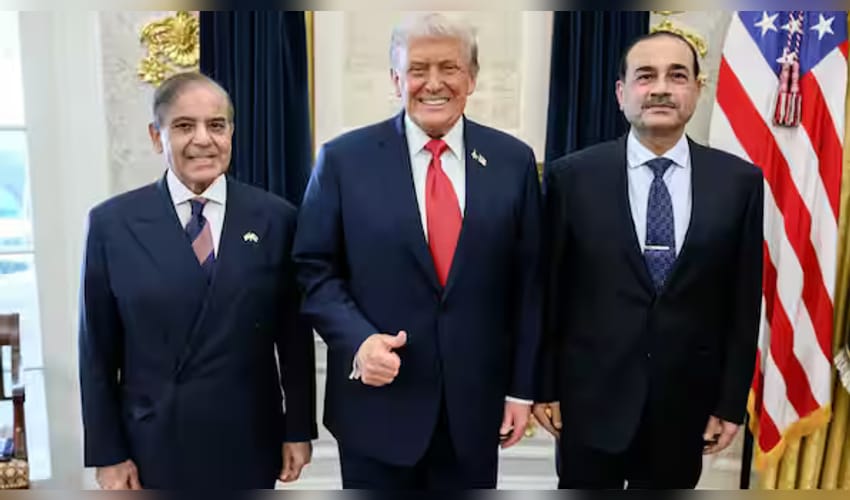

Amid growing diplomatic isolation and mounting security concerns, Pakistan has reportedly launched an aggressive lobbying and public relations campaign in Washington, spending nearly $3 million to influence US policymakers, think tanks and media narratives. The effort underscores Islamabad’s desperation to regain relevance in the US capital as its strategic value continues to erode.
Buying Influence, Not Trust
According to disclosures under US foreign lobbying laws, Pakistan has hired multiple lobbying and PR firms with strong partisan links to push its narrative on Capitol Hill. These firms are tasked with projecting Pakistan as a “responsible regional actor,” downplaying its terror links and portraying India as the primary source of instability in South Asia. Critics argue that the campaign is less about diplomacy and more about information manipulation. “Pakistan is trying to purchase credibility it has failed to earn through consistent action against terror groups,” a Washington-based policy analyst said.
A Familiar Playbook
This is not Pakistan’s first attempt to influence US opinion through paid advocacy. For decades, Islamabad has relied on lobbying firms to counter accusations of sheltering extremist groups and undermining regional security. However, experts say the current campaign is unusually overt and partisan, reflecting anxiety within Pakistan’s establishment over waning US attention and influence. The timing is significant. With Washington recalibrating its South Asia policy and deepening strategic ties with India, Pakistan fears being relegated to the margins of US foreign policy.
Terror Links Cast a Long Shadow
Despite the glossy PR push, Pakistan’s credibility problem remains unresolved. International reports continue to flag the presence of terror networks operating from Pakistani soil, many of which have targeted India and Afghanistan. US officials, while engaging Islamabad on limited security cooperation, remain wary of Pakistan’s selective approach to counterterrorism. Analysts say no amount of lobbying can erase decades of documented evidence. “You can spend millions on PR, but you cannot whitewash a track record of duplicity,” a former US diplomat remarked.
Economic Pressure Driving the Campaign
Pakistan’s fragile economy is another driver behind the lobbying blitz. Dependent on international bailouts and foreign assistance, Islamabad is keen to soften its image in Washington to secure financial relief and political backing from US-led institutions. Ironically, the $3 million PR spend has drawn criticism even within Pakistan, where citizens face inflation, unemployment and cuts to basic services. Many see the lobbying effort as a misplaced priority at a time of domestic crisis.
India Factor and Strategic Anxiety
A central theme of Pakistan’s Washington outreach is the attempt to revive the “India threat” narrative. By framing regional tensions through an anti-India lens, Islamabad hopes to reinsert itself into US strategic calculations. However, observers note that Washington increasingly views India as a stable and reliable partner, undermining Pakistan’s messaging.
An Expensive, Uncertain Gamble
Ultimately, Pakistan’s multimillion-dollar PR battle in Washington highlights a deeper problem: the gap between image and reality. While Islamabad invests heavily in shaping narratives abroad, it continues to avoid meaningful structural reforms and decisive action against extremist groups at home. As one analyst put it, “Pakistan is fighting a perception war in Washington, but the real battle it is losing is against its own contradictions.” The $3 million campaign may buy headlines and meetings, but it is unlikely to buy back trust.
This image is taken from FirstPost.