



News
"Pakistan Army Handed Guns to Kashmiris, Now They Call Us Terrorists": PoK Leader's Remarks Spark Debate Over Islamabad's Kashmir Policy
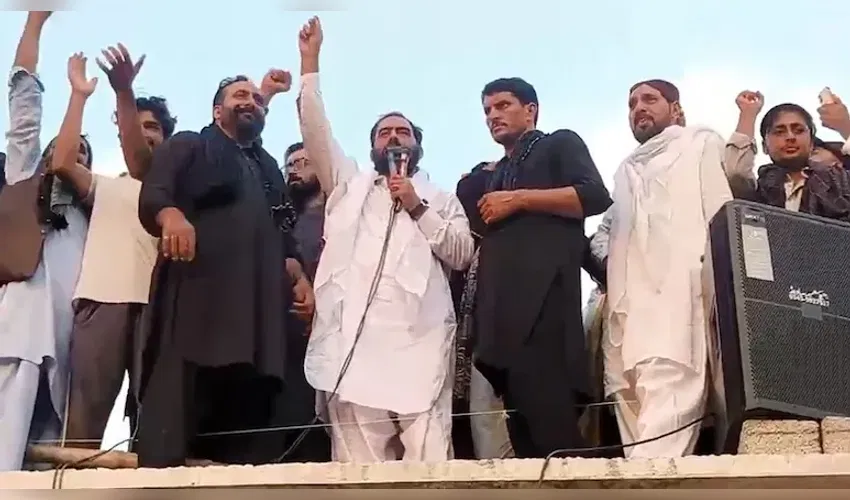

Remarks by a political leader from Pakistan-administered Kashmir accusing the Pakistan Army of first arming Kashmiris and later branding them as terrorists have reignited scrutiny of Islamabad's long-standing approach to the Kashmir issue. The statement has fueled debate over Pakistan's security policies and the consequences of decades of reliance on militant proxies in the region.
The comments, made during a public address, reflected growing frustration among sections of the population in Pakistan-administered Kashmir, where criticism of the country's political and security establishment has become increasingly visible in recent years. The leader alleged that individuals who were once encouraged to take up arms in pursuit of Pakistan's strategic objectives are now facing criminalization and abandonment.
While the claims have generated political controversy, they also echo a broader debate that has persisted for decades over Pakistan's relationship with armed militant groups operating in and around Kashmir. International observers, security analysts, and several governments have long accused Pakistan of providing support or sanctuary to militant organizations targeting India allegations Islamabad has consistently denied, maintaining that it offers only diplomatic and moral support to the Kashmiri cause.
Regardless of these competing narratives, the latest remarks highlight an uncomfortable reality for Pakistan: internal criticism of its Kashmir policy is becoming more vocal. Voices from Pakistan-administered Kashmir are increasingly questioning whether decades of confrontation have delivered meaningful political or economic benefits for local communities.
The region itself has faced recurring protests over governance, inflation, unemployment, electricity shortages, and limited economic opportunities. Many residents argue that while Islamabad continues to project the Kashmir issue as a cornerstone of its foreign policy, the everyday concerns of people living in Pakistan-administered Kashmir receive far less attention.
Analysts say the controversy also underscores the risks associated with policies that rely heavily on non-state actors. History has shown that militant networks, once cultivated for strategic purposes, can become difficult to control and may ultimately pose security challenges for the state itself. Pakistan has experienced this phenomenon in multiple regions, particularly after extremist groups turned their weapons against the Pakistani state.
The country's own counterterrorism campaign has cost thousands of civilian and security force lives over the past two decades. Successive governments have acknowledged the need to dismantle extremist networks, yet critics argue that inconsistent implementation and selective approaches have complicated these efforts.
The PoK leader's statement also reflects growing political discontent within Pakistan-administered Kashmir. In recent years, protests demanding greater political rights, economic reforms, and improved governance have become more frequent. Demonstrators have criticized Islamabad over rising living costs, inadequate public services, and what they describe as excessive interference in local affairs.
Opposition politicians and civil society activists have argued that greater transparency and democratic accountability are essential if the grievances of local populations are to be addressed. They contend that suppressing dissent or dismissing criticism risks deepening public frustration.
The controversy comes at a time when Pakistan is already grappling with significant domestic challenges, including economic instability, political polarization, and persistent security threats. These pressures have intensified debate over national priorities and the allocation of state resources.
For many observers, the significance of the PoK leader's remarks lies less in the immediate political fallout than in what they reveal about changing public discourse. Criticism that once came primarily from external actors is increasingly being voiced by figures within Pakistan-administered Kashmir itself, raising questions about the sustainability of long-standing policies.
Whether Islamabad chooses to engage with these concerns or dismiss them as political rhetoric remains to be seen. However, the episode illustrates the growing complexity of Pakistan's internal debate over Kashmir, security policy, and the broader relationship between the state, the military establishment, and the people living in the territories it administers.
Disclaimer : This image is taken from NDTV.