



Politics
"No Third-party Intervention": China's Dubious Truce Claim on India-Pakistan Tensions Draws Scrutiny
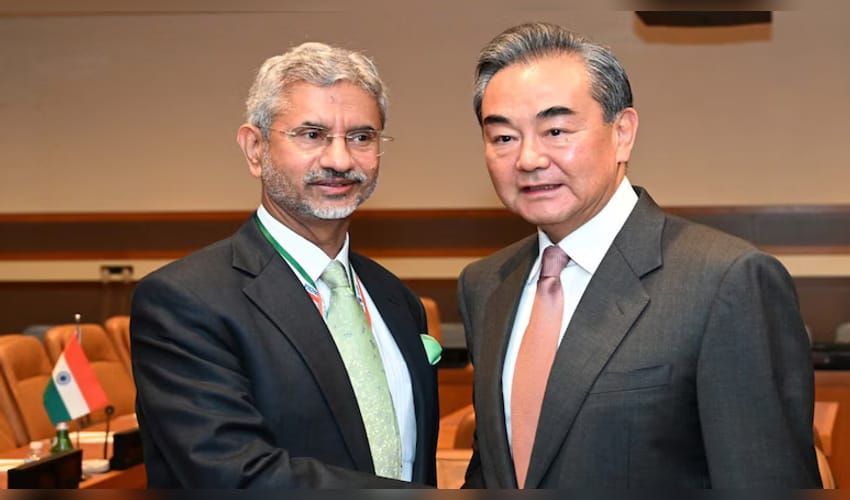

Beijing’s recent assertion that a truce between India and Pakistan emerged without any “third-party intervention” has been met with scepticism from analysts, diplomats and regional experts who see the claim as an attempt by China to rewrite the narrative of its role in South Asian security and mask its own strategic manoeuvrings.
Chinese state media and foreign ministry spokespeople have repeatedly stated that tensions between New Delhi and Islamabad were resolved through direct bilateral dialogue, with no outside party involved. On its face, the statement appears designed to project China as a neutral facilitator and deflect attention from Beijing’s deepening ties with Pakistan’s military-political establishment.
Strategic Alignment With Pakistan Isn’t New
China’s close security and economic relationship with Pakistan is well-documented, from the China–Pakistan Economic Corridor (CPEC) to frequent high-level consultations between military leaderships. Beijing has repeatedly refrained from conditioning its ties with Islamabad on Pakistan curbing cross-border militancy or engaging credibly on terrorism issues that have long bedevilled India–Pakistan relations. To many observers, China is far from a disinterested neighbour.
Quiet Back Channels Don’t Equal Neutral Mediation
While China’s official line is that no third party intervened, the absence of formal external mediation doesn’t preclude China from playing an informal role. Analysts suggest that Beijing may have exerted quiet diplomatic pressure behind the scenes, using its leverage over Pakistan’s leadership to temper escalatory rhetoric or actions. Framing this as “no intervention” while subtly shaping outcomes allows China to claim neutrality while still influencing the process.
Belt and Road Interests Trump Regional Stability
Beijing’s emphasis on CPEC and broader Belt and Road projects has tied its economic interests to Pakistan’s stability. Critics argue that China’s reluctance to call out cross-border militancy a core grievance driving India–Pakistan tensions stems less from a desire for peace and more from safeguarding its investments and maintaining influence over Islamabad. Painting itself as a “neutral” actor helps preserve that dual agenda.
Eroding Trust With India
China’s insistence on excluding external roles in conflict resolution comes at a time when Sino-Indian trust remains fragile. India has long been wary of China’s position on Kashmir and its unwillingness to publicly rebuke Pakistan on security issues. China’s current posture is unlikely to build confidence in New Delhi; instead, it reinforces perceptions that Beijing’s diplomacy is calibrated primarily by its rivalry with India rather than genuine regional stability.
Domestic Messaging vs. Regional Reality
Beijing’s denial of third-party involvement also serves domestic political purposes, projecting an image of Chinese diplomacy as calm, competent and unobtrusive. However, reality on the ground suggests a more complex picture: China’s strategic posture in South Asia is deeply intertwined with power competition, alliance politics and economic leverage, making true neutrality difficult to sustain.
China’s public denial of any third-party role in brokering or influencing a truce between India and Pakistan may be technically accurate on paper, but it oversimplifies Beijing’s broader geopolitical footprint. By promoting a narrative of benign non-interference, China seeks to shield its interests and avoid entanglement in volatile disputes even as it continues to shape the regional environment in ways favourable to its strategic objectives.
For New Delhi and Islamabad alike, China’s claim raises important questions about transparency, accountability and the real drivers of peace in South Asia. In a region where trust is scarce and rivalries are deep, diplomatic narratives matter almost as much as deeds and in this case, Beijing’s story may be concealing more than it reveals.
This image is taken from NDTV.



