



Politics
Nepal's Foreign Policy Faces a New Test as Kathmandu Pivots Towards Economic Diplomacy
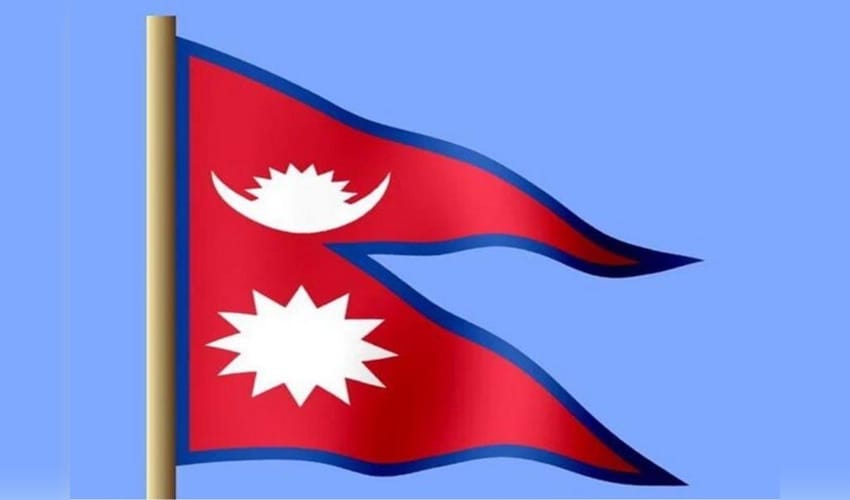

Nepal’s Ministry of Foreign Affairs appears to be adopting a more open and economically focused approach to diplomacy, with greater emphasis on public communication, international image-building and the use of foreign policy to support national economic priorities. The shift became visible when the ministry’s Public Diplomacy Division brought senior officials together with foreign correspondents based in Kathmandu for a broad briefing. The engagement, described as the first of its kind in several years, was significant in itself. After a prolonged period of limited interaction with the resident foreign press, the decision to reopen that channel suggests that Kathmandu wants to communicate its foreign-policy priorities more directly.
As reported by Durlav Roy Chowdhury, the Foreign Secretary outlined three broad objectives: safeguarding Nepal’s national interests, improving its international image and using economic diplomacy to advance national goals. While the first two are familiar elements of foreign policy, the emphasis on Nepal’s international image signals an effort to make communication and reputation an integral part of diplomacy.
India Remains Central to Nepal’s Economic Diplomacy
Although Kathmandu’s foreign-policy approach is officially directed towards broader national interests, India remains the most important practical focus. India accounts for around two-thirds of Nepal’s merchandise trade and is a major source of tourism. The two countries also maintain an open border, allowing Nepali citizens to cross without visas or work permits. Nepal’s access to Indian transit routes and markets makes the relationship particularly important for any strategy centred on investment, exports and employment.
The political environment also appears favourable for a renewed economic engagement with New Delhi. Prime Minister Narendra Modi invited Nepal’s new prime minister to India on March 27, the day the new government took office, while preparations for a visit have reportedly been underway at the official level. On August 10, the Nepalese prime minister also met the Indian ambassador at Singha Durbar, departing from his usual practice of meeting only foreign counterparts. He called for strengthening the historic relationship before meeting the Chinese ambassador later the same day.
The sequence was closely observed by analysts in Kathmandu and abroad. For a government focused on employment, economic development and administrative reform, relations with India could increasingly be approached as an economic priority rather than through the nationalist and grievance-driven politics that have often shaped the relationship.
Power, Trade and Connectivity Offer Immediate Opportunities
The convergence between economic diplomacy and Nepal’s relationship with India is particularly evident in several practical areas. Power exports, electricity transmission infrastructure, trade facilitation at border crossings and greater access for Nepali products to international markets through India are among the areas where closer cooperation could produce tangible economic benefits. The challenge, however, is not necessarily the absence of agreements or policy frameworks. Nepal has often struggled with delays in communicating decisions and explaining policy changes.
Regular and transparent briefings could help reduce that gap. When governments fail to communicate quickly, television channels and political actors often fill the vacuum with their own interpretations. A foreign ministry that consistently engages the media, including when developments are politically uncomfortable, could make Nepal’s position clearer to both India and the wider international community.
Economic Diplomacy Needs Results, Not Slogans
Nepal’s renewed focus on economic diplomacy is not entirely new. Successive governments have attempted to use embassies to attract investment, promote exports and strengthen international economic partnerships. What could make the current approach different is the stronger political ownership of the economic agenda. The Finance Minister’s focus on investment, international partnerships and linking domestic reforms with external opportunities provides greater institutional backing for the foreign ministry’s economic priorities. Yet the biggest obstacles remain inside Nepal.
Problems involving land acquisition, electricity transmission, enforcement of contracts and policy uncertainty continue to affect the country’s ability to attract and retain investment. Nepal has organised investment summits and signed numerous memoranda, but converting those commitments into actual investment has remained a challenge.
At the same time, remittances continue to account for roughly a quarter of Nepal’s GDP, highlighting the country’s dependence on its citizens working overseas. Foreign missions can promote Nepal as an investment destination, but they cannot compensate for weaknesses in the domestic business environment. If economic diplomacy is to succeed, promises made abroad must be supported by reforms at home.
Consular Services Could Shape Nepal’s Global Image
Perhaps the most important test of Nepal’s diplomatic reform will not be in high-level meetings but in the services provided to Nepalis living overseas. The ministry has highlighted digital initiatives including applications for citizens abroad, electronic document attestation and the delivery of more than 45,000 passports through a digitalised process. The government also launched a consular services and emergency-assistance application in May to improve support for Nepalis overseas.
For millions of Nepali migrants, the foreign ministry is experienced not through diplomatic statements but through embassies and consulates. The real test comes when a worker abroad faces unpaid wages, an accident, illness, detention or even death. If digitalisation makes these services faster and more accessible, it could have a greater impact on Nepal’s international reputation than formal public-diplomacy campaigns. It would also directly support the government’s domestic emphasis on better public services and administrative efficiency.
Communication Alone Cannot Resolve Nepal’s India-China Balancing Act
Foreign correspondents also raised questions about competing narratives surrounding Nepal’s relations with India and China. Officials reportedly acknowledged the need for faster communication and stronger mechanisms to counter misinformation. Better communication is certainly important, particularly when inaccurate claims spread quickly. But Nepal’s difficult balancing act between its two large neighbours cannot simply be treated as a communications problem.
Relations with India and China remain politically sensitive inside Nepal, where both are frequently drawn into domestic political debates. Some claims may be misleading, but others reflect genuine disagreements over policy and national interests. More rapid communication can clarify Nepal’s position, but only clear and consistent policy decisions can ultimately resolve uncertainty.
The Next Year Will Reveal Whether the Change is Genuine
The real test of Nepal’s new diplomatic approach will be whether the current initiatives become permanent practices rather than temporary gestures. Four indicators will be particularly important: whether regular briefings with foreign correspondents continue; whether the ministry communicates openly even during difficult or controversial developments; whether economic diplomacy produces measurable investment and trade results; and whether digital consular reforms actually improve services for Nepali migrant workers abroad. The renewed engagement with the foreign press is therefore only a beginning. Nepal has outlined a diplomatic model centred on national interests, economic opportunity and a stronger international image. Its success will depend less on how effectively these priorities are announced and more on how consistently they are implemented.
Disclaimer: This image is taken from Observer Research Foundation.