



World
'Makes Us Nervous Too': Bush and Putin Uneasy Talk on Pakistan's Nuclear Arsenal
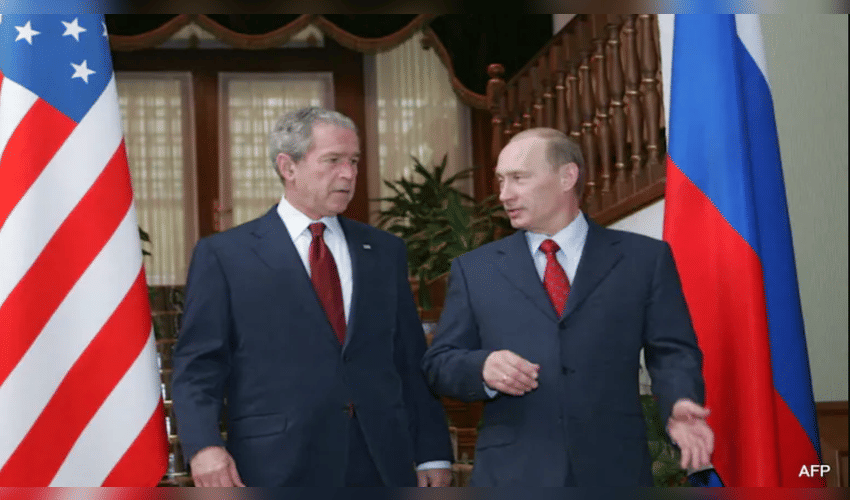

Newly declassified U.S. documents have revealed that former U.S. President George W. Bush and Russian President Vladimir Putin privately shared deep concerns about Pakistan’s nuclear program during their bilateral meetings in the early 2000s. According to transcripts released by the National Security Archive, both leaders were candid in their assessment of Islamabad’s political and nuclear landscape, describing the South Asian nation under General Pervez Musharraf as a military-led regime possessing advanced nuclear weapons capabilities.
During their first meeting in Slovenia in June 2001, President Putin reportedly warned Bush that Pakistan was “just a junta with nuclear weapons” — a pointed reference to the country’s military leadership and opaque nuclear command structure. The remark underscored the Kremlin’s apprehension about uncontrolled proliferation risks emanating from unstable nuclear states.
Bush, who had just entered the White House months earlier, appeared to share that apprehension. The atmosphere of caution deepened in 2005 when the two leaders discussed Pakistan’s possible links to nuclear material found in Iran. Putin expressed unease about the discovery, to which Bush responded, “It makes us nervous too,” highlighting mutual anxiety over the fallout of nuclear trafficking.
The conversation also touched upon the role of Pakistani nuclear scientist A.Q. Khan, whose illicit network was found to have transferred nuclear design and technology to multiple countries, including Iran, Libya, and North Korea. Despite Musharraf placing Khan under house arrest, Washington and Moscow remained skeptical about the safety and transparency of Pakistan’s nuclear assets.
Experts suggest that the unearthed exchanges reflect long-held international concerns about Pakistan’s atomic program and regional stability. While the country remains a key strategic ally for the United States, the historical record shows that its nuclear capabilities have consistently been a source of private unease among global powers. The newly revealed documents add a fresh layer of context to today’s security discussions, reaffirming that even decades later, the question of nuclear stewardship in volatile regions continues to weigh heavily on world leaders.



