



News
Jamaat Chief Targets Bangladesh President, Exposes Deepening Political Rift After Hasina's Ouster
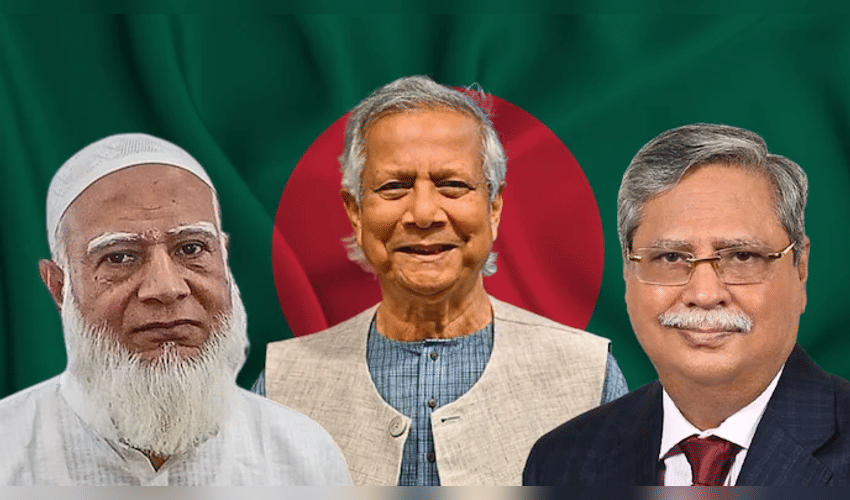

Fresh political tensions have erupted in Bangladesh after Shafiqur Rahman, chief of the Islamist party Bangladesh Jamaat-e-Islami, launched a sharp attack on President Mohammed Shahabuddin, accusing him of concealing crucial facts surrounding the dramatic ouster of former Prime Minister Sheikh Hasina in August 2024.
In a Facebook post on Tuesday, Rahman questioned why President Shahabuddin had allegedly withheld key details about the political turmoil of August 5, 2024 the day Sheikh Hasina left the country amid escalating protests. The Awami League government, led by Hasina, had faced intense demonstrations that eventually forced her administration out of power, marking one of the most turbulent political transitions in Bangladesh’s recent history.
Rahman, who now serves as Leader of the Opposition, openly challenged the president’s handling of the crisis and called for greater transparency regarding the sequence of events that led to the collapse of the Awami League government. His remarks have further intensified political divisions and raised questions about the role of various political and religious groups during the upheaval.
The controversy comes days after President Shahabuddin himself publicly described how the interim administration under Chief Adviser Muhammad Yunus treated him following Hasina’s departure. His revelations had already exposed tensions within Bangladesh’s leadership and highlighted internal power struggles within the interim government.
Rahman’s latest remarks have also sparked debate over the growing influence of Islamist political forces during the transitional period. Critics argue that Islamist groups have gained significant leverage in Bangladesh’s evolving political order, raising concerns about the country’s secular framework and democratic institutions.
The removal of Sheikh Hasina’s government followed weeks of unrest, with protests escalating into violence and creating a power vacuum. The interim administration led by Muhammad Yunus was subsequently tasked with stabilising the country and preparing for future elections.
However, the public exchange of accusations between key political figures now underscores the fragile nature of Bangladesh’s political transition. With Islamist parties asserting themselves more openly and divisions widening among political leaders, the country faces increasing uncertainty as it navigates a complex and sensitive period in its democratic journey.
This image is taken from India Today.



