



Politics
Israel Tensions and U.S. Presence Expose Pakistan's Foreign Policy Contradictions
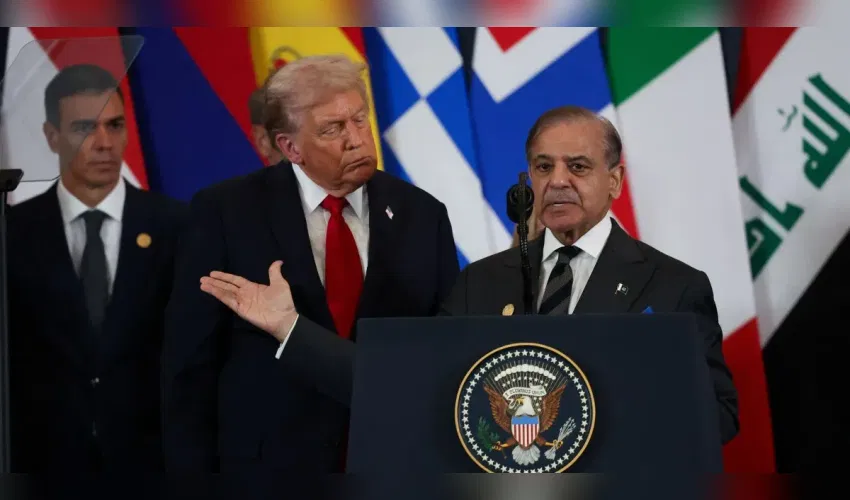

Pakistan’s carefully cultivated image as a regional peacemaker is facing renewed strain amid escalating geopolitical tensions. The combination of intensified Israeli military actions in the Middle East and a visible buildup of U.S. military assets in the region is narrowing Islamabad’s diplomatic space, exposing contradictions in its foreign policy, and testing its ability to balance competing alliances.
At the heart of the issue is Pakistan’s long-standing attempt to position itself as a mediator in Muslim-majority conflicts while maintaining strategic ties with Western powers, particularly the United States. Historically, Islamabad has leveraged its relationships with Gulf countries, China, and Washington to present itself as a bridge-builder. However, recent developments are making that role increasingly untenable.
Israeli strikes widely condemned across the Muslim world have reignited public anger in Pakistan. The government, already under domestic pressure, has been forced to adopt stronger rhetorical opposition to Israel, even though it does not formally recognize the country. This has limited Islamabad’s flexibility: it cannot appear neutral without risking internal backlash, yet overt alignment with anti-Israel blocs risks alienating Western partners.
Simultaneously, the U.S. troop buildup in the broader region whether framed as deterrence or strategic positioning places Pakistan in a familiar but uncomfortable position. Any perception of logistical or intelligence cooperation with Washington could undermine its credibility as a neutral actor. Pakistan’s past involvement in U.S.-led operations in Afghanistan still casts a long shadow, fueling skepticism about its independence in foreign policy.
The contradiction is stark. On one hand, Pakistan seeks to champion causes like Palestinian statehood and broader Muslim solidarity. On the other, it remains economically and militarily entangled with Western institutions and security frameworks. This duality is becoming harder to sustain in an era of sharper geopolitical polarization.
Moreover, Pakistan’s peacemaker narrative is further weakened by its limited influence over key actors in the current crisis. Unlike in Afghanistan, where it had direct leverage over the Taliban, Islamabad has little sway over Israel or major Arab powers shaping the response. This reduces its role from active mediator to reactive commentator.
Domestically, the situation exposes deeper vulnerabilities. Economic fragility constrains foreign policy choices, making Pakistan more dependent on external financial support. This dependence, in turn, restricts its ability to take bold or independent diplomatic stances.
In reality, Pakistan’s claim to a peacemaker role has often been more aspirational than operational. The current crisis is not creating this gap it is revealing it. Without significant economic resilience and clearer strategic alignment, Islamabad risks being sidelined in regional diplomacy rather than shaping it.
Ultimately, the convergence of Israeli military actions and U.S. strategic maneuvers is forcing Pakistan into a difficult recalibration. Whether it can maintain credibility as a mediator while navigating these pressures will depend less on rhetoric and more on its willingness to reconcile long-standing contradictions in its foreign policy.
This Image is taken from Al Jazeera.



