



Military
India to Set Up Local S-400 Maintenance Facility to Safeguard IAF Operations Against Supply Chain Disruptions
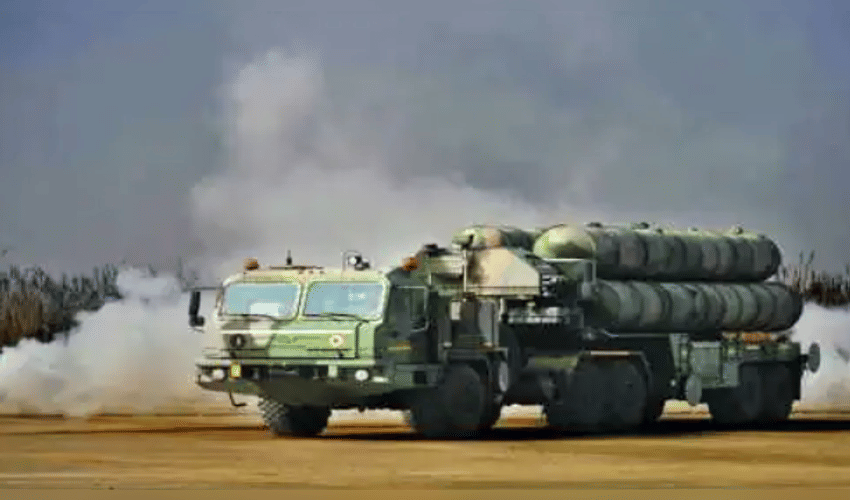

New Delhi: India is strengthening the long-term readiness of its S-400 air defence system by moving towards the establishment of a dedicated maintenance, repair and overhaul (MRO) facility within the country. The move is aimed at reducing dependence on foreign support and ensuring that the Indian Air Force (IAF) can maintain the advanced missile system even during periods of global supply chain uncertainty.
The proposed facility will support the servicing, repair and overhaul requirements of the Russian-origin S-400 Triumf air defence system, which is operated by the IAF as part of India’s layered air defence network. The project is being developed in partnership with Russia’s Almaz-Antey, the manufacturer of the S-400 system, with operations expected to begin by 2028. The decision comes amid growing concerns over defence supply chain vulnerabilities. Recent global conflicts, sanctions and disruptions in international logistics have highlighted the risks faced by countries that rely heavily on overseas support for critical military equipment.
For India, creating a domestic support ecosystem for the S-400 is seen as a strategic step. Instead of depending entirely on external facilities for repairs, spare parts and technical assistance, Indian engineers will gradually gain the capability to handle important maintenance activities within the country. The S-400, also known as Sudarshan Chakra in Indian service, is one of the most advanced long-range surface-to-air missile systems in the IAF inventory. It is designed to detect and engage multiple aerial threats, including aircraft, drones and missiles, making its operational availability a key requirement for India’s air defence preparedness.
The upcoming MRO facility is expected to improve turnaround time for repairs, strengthen spare parts management and reduce delays associated with sending equipment abroad for servicing. Defence experts believe that maintaining high availability of such systems is as important as acquiring them, especially during situations where rapid deployment is required.
The initiative also supports India’s broader push towards defence self-reliance under the Atmanirbhar Bharat programme. While the S-400 itself remains a foreign-origin platform, developing local expertise in maintenance and lifecycle support will help build domestic capability in handling advanced military technologies.
Beyond immediate operational benefits, the facility could also contribute to skill development by creating a specialised workforce capable of managing complex air defence technologies. It reflects a larger shift in India’s defence strategy — from simply purchasing military systems to building the infrastructure needed to sustain them for decades. With the security environment becoming increasingly technology-driven, India’s move to establish an S-400 maintenance hub highlights the growing importance of reliable logistics, repair capability and supply chain independence in modern warfare.



