



World
India Responds to US Lawmaker's FCRA Criticism: 'US Regulates Flow of Foreign Funds Too'
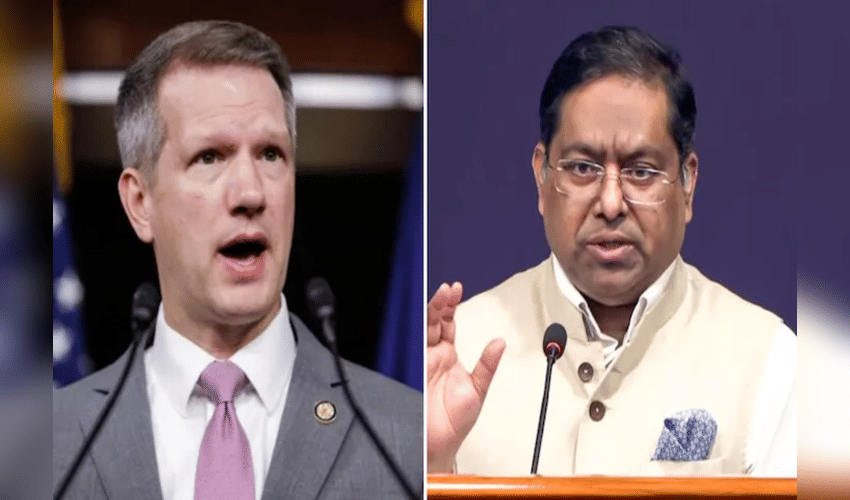

India has responded to criticism from US Congressman Riley Moore over the proposed amendments to the Foreign Contribution (Regulation) Act (FCRA), saying that regulating foreign funds is an internal matter and that the United States also has rules governing the flow of overseas money. Ministry of External Affairs spokesperson Randhir Jaiswal made the remarks while responding to questions about Moore’s objections to the proposed FCRA Amendment Bill, 2026.
Moore, a Republican lawmaker from West Virginia, had criticised the proposed legislation, claiming that it could adversely affect churches and Christian organisations that receive foreign contributions. He described the proposed changes as a matter of concern and suggested that they could have implications for India-US relations. Responding to the criticism, Jaiswal said India's legislative process is a matter for the country's Parliament. He also pointed out that governments around the world regulate foreign contributions and financial flows.
“US regulates flow of foreign funds too,” Jaiswal said, underlining India's position that regulations governing overseas contributions are not unique to the country. The FCRA provides the legal framework for receiving and using foreign contributions in India. Organisations such as NGOs, charitable institutions, educational bodies and religious organisations that receive funds from overseas are subject to the law.
The proposed amendments have become a subject of debate among political parties and civil society groups. Critics have raised concerns about provisions that could increase government oversight of organisations receiving foreign funds, while the government has maintained that stronger regulation is needed to ensure transparency and prevent the misuse of overseas contributions. The proposed legislation also seeks to establish mechanisms for dealing with foreign-funded assets in certain circumstances where an organisation's FCRA registration is cancelled, surrendered or not renewed. The provisions have attracted particular attention from religious and charitable organisations.
The controversy has now acquired an international dimension following Moore's intervention. His comments have prompted India to reiterate that decisions relating to its domestic legislation will be taken through its own constitutional and parliamentary processes. The government has also sought to place the issue in a broader international context by pointing out that countries, including the US, have regulations governing foreign donations and financial transfers.
The FCRA Bill is expected to face further discussion in Parliament, where lawmakers will examine its provisions and the concerns raised by different stakeholders. The debate is likely to focus on the government's regulatory powers, protection of foreign-funded assets and the compliance requirements imposed on organisations receiving overseas contributions. For now, New Delhi's response makes clear that it views the proposed FCRA changes as an issue of domestic legislation, while rejecting the suggestion that regulating foreign funds is an unusual practice.



