



Military
India enhances its long-range military capabilities amid growing security concerns involving China and Pakistan.
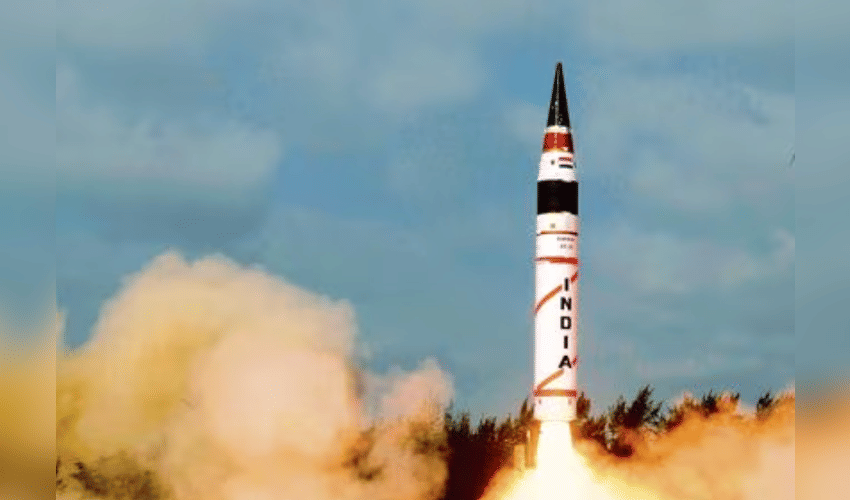

India is accelerating the modernisation of its missile and nuclear forces to narrow the capability gap with China, with a strong focus on long-range platforms such as Agni-V, Astra Mk-II/III, and advanced cruise missile systems, according to analysis cited by Nikkei Asia. Reports, including SIPRI’s 2026 assessment, suggest that this build-up reflects India’s intent to deter both China and Pakistan while strengthening its overall strategic deterrence posture. India’s nuclear stockpile is estimated to have grown to around 190 warheads by early 2026, alongside steady improvements in delivery systems designed to reach deep into Chinese territory.
Defence spending has also surged, reaching about $92.1 billion in 2025, placing India among the world’s top military spenders and the second-largest importer of major arms. This investment supports key programs like the Agni-V intercontinental ballistic missile, which has undergone extended-range testing beyond 5,000 km and is being developed for MIRV capability.
In air combat, the Astra missile family remains central to India’s long-range strike ambitions. The Astra Mk-II, with a range of roughly 200 km, is being integrated into platforms such as the Sukhoi-30 and Tejas. The upcoming Astra Mk-III (Gandiva), with a projected range of around 350 km and ramjet propulsion, is intended to enhance India’s ability to engage high-value airborne targets like AWACS and refuelling aircraft.
Cruise missile development is also advancing, with the BrahMos system now tested at extended ranges of up to 800 km, alongside ongoing work on hypersonic variants. These capabilities are aimed at strengthening both land-attack and maritime strike options, particularly in the Indian Ocean region. SIPRI also highlighted heightened regional tensions, including a major 2025 India–Pakistan crisis involving strikes on military infrastructure and the growing role of cyber operations in active conflict. Analysts say such incidents underline the increasing importance of precision, long-range strike systems in modern warfare.
At the same time, China’s expanding missile arsenal, including systems like the DF-26 with a range of around 4,000 km, continues to shape India’s strategic calculations. In response, India is pushing to expand its own long-range deterrent capabilities, including submarine-launched ballistic missiles to strengthen its nuclear triad and ensure second-strike survivability.
Ongoing advances in domestic defence technology—such as gallium nitride-based radar systems—are also improving missile guidance and resilience against electronic warfare, while supporting India’s broader push for self-reliance in defence production. The trend reflects a wider global shift toward renewed reliance on nuclear and long-range strike systems, with India’s modernization driven by its unique security environment involving two nuclear-armed neighbours and the need to maintain credible deterrence.



