



Military
India Deploys Project 17A Stealth Warships to Strengthen Blue-Water Naval Presence
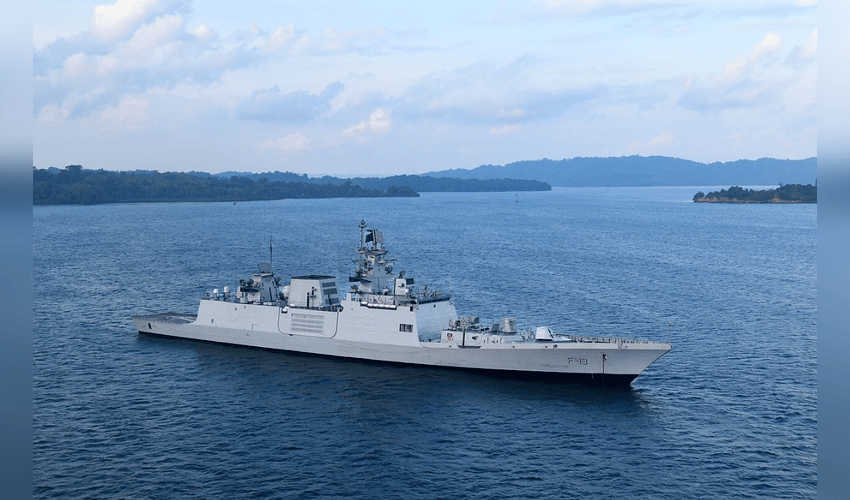

India’s naval forces are in the middle of a major upgrade, with the addition of modern stealth warships that significantly expand their operational capabilities. The recent induction of INS Mahendragiri and INS Dunagiri, along with the commissioning of INS Taragiri, signals a clear move toward stronger multirole readiness, sustained deployments, and true blue-water capability across the Indian Ocean. These developments are part of Project 17A, a program aimed at building seven advanced Nilgiri-class stealth frigates. These vessels are designed as the next step beyond the Shivalik-class, which were India’s first indigenously developed stealth warships.
The timing of these additions is important, as both China and Pakistan are actively strengthening their naval presence in the region. In response, India is accelerating its maritime modernisation efforts to ensure its fleet can effectively counter threats across the surface, air, and underwater domains. INS Mahendragiri was delivered on 30 April at Mazagon Dock Shipbuilders Limited in Mumbai, following the arrival of INS Dunagiri on 30 March at Garden Reach Shipbuilders and Engineers in Kolkata. Earlier in April, INS Taragiri was officially commissioned, further boosting the Navy’s operational strength.
All three ships are guided-missile frigates equipped with advanced stealth technologies that reduce their visibility to enemy radar and surveillance systems. Their induction coincided with the commissioning of INS Aridhaman, India’s third nuclear-powered ballistic missile submarine, highlighting simultaneous progress in both surface and sub-surface warfare capabilities.
INS Mahendragiri, identified as Yard 12654, is the sixth vessel in the Nilgiri-class series and the fourth to be constructed at Mazagon Dock. It reflects India’s growing expertise in domestic warship design and manufacturing, with around 75 percent of Project 17A components sourced locally. The ship design was led by the Indian Navy’s Warship Design Bureau, with supervision from the Warship Overseeing Team in Mumbai. The project has also provided a boost to the domestic industry, involving more than 200 MSMEs and creating thousands of jobs directly and indirectly.
INS Dunagiri, known as Yard 3023, is the fifth ship in the class and the second to be built at GRSE in Kolkata. It carries forward the legacy of the earlier INS Dunagiri, a British-origin Leander-class frigate that served the Navy for over three decades before being retired in 2010. The new Dunagiri is equipped with a powerful range of systems, including BrahMos supersonic missiles for striking both sea and land targets, MFSTAR radar and Barak-8 air defence missiles, a 76 mm rapid-fire gun, close-in weapon systems, and torpedoes for anti-submarine warfare. It can also operate two helicopters such as HAL Dhruv or Sea King, extending its reach and versatility.
Compared to the earlier Shivalik-class, the Project 17A frigates represent a major technological advancement. Built using modular construction techniques, they have a displacement of around 6,670 tonnes and feature advanced weapon and sensor systems. They are powered by a Combined Diesel or Gas propulsion system, which allows efficient cruising as well as high-speed manoeuvring. The Integrated Platform Management System automates many onboard functions, reducing crew workload and improving overall efficiency.
Stealth remains a key feature, achieved through reduced radar signatures, specialised coatings, and carefully designed structures. Infrared and acoustic signatures are also minimised, making these ships harder to detect in modern combat environments. Their survivability is further enhanced by improved damage control systems and robust structural design. These warships are capable of carrying out a wide range of missions, including anti-surface, anti-air, and anti-submarine operations, as well as long-duration deployments far from India’s coastline.
Blue-water capability refers to the ability of a navy to operate effectively across deep oceans for extended periods, and these ships play a crucial role in achieving that goal. The addition of INS Mahendragiri, INS Dunagiri, and INS Taragiri under Project 17A highlights India’s push for self-reliance in defence production and its focus on securing the Indian Ocean Region. With a growing fleet of indigenous warships, the country is preparing itself for an increasingly competitive maritime landscape. These advanced, multi-role platforms are expected to remain central to India’s naval strategy for years to come.



