



Military
IAF eyes Russian-supported Su-30MKI upgrades to fill squadron gaps as Super Sukhoi plan awaits CCS approval.
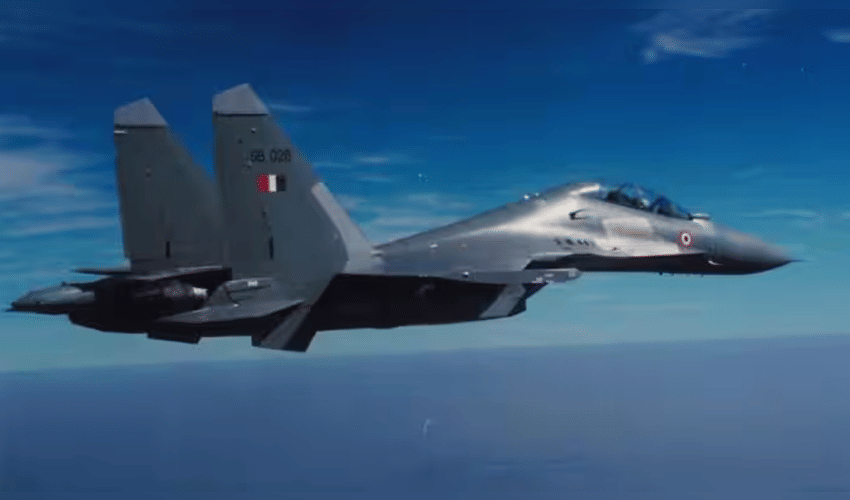

India is examining an additional pathway to modernise its Su-30MKI fleet to avoid a decline in combat strength and to shorten timelines that could otherwise extend into the 2030s if it depends solely on the indigenous Super Sukhoi programme. The Super Sukhoi upgrade, spearheaded by Hindustan Aeronautics Limited, currently covers only 84 aircraft out of roughly 260 Su-30MKIs in service, leaving around 175 jets outside its present scope. Although the project has received Acceptance of Necessity and budget clearance from the Defence Acquisition Council, it still awaits final approval from the Cabinet Committee on Security.
Even after approval, development, testing and certification will take years. The first upgraded aircraft is expected only in the late 2020s, with the full upgrade of 84 jets potentially stretching over 15 years. Defence officials warn that relying solely on this route could delay meaningful capability enhancement across the fleet until well into the next decade — a concern given the current security environment. The Indian Air Force currently operates about 31 fighter squadrons against a sanctioned strength of 42. Meanwhile, China is expanding its Chengdu J-20 fleet and promoting the Shenyang J-35 to Pakistan, reportedly offering 40 aircraft.
India has also evaluated Russia’s Sukhoi Su-57 as a potential interim fifth-generation solution, while indigenous programmes like AMCA remain years away. However, acquiring the Su-57 would mainly address the stealth segment and would not resolve the broader issue of maintaining sufficient 4.5-generation fighter strength. Since the Su-30MKI forms the backbone of the IAF, planners want to prevent any capability gap during this transition.
The proposed parallel strategy draws inspiration from the MiG-21 Bison upgrade model, where initial modernisation work was carried out in Russia before Indian facilities gradually assumed larger volumes using supplied kits. A similar framework for the Su-30MKI could involve upgrades at Russian facilities such as the Sokol Aircraft Plant, alongside parallel lines in India using Russian kits and technical support. This approach could accelerate upgrades for many of the 175 aircraft currently outside the Super Sukhoi plan, while HAL concentrates on the more complex integration tasks for the 84-aircraft Super Sukhoi block.
The Super Sukhoi package includes new radar systems, enhanced infrared search and track sensors, upgraded electronic warfare suites and modern avionics, potentially extending service life to around 2055 while boosting survivability and lethality. The parallel route may adopt a modular approach rather than replicate the full Super Sukhoi configuration, focusing on selective upgrades in radar, avionics and weapons integration to rapidly raise much of the fleet to a credible 4.5-generation standard. The objective is to avoid a situation where only a limited subset of aircraft is highly advanced while the majority lag behind regional adversaries. Rapid, incremental upgrades across more than 100 aircraft could deliver stronger immediate deterrence than waiting years for a smaller number of fully modernised jets.
Operational planning also factors in a possible two-front conflict scenario involving both China and Pakistan. In such a case, sortie generation, fleet availability and standardised capabilities across squadrons may prove more critical than a small number of top-tier fighters. A mixed Russian–Indian upgrade model could reduce aircraft downtime, improve squadron rotation cycles and ease logistics transitions. It would also help avoid grounding too many aircraft simultaneously, which could worsen existing squadron shortages.
From an industrial standpoint, the parallel model balances long-term self-reliance with immediate capacity constraints. While the Super Sukhoi programme strengthens India’s domestic expertise in avionics integration and life-extension of complex combat aircraft, HAL and its partners have limited manpower and infrastructure. Routing all 250-plus aircraft solely through domestic facilities could create bottlenecks. By distributing part of the workload to Russian facilities while continuing domestic assembly and integration using imported kits, India can leverage Russian experience on the platform without overwhelming its own industrial base.
The parallel route serves as a multi-level risk mitigation measure — addressing combat readiness, timelines and industrial capacity. It seeks to ensure that as India transitions toward a future mix including Rafale, TEJAS variants, AMCA and possibly the Su-57, the current Su-30MKI fleet does not become vulnerable due to obsolescence or prolonged upgrade cycles. The IAF appears to be shifting from a sequential, slow modernisation model to a concurrent, multi-track approach, aligning immediate operational needs with longer-term goals of strategic autonomy.



