



Military
How US Weapons and Fidayeen Attacks Made 2025 the Deadliest Year for Pakistan
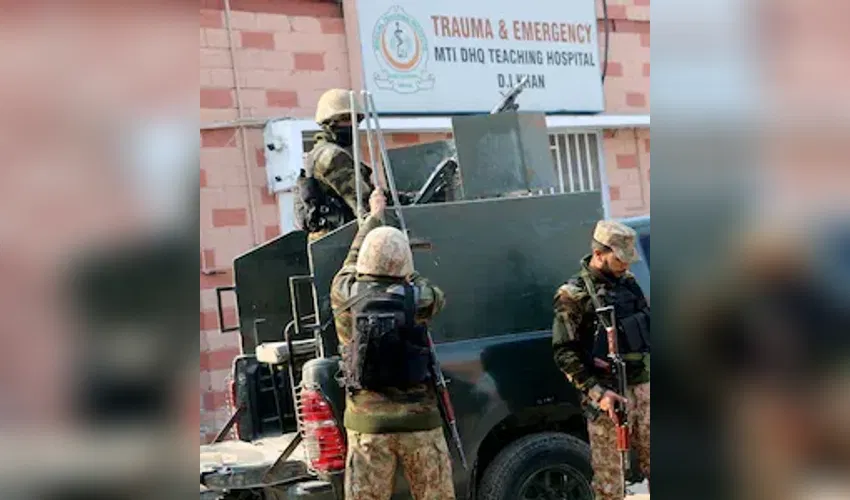

The year 2025 has emerged as one of the bloodiest chapters in Pakistan’s recent history, exposing the deepening security crisis within the country. A lethal combination of advanced US-origin weapons flooding militant hands and a sharp rise in fidayeen (suicide) attacks pushed violence levels to record highs, underlining the blowback of Pakistan’s own long-standing policies.
US Weapons, Pakistan’s Blowback
Large quantities of sophisticated US military equipment originally supplied for operations in Afghanistan have increasingly surfaced in terror attacks inside Pakistan. After the Taliban takeover, assault rifles, night-vision devices, and advanced explosives found their way into the black market and militant networks operating across the Pakistan-Afghanistan border.
Security analysts say Pakistan has become a victim of the same ecosystem it once helped nurture. Militant groups, emboldened by access to modern weaponry, carried out more precise and deadly attacks on Pakistani security forces, police units, and civilian targets throughout 2025. “The irony is stark. Weapons meant for counterterrorism are now being used to destabilise Pakistan itself,” a regional security expert noted.
Surge in Fidayeen Attacks
2025 also witnessed a dramatic increase in fidayeen attacks, particularly in Khyber Pakhtunkhwa and Balochistan. Suicide bombers targeted military convoys, intelligence facilities, and even civilian gatherings, causing mass casualties and widespread fear. These attacks were not sporadic but part of a coordinated campaign by multiple terror outfits, including factions that Pakistan once described as “strategic assets.” Many of these groups now openly challenge the Pakistani state, exposing the limits of Islamabad’s control over extremist proxies.
Internal Security Collapse
The scale and frequency of attacks overwhelmed Pakistan’s already strained security apparatus. Police stations, checkposts, and paramilitary bases were repeatedly targeted, highlighting gaps in intelligence coordination and counterterror preparedness. Civilian casualties climbed sharply, with markets, transport hubs, and religious sites increasingly coming under attack. The violence further eroded public confidence in the state’s ability to provide basic security.
A Policy Backfire
Experts argue that Pakistan’s decades-long policy of tolerating and selectively supporting militant groups has finally come full circle. While Islamabad has consistently blamed external actors, the reality on the ground points to an internal implosion driven by radicalisation, unchecked militancy, and poor governance. “The Pakistani establishment believed it could manage militants. 2025 proved that this was a dangerous illusion,” said a counterterrorism analyst.
Economic and Social Fallout
The security crisis has taken a heavy toll on Pakistan’s fragile economy. Foreign investment declined, development projects stalled, and tourism collapsed in violence-hit regions. Ordinary Pakistanis bore the brunt, facing loss of life, livelihoods, and an ever-present climate of fear.
A Warning for the Future
As 2026 begins, Pakistan faces a stark choice: dismantle the militant infrastructure it once cultivated or risk sliding further into chaos. The deadly lessons of 2025 show that reliance on terror proxies and the circulation of foreign weapons have turned Pakistan into its own worst enemy.
This Image is taken from NDTV.