



Politics
How Pakistan's ISI Is Exploiting Bangladesh's Unrest
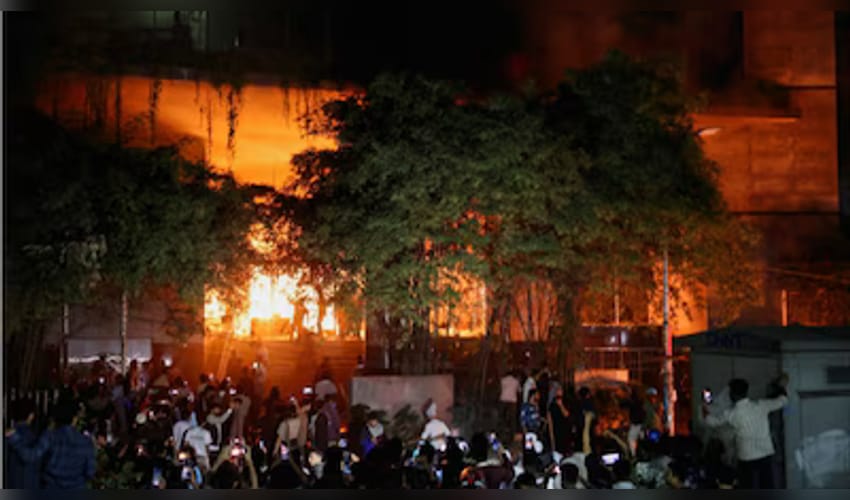

Bangladesh’s recurring waves of political unrest have increasingly drawn the attention of regional intelligence agencies, with Pakistan’s Inter-Services Intelligence (ISI) emerging as a key external actor seeking to exploit the instability for strategic gain. Security analysts warn that the ISI’s activities in Bangladesh are aimed not at supporting democratic processes, but at weakening Dhaka’s internal cohesion and reshaping regional dynamics in ways favourable to Pakistan.
Leveraging Political Polarisation
Bangladesh’s sharply polarised political landscape provides fertile ground for foreign manipulation. According to intelligence assessments, ISI-linked operatives have sought to cultivate contacts across the political spectrum, particularly among disgruntled factions and fringe groups that feel marginalised by the current power structure. By amplifying grievances and deepening mistrust between rival camps, the ISI aims to keep the domestic political environment volatile and distracted.
Reviving Islamist Networks
A central component of the ISI’s strategy is the revival of dormant or weakened Islamist networks in Bangladesh. Groups that were previously suppressed through sustained counterterrorism operations have reportedly received ideological encouragement, logistical guidance, and limited financial support via indirect channels. The objective, analysts say, is not necessarily to trigger large-scale violence immediately, but to keep extremist infrastructure alive and capable of rapid mobilisation when unrest peaks.
Information Warfare and Disinformation
In the digital domain, the ISI is accused of running coordinated disinformation campaigns to inflame protests and erode public trust in Bangladeshi institutions. Social media platforms and encrypted messaging apps are used to circulate exaggerated claims of state repression, communal bias, or economic collapse. These narratives are often tailored to specific audiences, including students, religious conservatives, and migrant worker families, making them harder to counter through official messaging.
Using Bangladesh as a Pressure Point Against India
Bangladesh’s strategic location makes it a valuable pressure point in Pakistan’s broader rivalry with India. By encouraging instability in Dhaka, the ISI seeks to complicate India’s eastern security environment and strain India–Bangladesh cooperation on counterterrorism, border management, and connectivity projects. Any deterioration in ties between New Delhi and Dhaka would serve Islamabad’s long-standing objective of regional disruption.
Financial and Diaspora Channels
Investigators also point to the misuse of charity fronts, informal money transfer systems, and diaspora networks to move funds and influence into Bangladesh. These channels allow ISI-linked actors to maintain plausible deniability while sustaining agitation on the ground. Small but steady financial flows can be enough to keep protests organised, supply propaganda materials, and support underground networks.
A Calculated, Long-Term Strategy
Rather than pursuing dramatic, one-off interventions, the ISI’s approach in Bangladesh appears incremental and opportunistic. Periods of economic stress, election-related tensions, or high-profile court rulings are treated as openings to intensify interference. The aim is to normalise instability, making unrest seem organic and inevitable rather than externally fuelled.
The Challenge for Bangladesh
For Bangladesh, countering such exploitation requires more than security crackdowns. Analysts argue that transparent governance, credible elections, and inclusive political dialogue are essential to reducing the vulnerabilities that external actors exploit. Strengthening cyber monitoring, regulating foreign funding, and enhancing intelligence cooperation with trusted partners will also be critical.
Bangladesh’s unrest is rooted primarily in domestic political and socio-economic issues, but Pakistan’s ISI has shown a consistent willingness to exploit these fault lines. By blending political manipulation, extremist networking, and information warfare, the ISI seeks to turn Bangladesh’s internal challenges into a strategic asset against its regional rivals. Recognising and addressing this external dimension is crucial for safeguarding Bangladesh’s stability and sovereignty.
This image is taken from News18.



