



Asia In News
China Eyes New Bangladesh-Myanmar Economic Corridor, Raising Strategic Questions for India
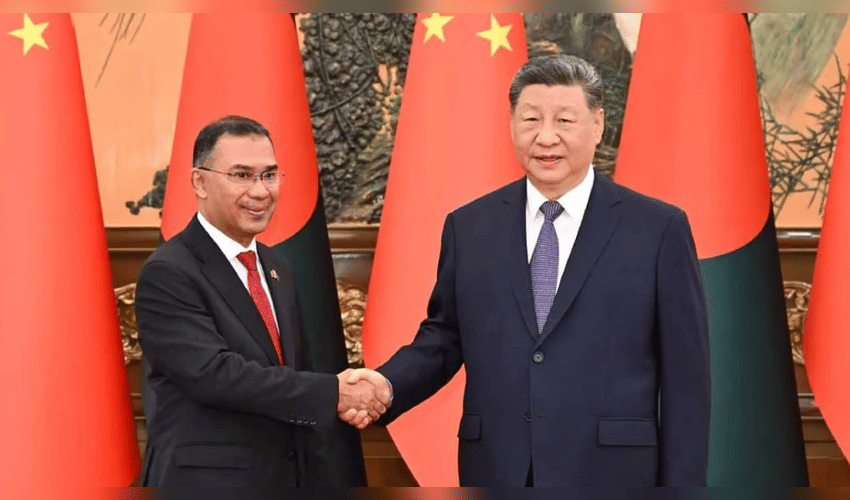

Beijing: China is moving ahead with plans to establish a new economic corridor connecting its southwestern Yunnan province with Bangladesh through Myanmar, a proposal that could reshape regional connectivity while drawing attention in New Delhi due to its strategic location near India's eastern frontier. The proposed China-Myanmar-Bangladesh Economic Corridor (CMBC) was discussed during recent high-level meetings between Chinese and Bangladeshi leaders in Beijing. Both sides emphasized stronger cooperation in infrastructure, trade, logistics, industrial development, and cross-border connectivity as part of their expanding bilateral relationship.
If implemented, the corridor would link Kunming, the capital of Yunnan province, with Myanmar's commercial and transport hubs before extending into Bangladesh. The project is expected to include highways, rail links, logistics facilities, industrial parks, and other infrastructure aimed at boosting regional trade and economic activity.
The proposal comes as China continues to expand its Belt and Road Initiative (BRI), a global infrastructure and connectivity program that has already financed roads, railways, ports, and energy projects across Asia, Africa, and Europe. The latest plan has attracted attention because it would create another China-backed connectivity route close to India's borders. Beijing already operates the China-Pakistan Economic Corridor (CPEC), one of the flagship BRI projects that connects western China to Pakistan's Gwadar Port on the Arabian Sea.
Analysts say the proposed Bangladesh-Myanmar corridor would provide China with another important land route toward the Bay of Bengal while strengthening its economic ties with two neighboring countries. Improved transport links could also increase trade flows, reduce logistics costs, and encourage industrial investment in participating regions.
For Bangladesh, the project could bring fresh infrastructure investment and greater access to Chinese markets. Myanmar could also benefit from improved transport networks and trade opportunities, although the country's ongoing political instability and security challenges remain significant obstacles to large-scale infrastructure development.
India is expected to closely monitor the proposal. New Delhi has consistently stayed away from the Belt and Road Initiative, citing sovereignty concerns and strategic considerations. Indian policymakers have also expressed caution over China's growing infrastructure footprint in South Asia and the Indian Ocean region.
The corridor is also being viewed as a possible successor to the earlier Bangladesh-China-India-Myanmar (BCIM) Economic Corridor, a project that included India but lost momentum after relations between New Delhi and Beijing deteriorated in recent years. The latest proposal focuses only on China, Myanmar, and Bangladesh. Officials have not announced a timeline for construction or disclosed details regarding funding and implementation. The proposal remains in its early stages, and several political, financial, and security issues will need to be addressed before work can begin. The announcement reflects China's continued efforts to strengthen regional connectivity and deepen its economic engagement in South Asia. As discussions progress, the proposed corridor is expected to remain a key development watched closely by governments and strategic analysts across the region.