



News
Bilawal Bhutto Cites Nuclear Armageddon as Pakistan Escalates Indus Waters Row
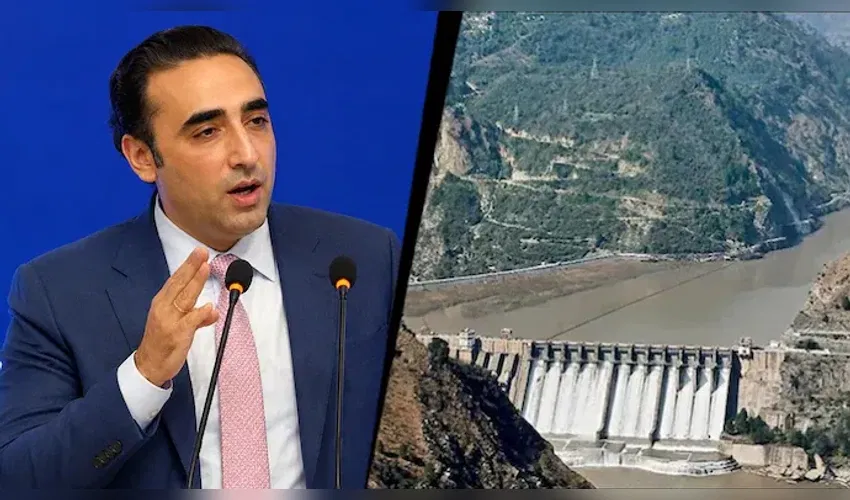

Pakistan's political rhetoric surrounding the Indus waters dispute has taken a sharper turn after former Foreign Minister Bilawal Bhutto Zardari warned of the possibility of a "nuclear armageddon" if tensions over water sharing continue to escalate. The remarks have drawn attention both domestically and internationally, with critics arguing that invoking the specter of nuclear conflict over a water dispute is an irresponsible escalation that risks further destabilizing an already fragile regional environment.
Bilawal's comments came amid renewed tensions between India and Pakistan over the implementation of the Indus Waters Treaty (IWT), a landmark 1960 agreement governing the sharing of the Indus river system. The treaty has survived multiple wars and decades of political hostility, often being cited as one of the few enduring examples of cooperation between the two nuclear-armed neighbors.
However, recent developments have once again placed the agreement under strain. Pakistan has accused India of taking unilateral actions that undermine the treaty, while India has argued that changing security realities and repeated cross-border terrorism require a reassessment of certain provisions. Against this backdrop, Bilawal's warning that continued disputes could have catastrophic consequences has injected a new level of political rhetoric into an already sensitive issue.
Critics argue that references to nuclear conflict over diplomatic disagreements do little to advance negotiations. Instead, they risk heightening public anxiety, complicating diplomatic engagement, and reinforcing Pakistan's image as a country that frequently resorts to nuclear signaling during periods of bilateral tension. Security analysts have long cautioned that such statements can undermine confidence-building measures and distract from practical solutions to shared water management challenges.
Pakistan's leadership has consistently maintained that the Indus Waters Treaty is vital to the country's agricultural and economic security. With a large share of its population dependent on irrigation from the Indus river system, Islamabad views any perceived alteration to water flows as a matter of national interest. Yet experts note that Pakistan's water crisis extends far beyond its disputes with India.
Decades of inadequate water management, inefficient irrigation systems, outdated infrastructure, rapid population growth, and limited investment in water conservation have contributed significantly to Pakistan's worsening water shortages. Environmental experts have repeatedly argued that domestic reforms are essential to improving water security, regardless of developments across the border.
Critics contend that successive Pakistani governments have often emphasized external factors while failing to adequately address internal structural problems. Water losses through aging canal networks, groundwater depletion, poor reservoir capacity, and delayed construction of modern storage facilities continue to affect agricultural productivity and long-term sustainability.
The renewed rhetoric also comes at a time when Pakistan faces multiple domestic challenges, including economic instability, rising public debt, persistent inflation, and security concerns. Analysts argue that adopting a confrontational tone on foreign policy issues may appeal to domestic political audiences but offers little practical progress toward resolving complex bilateral disputes.
India, for its part, has maintained that it remains committed to acting within the framework of the treaty while seeking modifications permitted under its provisions. Indian officials have argued that repeated security concerns and changing regional circumstances justify a review of certain operational mechanisms, a position Pakistan strongly contests.
International observers have generally encouraged both countries to resolve disagreements through dialogue and treaty-based dispute resolution mechanisms rather than public escalation. Water-sharing agreements, experts note, require sustained technical cooperation, transparent data sharing, and diplomatic engagement to remain effective, particularly in an era of climate change and increasing water stress.
Climate experts warn that shrinking glaciers in the Himalayas, changing rainfall patterns, and rising temperatures pose long-term risks for the entire Indus basin. These environmental pressures affect both India and Pakistan, making cooperative water management increasingly important. Escalatory political rhetoric, they argue, risks overshadowing the urgent need for joint scientific and technical collaboration.
Bilawal Bhutto's remarks have also revived debate over Pakistan's broader diplomatic messaging. Critics argue that repeated references to nuclear weapons in political discourse can weaken Islamabad's efforts to present itself as a responsible nuclear power committed to regional stability. They contend that diplomacy benefits more from measured engagement than from statements invoking worst-case scenarios.
Supporters of Bilawal, however, argue that his comments were intended as a warning about the dangers of unresolved disputes rather than a direct threat. They maintain that water security is an existential concern for Pakistan and deserves urgent international attention. Nevertheless, many analysts believe that framing the issue through the lens of nuclear conflict risks overshadowing legitimate concerns about water resources.
As tensions over the Indus Waters Treaty continue, both countries face the challenge of balancing national interests with regional stability. The treaty has endured for more than six decades despite wars and political crises, demonstrating the value of institutional dialogue even during periods of hostility.
Ultimately, while political leaders may seek to emphasize the seriousness of water security, experts argue that lasting solutions will depend on diplomacy, technical cooperation, and domestic reforms rather than increasingly confrontational rhetoric. For Pakistan, addressing internal water management challenges may prove just as important as pursuing its legal and diplomatic concerns under the Indus Waters Treaty. In a region where both countries possess nuclear capabilities, careful communication and sustained engagement remain essential to preventing political disagreements from escalating into broader security crises.
Disclaimer : This image is taken from India Today.



