



News
As Attacks on Hindus Rise, Muhammad Yunus Appears to Lose Control in Bangladesh
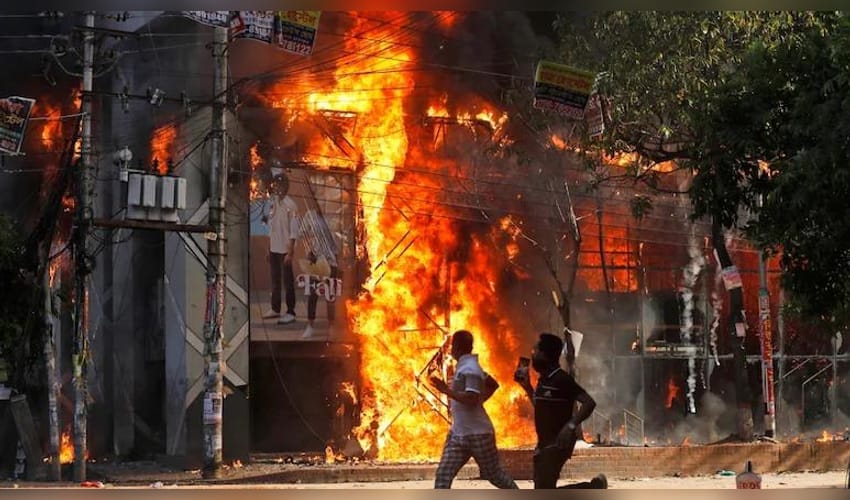

Violence targeting minority communities in Bangladesh has intensified in recent weeks, raising serious concerns over law and order under the interim government led by Nobel laureate Muhammad Yunus. Observers and critics say the administration appears increasingly unable to rein in radical elements and contain rising communal tensions across the country. The deteriorating security situation has already had regional implications. The Indian visa application centre in Chittagong was shut indefinitely, with officials citing safety concerns amid escalating unrest. Services have been restricted to emergency and medical cases, reflecting growing anxiety over stability in the port city and surrounding regions.
Several districts have reported incidents of mob violence, intimidation, and targeted attacks against Hindu minorities, leaving many families fearful for their safety. In some cases, allegations of blasphemy circulating on social media have triggered violent reprisals, often without verification or legal process.
One such incident involved a Hindu youth who was killed by a mob after being accused of making derogatory remarks. Subsequent inquiries reportedly found no credible evidence to support the claim, sparking outrage among human rights groups and civil society activists. Analysts warn that these incidents are not isolated but part of a broader pattern of lawlessness and radicalisation, driven by inflammatory rhetoric, social media misinformation, and weak enforcement on the ground.
The Yunus-led interim administration has come under sharp criticism for its perceived failure to protect minorities and maintain public order. Political opponents and rights advocates argue that the government’s response has been slow and inadequate, allowing extremist groups to operate with relative impunity.
Former leaders and regional observers have openly questioned the government’s ability to govern effectively during this sensitive transition period. Concerns have also been raised in India over the safety of minorities and the broader security implications of instability in a neighbouring country. Security experts note that the violence is occurring alongside a wider breakdown in law and order, including lynchings, political clashes, and attacks on journalists and cultural figures, pointing to a deepening governance crisis.
The fragile situation is unfolding as Bangladesh moves toward future elections, a period traditionally marked by heightened political rivalry. Reports of intimidation, political violence, and suppression of dissent have added to fears that instability could worsen in the coming months. While Muhammad Yunus has reiterated his commitment to safeguarding all citizens and restoring calm, critics argue that firm action against radical groups and stronger law enforcement measures are urgently needed to prevent further deterioration.
Human rights organisations have warned that continued attacks on religious and cultural minorities could have long-term consequences for Bangladesh’s social fabric and international standing. They stress the need for accountability, swift justice, and clear political messaging to counter extremism and protect vulnerable communities. As Bangladesh grapples with rising unrest, the coming weeks will be critical in determining whether the interim government can restore confidence, uphold the rule of law, and ensure equal protection for all its citizens.



