



Economy
India moves beyond defensive approach, pursues future-oriented trade agreements, says Piyush Goyal.
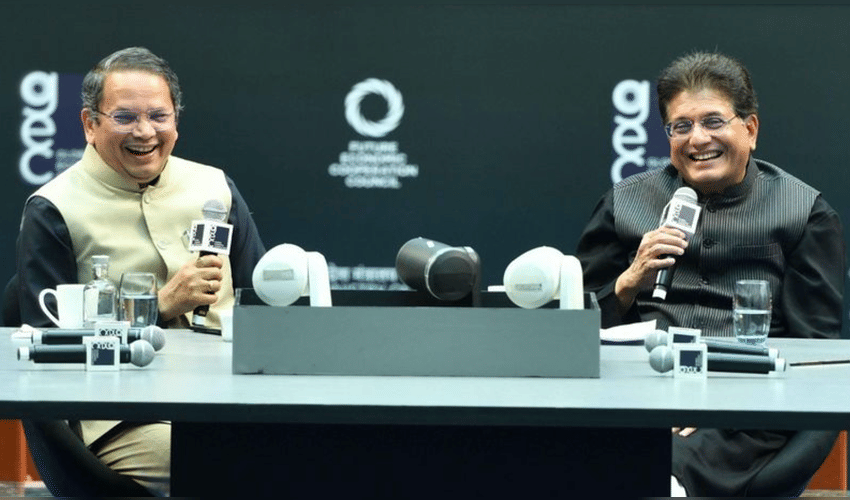

Union Commerce Minister Piyush Goyal announced today that India is overhauling its trade strategy, shifting from a guarded, defensive approach to forging forward-looking agreements that capitalize on the nation's economic surge. Speaking at a business conclave in Mumbai, Goyal highlighted how this proactive stance is accelerating long-stalled free trade deals and positioning India as a global trade powerhouse.
India's trade playbook has fundamentally changed. "We're no longer apologizing for our challenges or negotiating from a position of weakness," Goyal stated, emphasizing that today's deals are framed around India's projected growth from a $4 trillion economy to $30-35 trillion by 2047. This vision turns FTAs into bridges for international partners to tap into India's booming consumer base, while safeguarding key domestic sectors like dairy and fisheries.
In the past four years—post the COVID negotiations restart—India has inked nine major FTAs, many of which languished for over two decades. These pacts prioritize India's strengths in labor-intensive industries such as textiles, pharmaceuticals, and marine products, offering exporters new markets without compromising local livelihoods.
Goyal pointed to thawing India-US relations as a prime example, with recent tariff agreements paving the way for a comprehensive bilateral trade pact. Current bilateral trade stands at $191 billion, with ambitions to hit $500 billion by 2030 through deeper ties in tech, renewables, and manufacturing. "Progress is being made," he noted, signaling optimism amid global shifts.
This strategic pivot aligns with the Aatmanirbhar Bharat initiative, blending self-reliance with global integration. For regions like Ghaziabad in Uttar Pradesh, it spells opportunities in job creation and exports, as India negotiates from strength rather than caution. Analysts see this as a masterstroke for sustained growth in a multipolar world.



